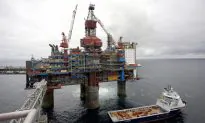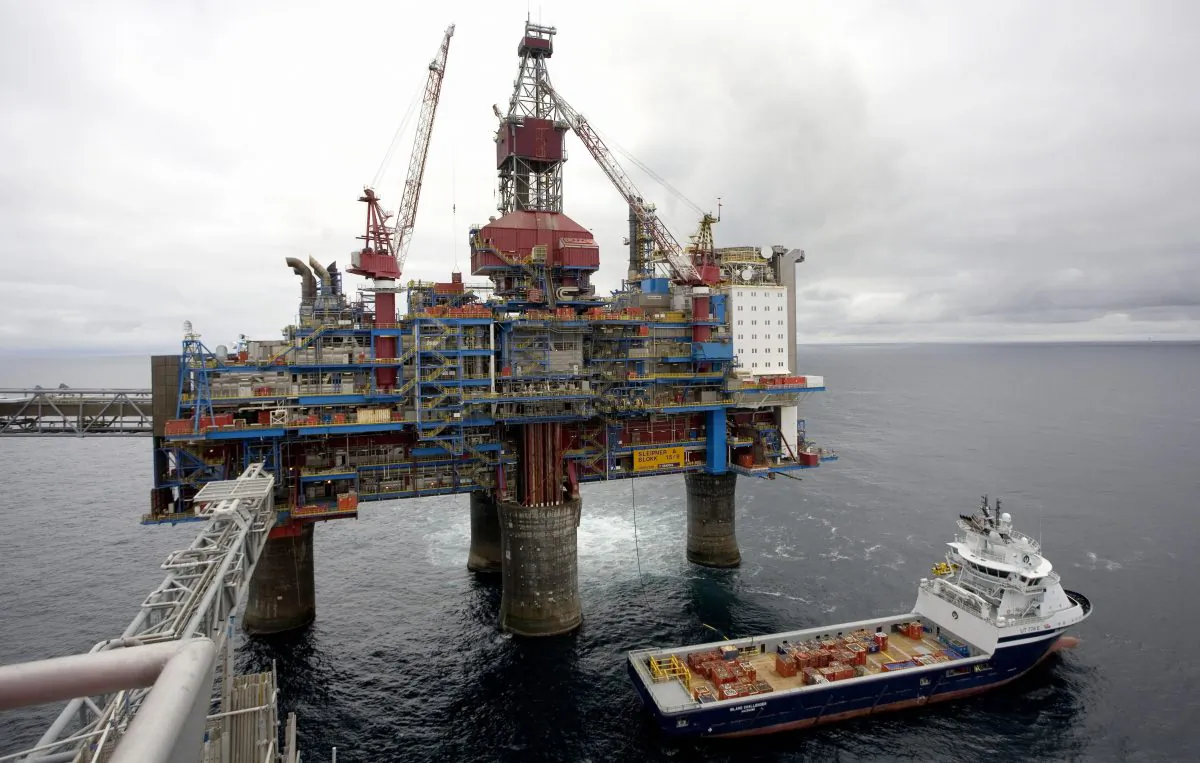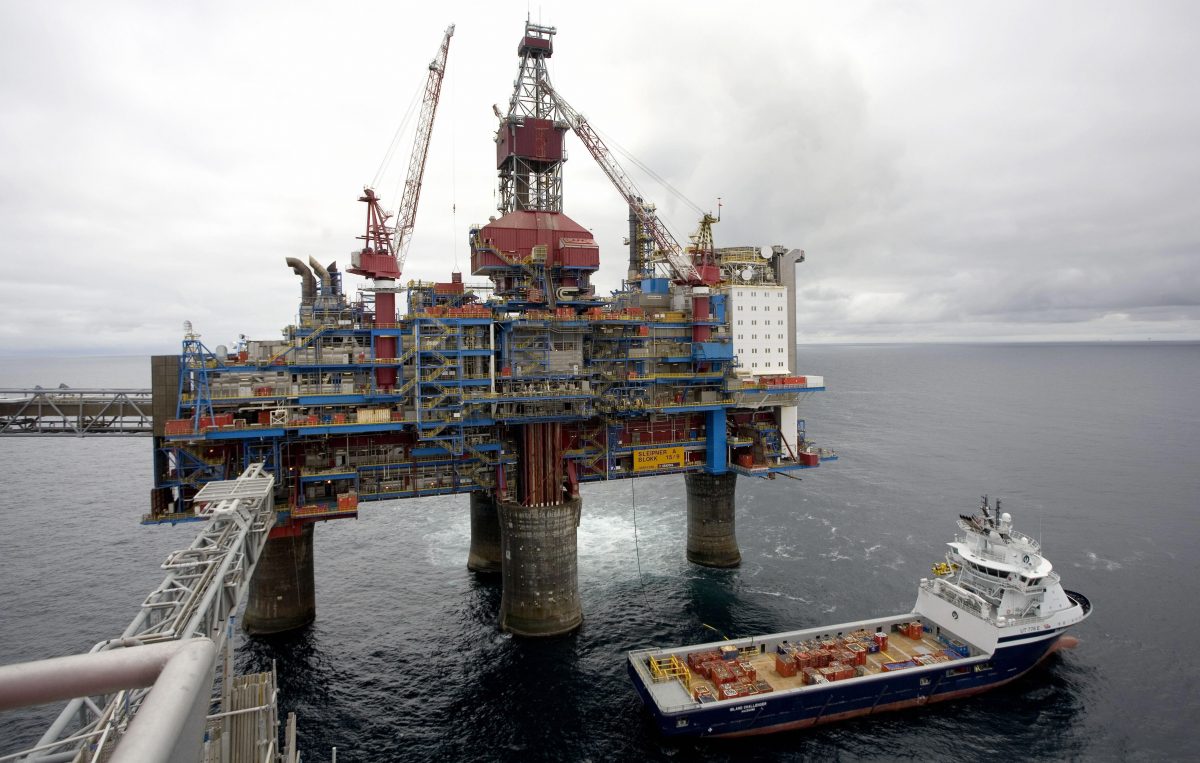

Norway has approved plans to reopen three gas fields in the North Sea that were shut down nearly three decades ago, a move the government says will support European energy security.
The Ministry of Energy said on May 5 that it has approved development plans for the Albuskjell, Vest Ekofisk, and Tommeliten Gamma fields, all located in the Ekofisk area in the southern North Sea.
The fields were discovered in the 1970s and began production between 1977 and 1988, but were closed in 1998 during a redevelopment of the Ekofisk field.
Norwegian Energy Minister Terje Aasland said the reopening showed the continuing value of Norway’s offshore assets.
“It is a pleasure to be able to approve the reopening of three fields in the North Sea; Albuskjell, Vest-Ekofisk and Tommeliten Gamma,” Aasland said. “The three fields will create great value for the community, and show the importance of existing infrastructure.”
Total investment is estimated at about 19 billion Norwegian krone (about $2 billion), with first gas planned for the end of 2028. Production is expected to continue until 2048.
Aasland said Norway’s oil and gas output remains important for Europe, particularly in light of the Russia–Ukraine war and the ongoing conflict in the Middle East.
“Norwegian production of oil and gas is an important contribution to energy security in Europe,” he said. “Development of new gas fields helps Norway to maintain high deliveries in the long term.”
The ministry said recoverable resources are expected to total the equivalent of between 90 million and 120 million barrels of oil.
Gas will be exported to Emden in Germany, while condensate, a light liquid hydrocarbon that is separated from natural gas, will be sent to Teesside in the UK.
Unlike Norway, Germany has moved more cautiously, backing limited domestic and cross-border gas projects, while the UK’s major new North Sea projects remain caught between energy–security arguments, court rulings, and a government net-zero policy shift away from new drilling licenses.
Germany and the UK are collaborating on net-zero goals—the total “decarbonization” of all sectors away from fossil fuels—with Germany targeting 2045 and the UK 2050.
Gassco, Norway’s state-owned gas pipeline operator, said Norwegian gas accounts for about 30 percent of Europe’s natural gas imports.
Norway delivered 114.9 billion cubic meters (bcm) of gas to Europe in 2025, including 58 bcm to the German and Danish market and 27 bcm to the UK, according to Gassco. The Nordic country was the largest supplier of gas to Germany (44 percent) in 2025, Gassco said.
The UK is less import-dependent than Germany, but its own North Sea production has fallen to its lowest level since the early 1970s, leaving Norway and the United States as its dominant external suppliers.
The UK’s main projects are Jackdaw, a Shell gas field, and Rosebank, a large oil-and-gas field.
However, a Scottish court ruled in January 2025 that previous consents for Rosebank and Jackdaw were unlawful because they did not consider emissions produced from burning the fuels.
While in opposition, Labour’s Energy Secretary Ed Miliband called Rosebank an act of “climate vandalism” in a 2023 post on X.
Other countries are seeking to secure their own energy sources amid the Iran war.
Since the United States and Israel launched their Feb. 28 strikes on Iran, shipping traffic through the Strait of Hormuz, one of the world’s most important energy corridors, has slowed to a near standstill.
The Belgian government on April 30 said it planned to buy the Belgian nuclear assets of French power group Engie, a move that Brussels said would help secure the country’s energy supplies.
New South Wales, Australia, will open new areas for gas exploration for the first time in more than a decade, after officials warned of potential supply shortfalls on the country’s east coast from 2030.
The Minns Labor government will release the Bancannia and Pondie Range Troughs in the state’s far west for petroleum exploration, with expression of interest opening on May 1.
However, State Natural Resources Minister Courtney Houssos said any new supply would take time to come online.
In March, Italian Prime Minister Giorgia Meloni’s government said it wanted to delay the closure of its coal-fired power stations by 13 years, postponing the phase-out from the end of 2025 to 2038.
Italy has “coal-powered stations that I wouldn’t like to reactivate, but they are there in reserve to safeguard our country,” Italian Energy Minister Gilberto Pichetto Fratin said in an interview with the TV news channel TgCom24 on March 4.
Monica O’Shea contributed to this report.
 Friends Read Free
Copy
Facebook
Tweet
Friends Read Free
Copy
Facebook
Tweet