
The New Zealand government will abolish the former Labour government’s 30 percent prisoner reduction target.
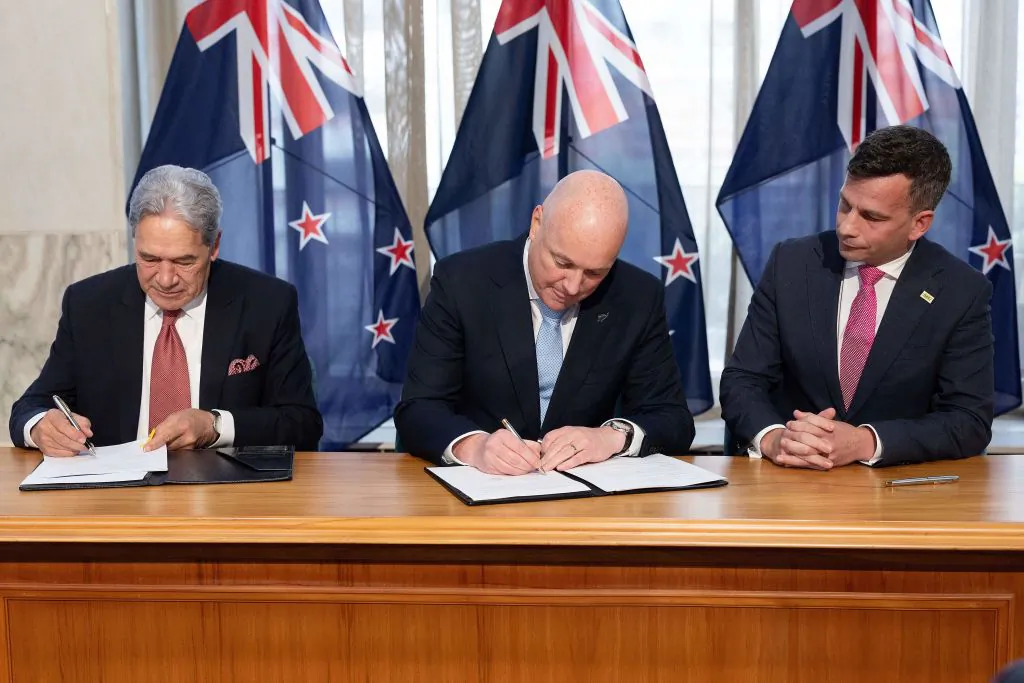
Prime Minister Christopher Luxon, who has formed a tri-party agreement with the libertarian ACT party, and NZ First, held his first cabinet meeting on Nov. 28.
The centre-right leader, 53, was sworn in as prime minister on Nov. 27 with his family by his side after striking a deal to form government last week.
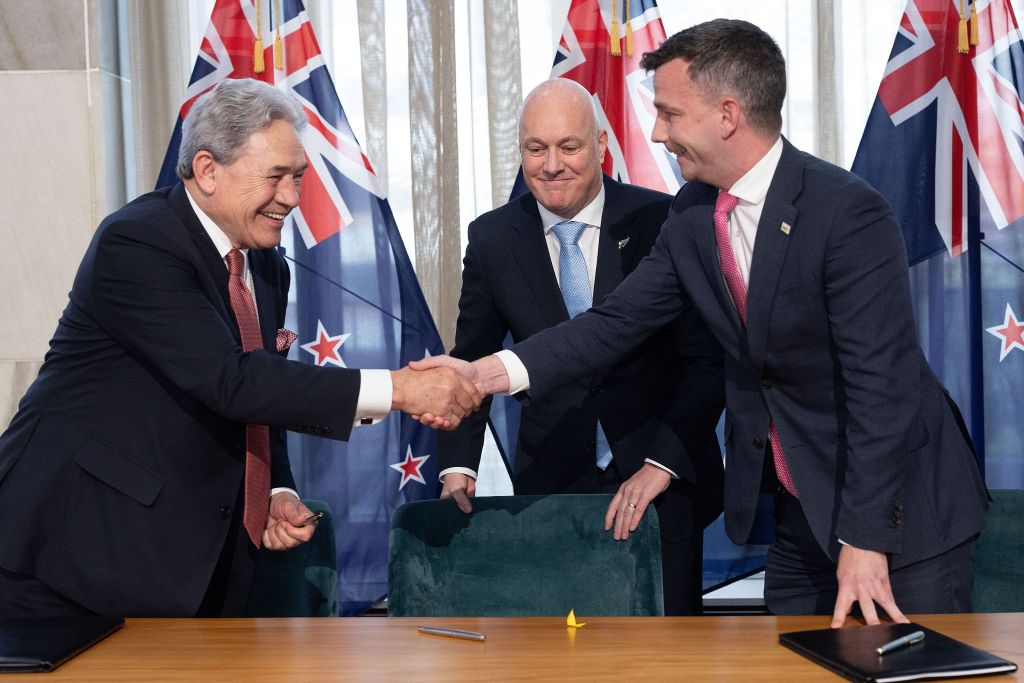
Mr. Luxon outlined detailed policy agreements with both ACT New Zealand and NZ First on Nov. 24.
The deal with ACT (pdf) specifies the government will “abolish the previous Labor government’s prisoner reduction target.”
Labour had a target to reduce the prison population by 30 percent by 2033—via changes to sentencing—which it had already achieved prior to the October election.
Imprisonment rates in New Zealand fell 30 percent from 213 people per 100,000 people in 2018, to 149 people in 2023, the New Zealand Herald reported in September.
Ahead of the election, former Prime Minister Chris Hipkins said, “We don’t have a target for the next term.”
Mark Mitchell, the new police minister, said prior to the election that for “the last six years, Labour have focussed on emptying out New Zealand’s prisons rather than trying to reduce crime.”
“The result has been unsurprising, with violent crime up 33 percent, serious assaults up 121 percent, gang membership up 70 percent, and two businesses ram raided every day.”
The National Party promised prior to the election to “restore law and order” and ensure offenders faced consequences.
National Party’s Agreement With ACT
The agreement with ACT includes a section focused on “restoring law and order and personal responsibility.”
In addition to removing the prisoner reduction target, the new government will boost funding for the Department of Corrections to make sure there is enough prison capacity.
In addition, the three-party coalition said it would invest in more youth justice beds, and restore Three Strikes legislation with amendments that strengthen the definition of “strike offences” and will create a “benefit” to encourage guilty pleas.
The Sentencing Act 2002 would also be amended to “ensure appropriate consequences for criminals.”
This includes providing more weight to victims needs and communities rather than offenders. The electronic monitoring regime will also be tightened.
Firearms Law Reform is also on the agenda, including a review of whether the “Firearms registry is effectively improving public safety,” by June 2024.
New Zealand National won 48 seats in the election, while the ACT received 11, and the nationalist NZ First gained 8 seats.
This provides the tri-party coalition with a majority of 67 seats in a 122-seat parliament. ACT leader David Seymour and NZ First leader Winston Peters will share the roles of deputy prime minister.
It was very special to this morning be sworn in as Prime Minister with Amanda, Olivia and William behind me.
The support of my family means everything to me and I know they’ll be with me all the way. pic.twitter.com/Ahri78MH46
— Christopher Luxon (@chrisluxonmp) November 26, 2023
 Friends Read Free
Copy
Facebook
Tweet
Friends Read Free
Copy
Facebook
Tweet