
Brent crude shot above $91 per barrel on Aug. 31 after the United States and Iran exchanged hostilities over an island in the Strait of Hormuz.
The price of the benchmark sweet petroleum commodity bubbled up by more than 2 percent in early trading on Aug. 31, hitting a high of $91.4 per barrel at 6:15 a.m. ET, following an American assault on Larak Island.
The United States hit a duo of rocket launchers loaded with sea mines on the tiny landmass, in the first known U.S. strikes on Iran in a month.
“Islamic Revolutionary Guard Corps (IRGC) forces were observed preparing to launch rockets with sea mines into the Strait of Hormuz,” U.S. Central Command (CENTCOM) spokesman Navy Capt. Tim Hawkins told The Epoch Times in an email on Aug. 30.
“U.S. forces are monitoring the area closely and remain prepared to protect the free flow of commerce through this essential waterway,” Hawkins said.
The IRGC said several of its fighters had been killed and injured in the attack on Larak Island, which it labeled an “aggressive act based on desperation,” according to a report by its in-house outlet Sepah News.
“This act will be responded to by the children of Islamic Iran and will result in the punishment of the aggressor,” the IRGC added.
The IRGC also said that in response to the American attack on the island, it had fired on a pair of American air bases in Jordan, Sepah News reported, with its Aerospace Force attacking the King Hussein and Al-Azraq bases in the Hashemite kingdom with ballistic missiles and causing “heavy damage.”
CENTCOM rejected the characterization of its action in the Strait of Hormuz as an “act of aggression,” saying this was “absolutely FALSE” in an Aug. 31 post on X, saying it had moved to prevent the IRGC from placing mines in the waterway.
“U.S. forces took limited, precise action against IRGC minelaying forces posing an imminent threat in the Strait of Hormuz. In essence, Iran created the threat, and the U.S. military eliminated it to protect civilian mariners, commercial shipping, and the free flow of global commerce,” CENTCOM said.
Jordan’s military said it intercepted eight missiles that entered the country’s airspace early on Aug. 31.
Additionally, the United Arab Emirates (UAE) said its air force had engaged a drone over its territorial waters that had come from Iran, the country’s defense ministry said in a post on X the same day.
It did not provide further details on the drone but said that its armed forces “remain on a high state of readiness to address any potential threats, while air defense systems continue to monitor and safeguard the country’s airspace around the clock.”
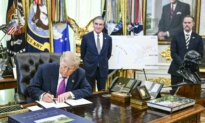
The attack on Karak Island came after U.S. President Donald Trump said in an Aug. 30 Truth Social post that Tehran’s key energy center of Kharg Island, also located in the Strait of Hormuz, is being “blown to smithereens.”
Trump’s brief post was accompanied by an AI-generated video of a man looking out of an aircraft at an explosion and did not elaborate on why he had said the island had been destroyed.
No statements from U.S. forces in the region have yet supported the president’s assertion that the location has been recently attacked.
Commodities analysts at banking group ING, Warren Patterson and Ewa Manthey, said in a commentary on Aug. 31 that the exchange of violence between Washington and Tehran “reinforces concerns about a prolonged stalemate between both sides and, as a result, disruptions to energy flows from the Persian Gulf.”
“Obviously, the key is whether this ignites further rounds of strikes from both sides, and whether it leaves shippers hesitant to navigate the Strait of Hormuz,” they said, adding that Middle East oil producers “have grown more comfortable shuttling crude through the key chokepoint in recent weeks.”
They said reports show between 6 million and 8 million barrels of oil transit the waterway daily, although ING itself put the average at 5 million barrels per day, adding that “further escalation could put these flows under renewed pressure.”
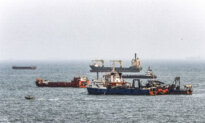
The Strait of Hormuz is a crucial waterway that used to transport one-fifth of the world’s traded oil before the war with Iran began on Feb. 28, which has heavily slowed traffic.
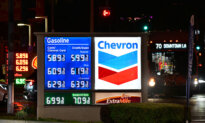
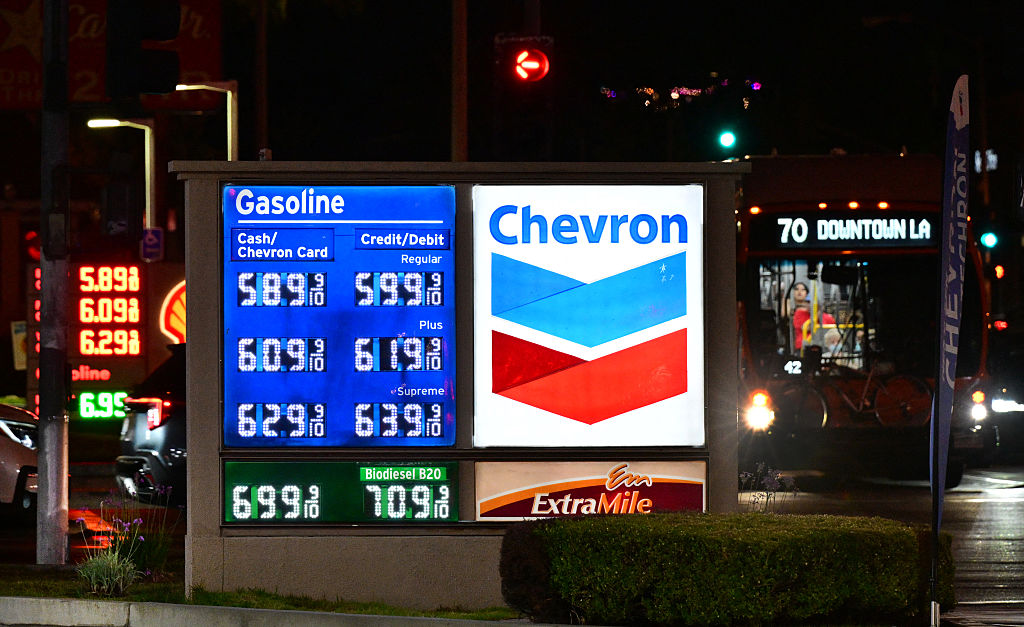
The war sparked uncertainty in the region and raised gas prices worldwide, including in the United States, where the average cost of a gallon of regular gas surged by $1 in one month, rising from $2.98 in late February to $3.98 on March 26.
As of Aug. 31, the nationwide average for a gallon of regular gas cost $4.08, according to data from the American Automobile Association.
 Friends Read Free
Copy
Facebook
Tweet
Friends Read Free
Copy
Facebook
Tweet