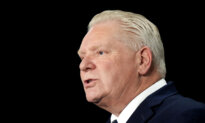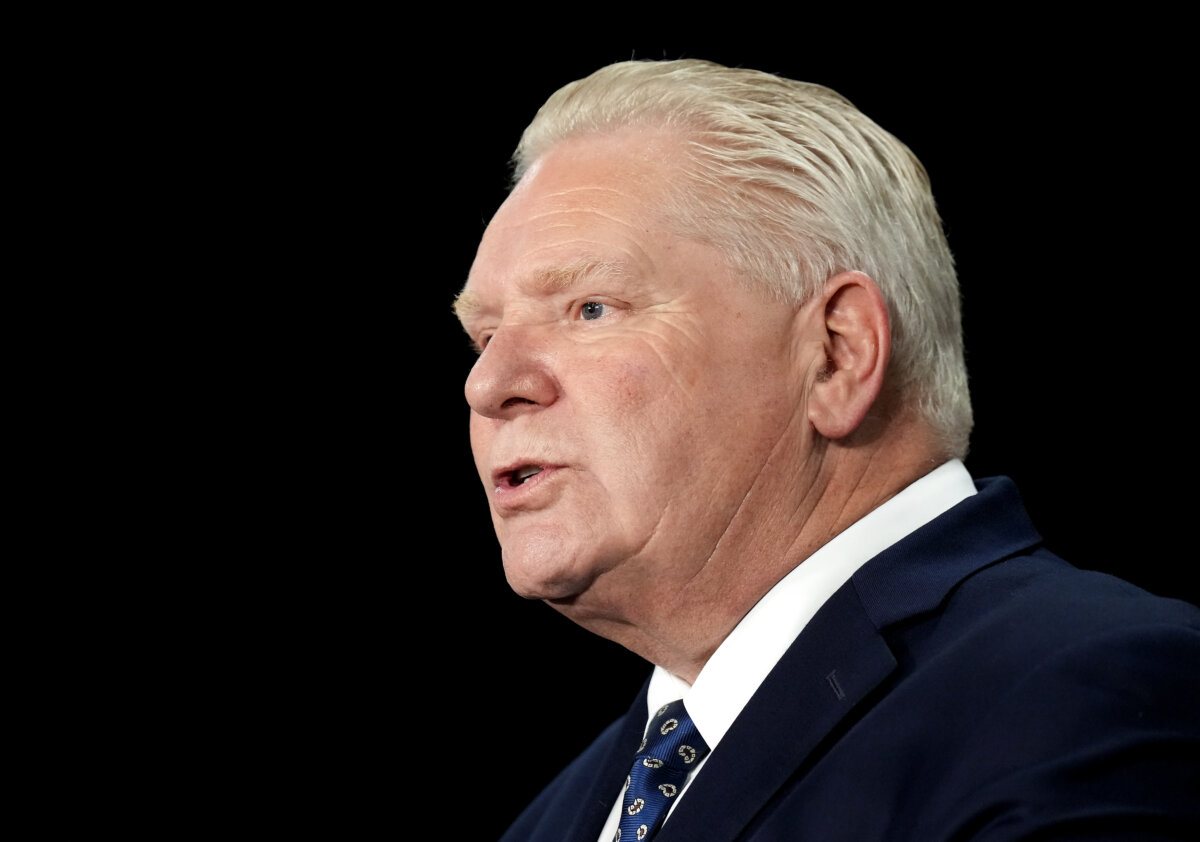
Ontario Premier Doug Ford said he opposes the federal gun buyback program, calling on Ottawa to instead focus on illegally obtained firearms and bail reform in its efforts to make streets safer.
Ottawa has earmarked over $700 million for the buyback program, which launched nationwide on Jan. 19, and has the stated goal of tackling gun crime by compensating gun owners who voluntarily turn in “assault-style” rifles that now fall under the government’s list of outlawed firearms.
Speaking Jan. 21 at an unrelated press conference, Ford said he disagrees that the gun buyback program will make Canadians safer and said the program is “wasting money.”
“Stop wasting money at the federal government,” Ford said. “Let’s start focusing on getting your bail reform that you made a big deal about.”
Ford said the government should focus on passing Bill C-48, the federal bail and sentencing reform legislation that would introduce stricter bail provisions for repeat and violent offenders and expand sentencing options such as consecutive terms. It is one of three bills tabled by the government last fall that have yet to be passed by Parliament and would amend the Criminal Code to toughen how bail and sentencing are applied for certain serious offences
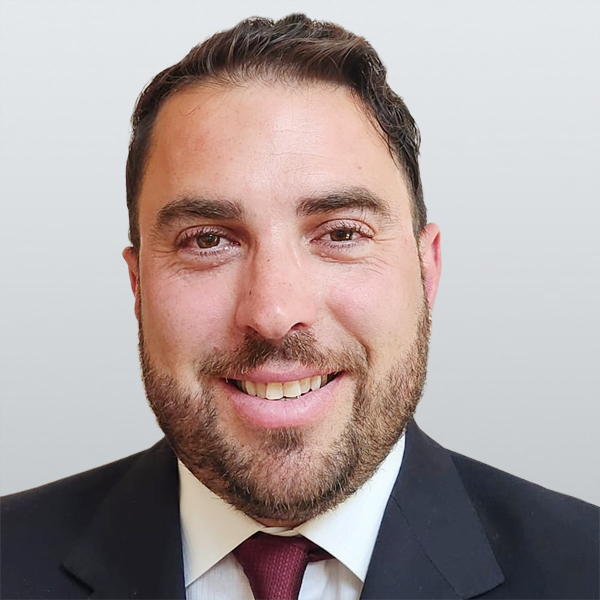
Ford’s government has long been critical of the federal gun buyback program, with Ontario officials such as Solicitor General Michael Kerzner questioning whether it will effectively address gun violence and noting concerns about enforcement resources.
Ford said in his Jan. 21 remarks that he hears from many Canadians who feel unsafe but has “never” heard them say that the response should be to confiscate legally obtained guns.
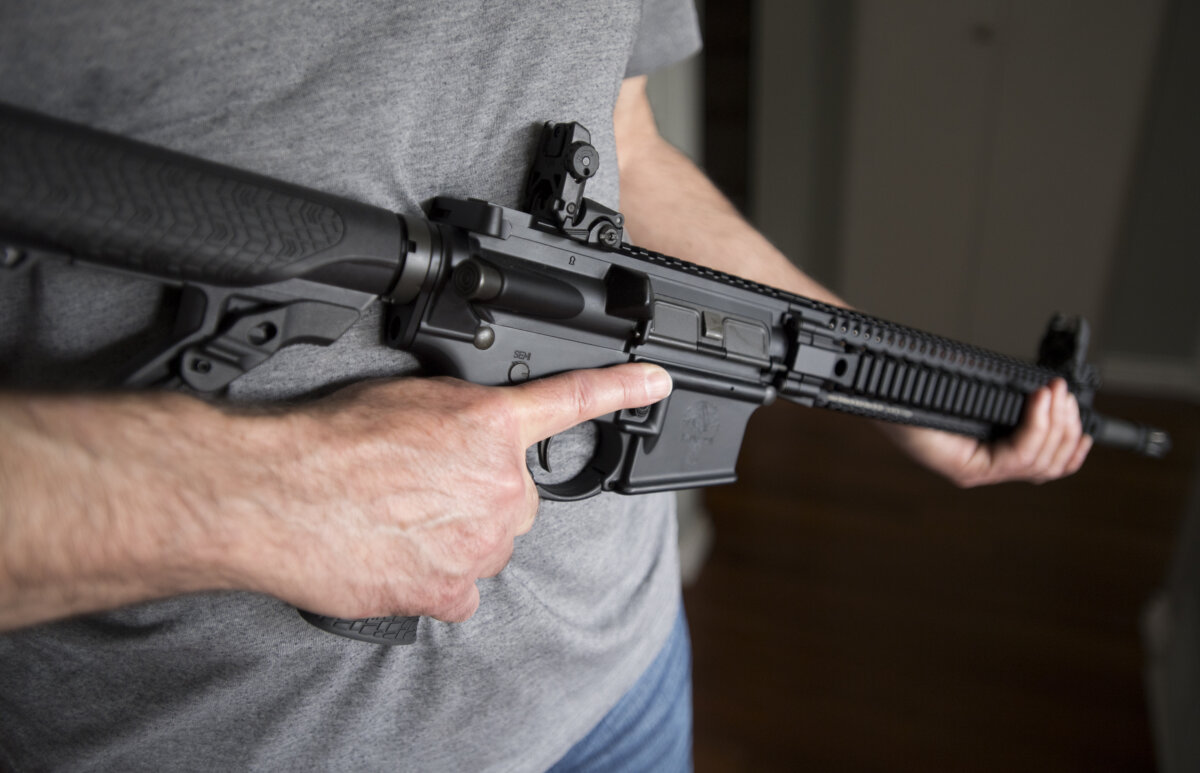
“Imagine if you go and register for your firearms: you think those people are going out and robbing stores and kicking in doors, those are the people? Start focusing on the bad guys, not on the good guys,” Ford said.
Manitoba Premier Wab Kinew also announced on Jan. 16 that his province would not participate in the gun buyback program, saying it “doesn’t appear to be very efficient.”
Alberta, Saskatchewan, and the Yukon have also said they would not enforce the program. Quebec, which has kept a firearms registry since 2016, is cooperating with the program and is slated to receive $12.4 million to cover costs for local police to carry out the gun buyback program according to a Jan. 7 announcement by Public Safety Minister Gary Anandasangaree.
Program Launched
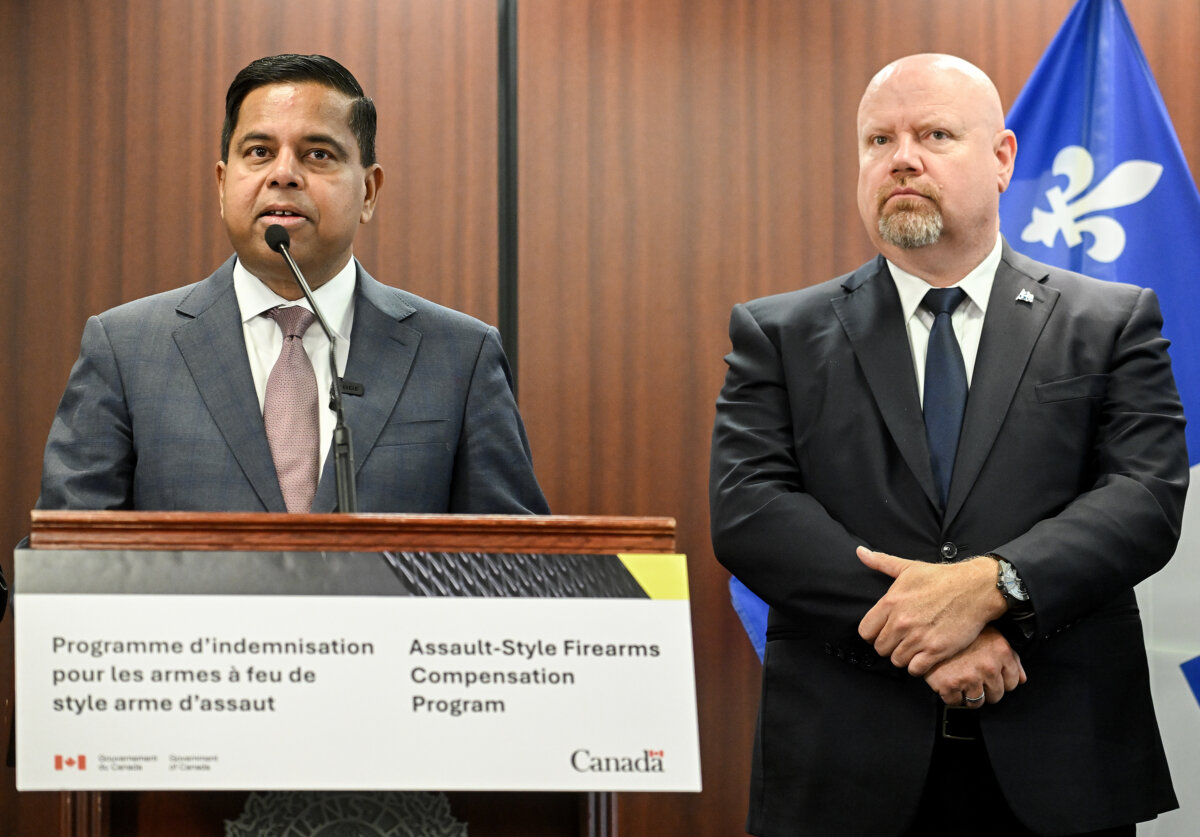
Anandasangaree said in his Jan. 17 announcement on the launch the buyback program that removing “assault-style firearms” from Canadian communities will help tackle gun violence and keep Canadians safe, while also offering compensation to gun owners whose weapons are now outlawed.
“I urge all owners of prohibited assault-style firearms to declare their weapons so they can seek compensation. While participation is voluntary, abiding by the law is not,” he said.
Under the program, eligible gun owners are able to fill out a declaration online and receive compensation for turning in newly banned firearms. Ottawa said the deadline for taking part in the program runs until March 31 and the amnesty period for owning the illegal firearms ends Oct. 30.
In a Jan. 20 notice sent out to owners of Possession and Acquisition Licenses, the RCMP reminded gun owners that banned firearms should be safely stored and can’t be legally used.
“Impacted firearms and devices must be disposed of, or deactivated by the end of the amnesty period on October 30th, 2026,” the notice reads. “If you remain in possession of an impacted firearm following this date, you will be noncompliant with legislation.”
The notice does not mention what law enforcement steps will be taken for those who are not compliant with the legislation by Oct. 30.
A 90-day pilot program in Nova Scotia last fall that aimed to test the buyback process collected 25 firearms from 16 people, falling short of its goal of collecting 200 guns, according to Public Safety Canada. Meanwhile, a pilot program to buy back prohibited firearms from businesses has resulted in 12,000 collected so far and over $22 million given to businesses, according to the RCMP.
Former Prime Minister Justin Trudeau first banned the sale, import and use of around 1,500 kinds of what his government referred to as “assault-style” firearms following a 2020 mass shooting in Nova Scotia. Illegal firearms obtained from the United States were used in the shooting, which left 22 people dead.
The Liberal government has said the newly banned firearms are not needed for hunting or sport shooting and are “designed for military use.”
The ban was later expanded to include over 2,000 models and has since grown to around 2,500.
The 2020 ban announced temporary exemptions for First Nations to exercise their treaty rights in hunting as they required, and for non-indigenous hunters who needed to use the firearms to sustain themselves or their family.
“These exceptions will allow for the continued use of newly prohibited firearms in limited circumstances until a suitable replacement can be found. By the end of the amnesty period, all firearms owners must comply with the ban,” the notice read.
 Friends Read Free
Copy
Facebook
Tweet
Friends Read Free
Copy
Facebook
Tweet