
A Polish judge ruled on Oct. 17 against extraditing a Ukrainian national who is wanted in Germany in connection with the 2022 bombing of a series of underwater natural gas pipelines running between Russia and Germany.
The Ukrainian national, who was identified in court records only as Volodymyr Z. because of German privacy laws, was detained in Poland last month, after the German government issued a warrant for his arrest in June.
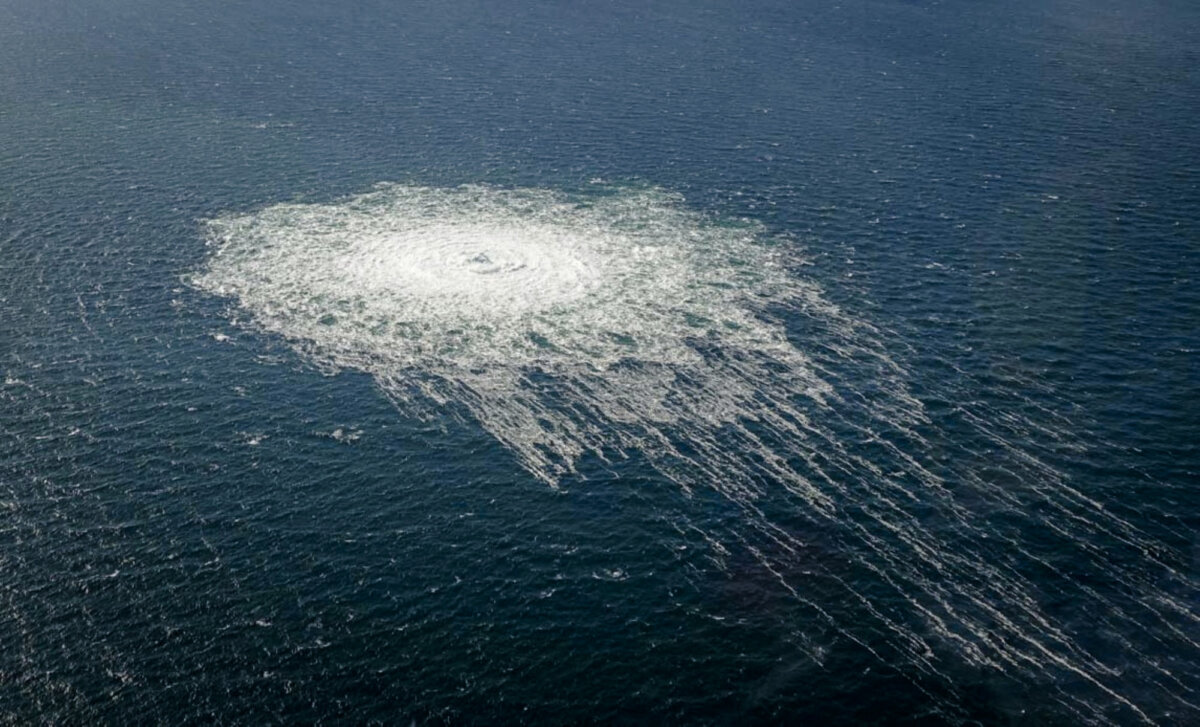
Three underwater gas transit lines were ruptured in a series of blasts on Sept. 26, 2022. The gas transit lines were part of the Nord Stream 1 and Nord Stream 2 pipelines.
Russia’s state-controlled gas company, Gazprom, holds a controlling interest in the two Nord Stream pipeline projects, which operate in partnership with a variety of gas companies headquartered in other European nations.
The 2022 pipeline blasts occurred in the months after Russian forces marched into Ukraine, setting off what has become a costly attritional war between Moscow and Kyiv.
Rendering his verdict on Oct. 17, Polish Judge Dariusz Lubowski concluded that the 2022 attack on the pipelines could be legally excusable.
“The person being prosecuted, if he was the perpetrator, is entitled to functional immunity, which covers an act committed in connection with his activities for the Ukrainian state,” Lubowski said.
Even before Lubowski rendered his decision, Polish Prime Minister Donald Tusk referenced the 2022 attack in a social media post, writing that the problem is not that Nord Stream 2 was targeted but that it was ever built in the first place.
“The Polish court denied extradition to Germany of a Ukrainian national suspected of blowing up Nord Stream 2 and released him from custody,” Tusk wrote in another social media post following the court ruling on Oct. 17. “And rightly so. The case is closed.”
According to an assessment shared by the U.N. Environment Programme in January, the 2022 pipeline blasts in the Baltic Sea resulted in the release of 485,000 metric tonnes (534,621 imperial tons) of methane, a greenhouse gas. This would represent the largest human-caused release of methane.
In August, German prosecutors called on the Italian government to extradite another Ukrainian national, whom they identified as Serhii K., in connection with the 2022 Nord Stream blasts. The extradition case faced a delay this week, as the suspect’s attorneys have argued that the legal classification behind the arrest warrant was faulty.
Reuters contributed to this article.
 Friends Read Free
Copy
Facebook
Tweet
Friends Read Free
Copy
Facebook
Tweet