
A new Senate report is calling for periodic independent reviews of CBC/Radio-Canada’s news content to assess its “fairness and balance.”
The recommendation is one of seven in the June 17 report released by the Senate Standing Committee on Transport and Communications after hearing from more than 60 academics, journalists, media companies, community groups, and CBC employees in 2024 and 2025.
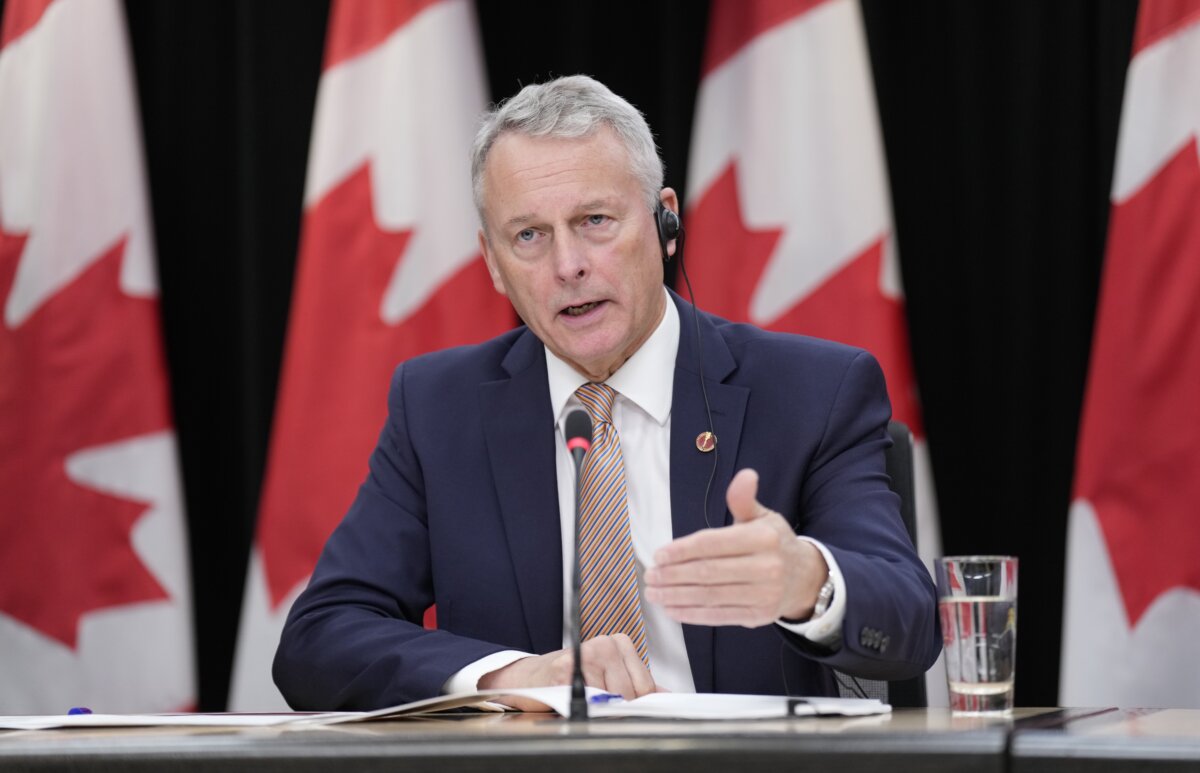
Committee chair Senator David Wells said independent reviews could help boost public confidence in CBC/Radio-Canada news at a time when trust in the media is falling.
“It’s well known that public trust in the media is declining,” Wells said at a June 17 press conference in Ottawa, adding that independent reviews of CBC could help “stem that tide.”
“That should be a part of normal oversight in any government-funded institution,” he said. “I know we have an audit and oversight committee in the Senate that looks at these things, and we have independent people on that committee to do that.”
Committee deputy chair Sen. Donna Dasko said independent reviews could help methodically assess whether CBC News content demonstrates bias.
“Is there bias? Sometimes people make the charge and it’s hard to know what they’re talking about. And if there is this kind of research, I think it helps answer those questions,” she said.
The report says that witnesses raised concerns that CBC’s news coverage may be perceived as politically or ideologically biased.
Critics have charged that the CBC’s reporting demonstrates bias against conservative viewpoints. Conservative Leader Pierre Poilievre has long called for defunding the public broadcaster while suggesting its radio programming should be maintained.
The Senate says an independent review could determine whether these concerns of bias are supported by evidence, and bolster accountability at the state broadcaster, which received $1.41 billion in parliamentary appropriations in fiscal year 2024–25.
The Senate report is advisory and doesn’t compel CBC/Radio-Canada, the federal government, or the Canadian Radio-television and Telecommunications Commission (CRTC) to take action. Several recommendations, including changes to the Broadcasting Act and new reporting requirements, would require legislative or regulatory action.
Other Recommendations
The report also said CBC/Radio-Canada could fill the gap left by a declining local media sector, particularly in remote communities with no dedicated local news outlets.
“As a taxpayer-funded organization, CBC Radio Canada is uniquely positioned to withstand the pressures on the media industry and to serve Canadians with news about the places we call home,” Wells said.
The report notes that CBC/Radio-Canada will create 11 new local bureaus across Canada and recommends that it continue growing. Testimony in the report lists the closure of 521 local news outlets in 347 communities since 2008.
Other recommendations include amending Canada’s Broadcasting Act to require CBC/Radio-Canada to provide fixed amounts of coverage to local and remote communities and publicly report on those efforts during the broadcaster’s next licence renewal.
It also recommends that Parliament commit stable multi-year funding for local programming, back closer collaboration with local and private news outlets, improve investments in official-language minority communities, and bolster the broadcaster’s emergency broadcast capabilities in remote areas.
Controversies
CBC has faced a series of recent controversies regarding allegations of bias in its journalistic operations and programming.
Former CBC journalist Travis Dhanraj, who resigned in 2025, filed a complaint with the Canadian Human Rights Commission alleging that his voice was “silenced” at the CBC after trying to book conservative voices during his tenure as host of the “Canada Tonight” program, and said he was subjected to bullying and harassment.
CBC denies the allegations, saying a number of Dhanraj’s claims are false or misleading.
The CBC came under controversy in May for a now-paused project with the working title “Northland Tales” that featured hoax interviews and media appearances.
Several academics, politicians, authors and retired RCMP officers said they were invited to interviews under false pretences and were then subjected to ridicule or criticism for holding conservative or dissenting views on indigenous relations.
Those who say they were targeted by the program under false pretences include academic Frances Widdowson, Conservative MP Aaron Gunn, OneBC MLA Dallas Brodie, author Lindsay Shepherd, as well as a group of retired RCMP officers.
CBC paused the program for review amid the controversy, emphasizing that the project between CBC and the Aboriginal Peoples Television Network was being carried out by its entertainment division and was not connected to its news services.
 Friends Read Free
Copy
Facebook
Tweet
Friends Read Free
Copy
Facebook
Tweet