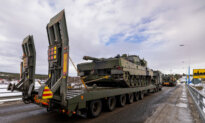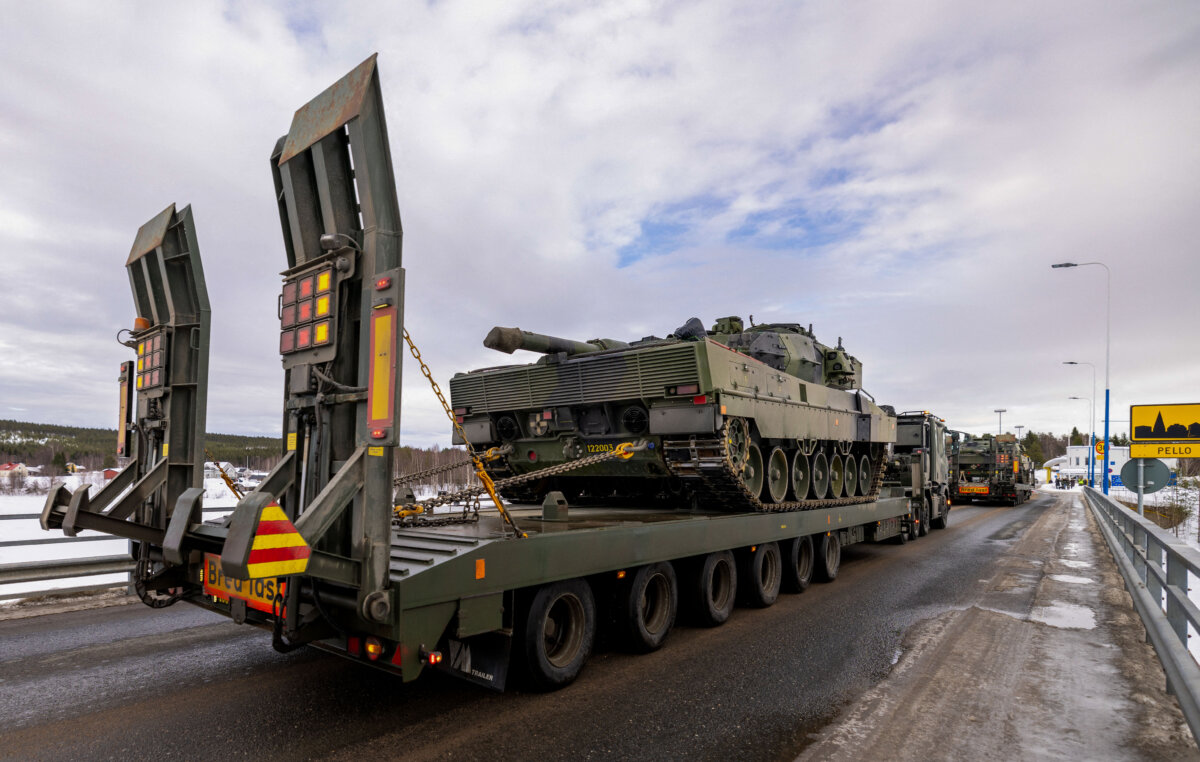

Sweden unveiled a new strategy for the Arctic Circle on June 1, amid what it described as the “most serious” security situation since World War II.
The announcement comes amid increased concern in the region over threats posed by Russia and China.
Swedish Foreign Affairs Minister Maria Malmer Stenergard said that Stockholm’s role in the region was “a matter of both foreign and domestic policy” when she announced the move at the Defense Museum in the northeastern town of Boden.
“The new Arctic Strategy reflects the serious security situation and increased international interest in the region,” Stenergard said. “For us as an Arctic state, this means a special responsibility and greater Swedish influence.”
In a June 1 post on X, Stenergard noted that in the region, “climate change, the security policy situation, and economic interests are closely interconnected, placing the Arctic in increased geostrategic focus.”
“The goal of Swedish Arctic policy is a peaceful and secure Arctic, with sustainable and resilient communities and reduced environmental and climate impact,” she added.
The Ministry of Foreign Affairs said its membership in NATO, which Stockholm joined in 2024, had led to the country having a “new role” in the region, saying that the alliance’s deterrence and defense in the strategically important area is “enhanced” by Sweden and Finland—which joined at the same time as its western neighbor—being members.
“Sweden’s geographical location also enhances the security policy link between the Baltic Sea, the High North, and the Arctic,” the ministry said. “It also offers increased opportunities for cooperation with other Arctic countries in NATO.”
The policy identifies Russia’s military build-up and hybrid activities as the main threat in the region and rests on five pillars, with the most prominent being bolstering security and stability through stronger defense capabilities and NATO cooperation in the High North.
Additionally, the new policy aims to promote sustainable economic development, particularly in critical minerals, shipping, and fisheries; protect the environment; advance research and strategic infrastructure, such as polar research and connectivity projects; and support Sami and indigenous rights.
It was presented to the Riksdag (Swedish Parliament) for consideration on June 1, the ministry said.
Sweden’s announcement of its new Arctic strategy comes months after NATO launched a wide-scale military exercise, “Arctic Sentry,” in the Arctic and High North regions in February amid concerns over China and Russia’s threat to the area.
Sweden and fellow Scandinavian member state Denmark both announced that they would contribute fighter aircraft to that mission the same month.
The move also comes at a time of heightened concern among the Eastern European and Baltic states about the threat posed by Russia, with numerous member states in the region calling for increased defenses.
The leaders of Bulgaria, the Czech Republic, Estonia, Latvia, Lithuania, Poland, Romania, Slovakia, and Hungary—the so-called Bucharest Nine group—and the Nordic nations of Denmark, Finland, Iceland, Norway, and Sweden all said “repeated airspace violations on the Eastern Flank” highlight the urgent need to consolidate the alliance’s air defenses against missiles and drones, in a joint statement on May 13.
“Russia is and will remain the most significant, long-term and direct threat to Allies’ security,” the statement reads.
A Russian drone injured two people in southeastern Romania during the night of May 28 to May 29.
The incident, which occurred during one of Moscow’s overnight aerial attacks on Ukraine, marked the first time during the more than four-year-long war that a drone had hit a densely populated area in Romania and caused injuries.
That incursion prompted widespread condemnation of Russia from across Europe, after a spate of other drone-related incidents over the skies of the Baltic and Eastern Europe.
 Friends Read Free
Copy
Facebook
Tweet
Friends Read Free
Copy
Facebook
Tweet