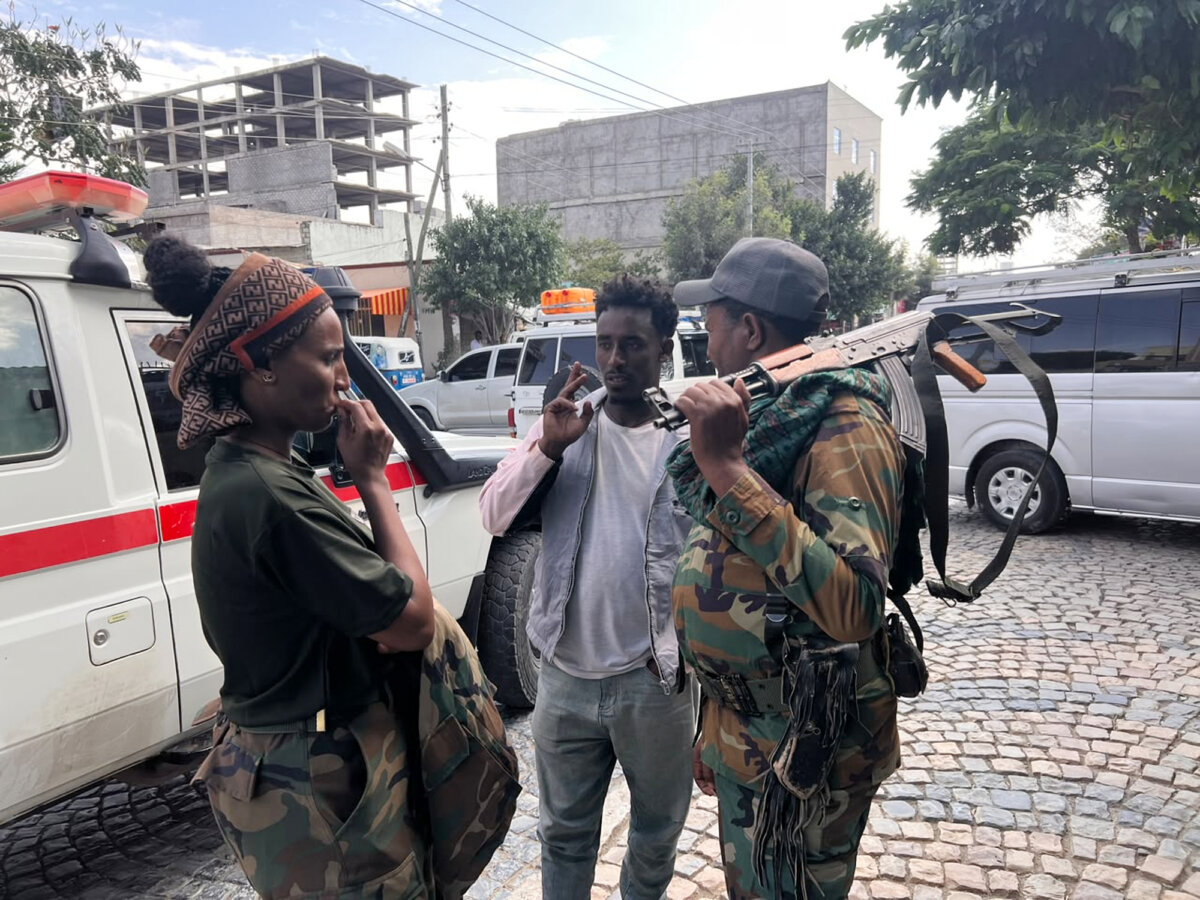

Fighting continued on Monday in northern Ethiopia’s Tigray region, where advancing federal forces and their allies clashed with regional rebels amid rising concern that neighboring Eritrea could be drawn into the conflict.
The Ethiopian National Defence Force and the allied Tigray Peace Force successfully retook the regional capital, Mekelle, over the weekend, following a withdrawal by the Tigray People’s Liberation Front (TPLF).
On Oct. 1, Eritrea severed all diplomatic ties with Ethiopia, as tension grew in the region, which is on the opposite side of the crucial Bab el-Mandeb strait from Yemen, where the government began a fresh offensive against the Houthis on Sunday.
The U.S. State Department issued a statement on Saturday saying the conflict in the Horn of Africa “jeopardizes ongoing U.S. collaboration on shared interests” with both Ethiopia and Eritrea.
“We strongly urge Ethiopia and Eritrea to respect the sovereignty and territorial integrity of their neighbors, exercise maximum restraint, and return to dialogue and cooperation as agreed in their 2018 peace framework,” the U.S. State Department’s senior adviser for Arab and African affairs, Massad Boulos, posted on X on Monday.
In a previous war, between 2020 and 2022, between the TPLF and the Ethiopian government, Eritrea backed Addis Ababa, but it now appears to have switched sides.
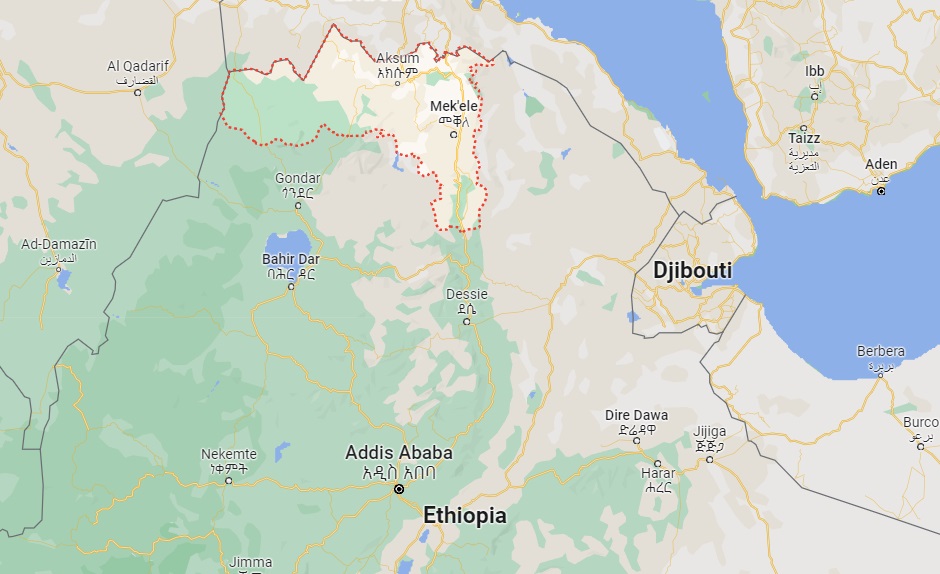 Ethiopia’s Tigray region, which borders Eritrea to the north, on Oct. 5, 2022. (Google Maps/Screenshot via The Epoch Times)
The TPLF announced on Sept. 20 that it had made an alliance with six other armed groups to overthrow the government of Ethiopian Prime Minister Abiy Ahmed, whose Prosperity Party won a national election in June. Then, in a Facebook post on Sept. 23, the TPLF said it was launching a “defensive war” against intensifying Ethiopian attacks.
Egyptian President Abdel Fattah el-Sisi held a summit in the town of El Alamein at the weekend with Eritrean President Isaias Afwerki, Sudanese army chief Gen. Abdel Fattah al-Burhan, and Somalian leader Hassan Sheikh Mohamud.
Joint Declaration Excludes Ethiopia
On Sunday, those four countries produced the El Alamein Joint Declaration, in which they affirmed “the principle of freedom of navigation and that the governance of the Red Sea is the exclusive responsibility of the littoral states.” That would exclude Ethiopia, which does not have a coast.
“Emphasizing the importance of respecting international law regarding transboundary rivers—including the Nile River—particularly the principle of ‘no harm’ and the obligation to cooperate through prior notification, consultation, and consensus; and categorically rejecting any unilateral measures that harm the existing water uses of the two downstream Nile states,” the declaration added.
In an apparent response to the declaration, the Ethiopian Foreign Ministry published a statement on X on Monday in which it said it needed to be included in any discussions about “maritime affairs and security architecture” in the Red Sea, even though Ethiopia has not had a coastline since Eritrea became independent in 1993.
The foreign ministry also stated that 85 percent of the waters of the river Nile—which passes through neighboring Sudan and Egypt—originate in Ethiopia.
“These geographical and historical realities cannot be altered by political rhetoric, coercive measures, or acts of destabilization,” it said.
Ethiopia Rejects ‘Zero-Sum Approaches’
“Ethiopia stands ready to defend its sovereignty, territorial integrity, and core national interests, while urging all regional actors to address shared challenges through constructive dialogue, partnership, and adherence to the principles of good neighborliness rather than confrontation and zero-sum approaches,” the ministry said.
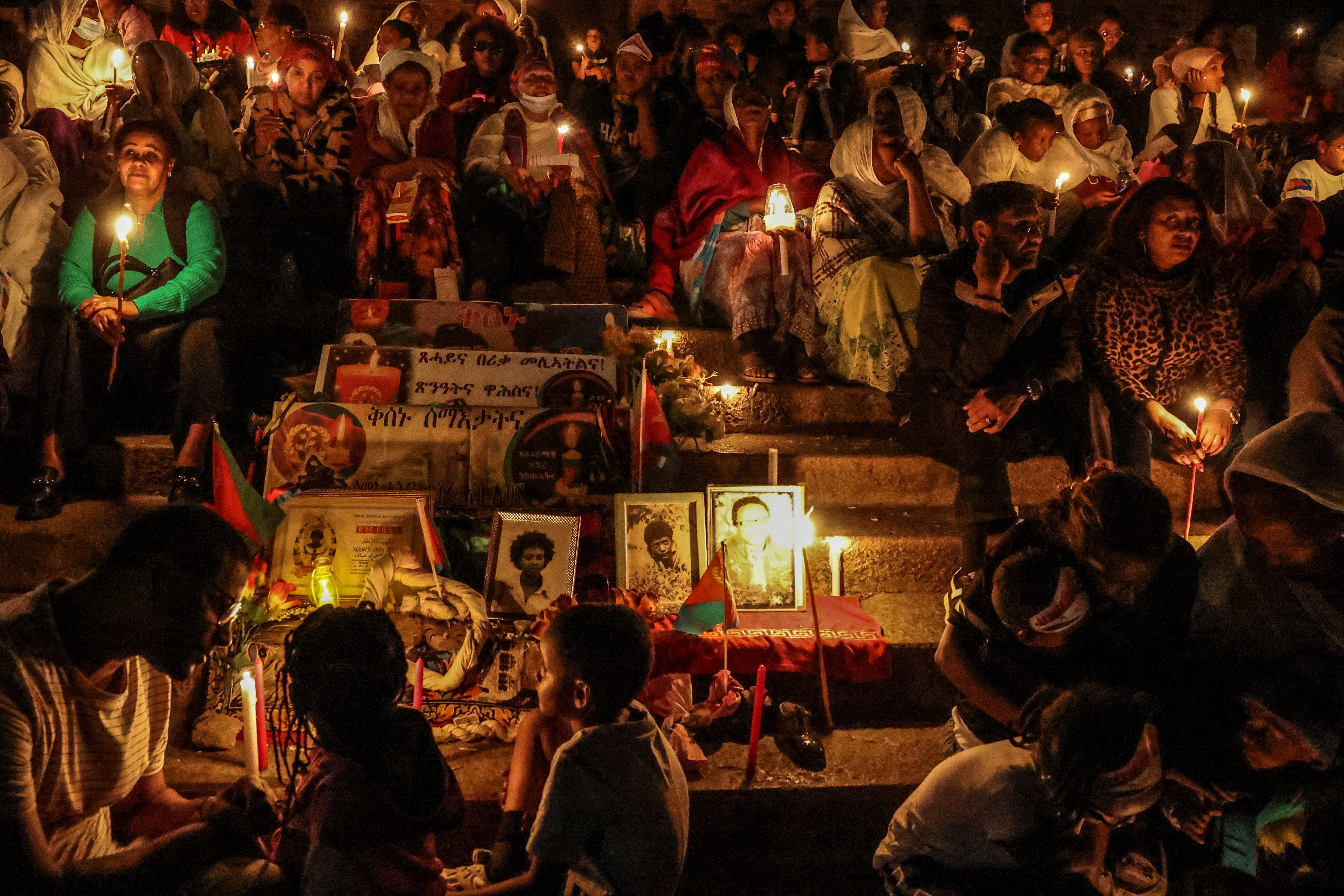 People hold a vigil for Eritreans—who lost their lives during the country’s war of independence—in Asmara, Eritrea, on June 19, 2026. (Monicah Mwangi/Reuters)
Eritrea, a former Italian colony, was federated with Ethiopia in 1952 before being annexed by Ethiopia in 1962, prompting the Eritrean People’s Liberation Front and other groups to fight a long war to gain independence from Addis Ababa. Eritrea’s ownership of the Red Sea coast leaves Ethiopia completely landlocked.
The two countries later fought a border war over the so-called Badme triangle from 1998 to 2000.
A former U.S. assistant secretary of state for Africa and U.S. ambassador to Ethiopia, Tibor Nagy, described the El Alamein Joint Declaration in a post on X as “hypocrisy.”
“These four ‘leaders’ claim that only littoral states have any say over the Red Sea but on Nile use want downstream nations to have equal control. Ethiopia contributes most water to Nile and had Red Sea ports for millennia!” Nagy wrote.
Rashid Abdi, a Nairobi-based researcher, said Ethiopia and Eritrea were locked in what he called a “mutuality of strategic regret,” in a post on X on Tuesday.
In the past four years, Ethiopian Prime Minister Abiy Ahmed has consistently framed the independence of Eritrea and the decision to cede the Red Sea coast as a catastrophe for the Ethiopian state and a strategic blunder that must be corrected, Abdi wrote.
Reuters contributed to this report.
 Friends Read Free
Copy
Facebook
Tweet
Friends Read Free
Copy
Facebook
Tweet