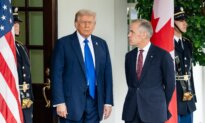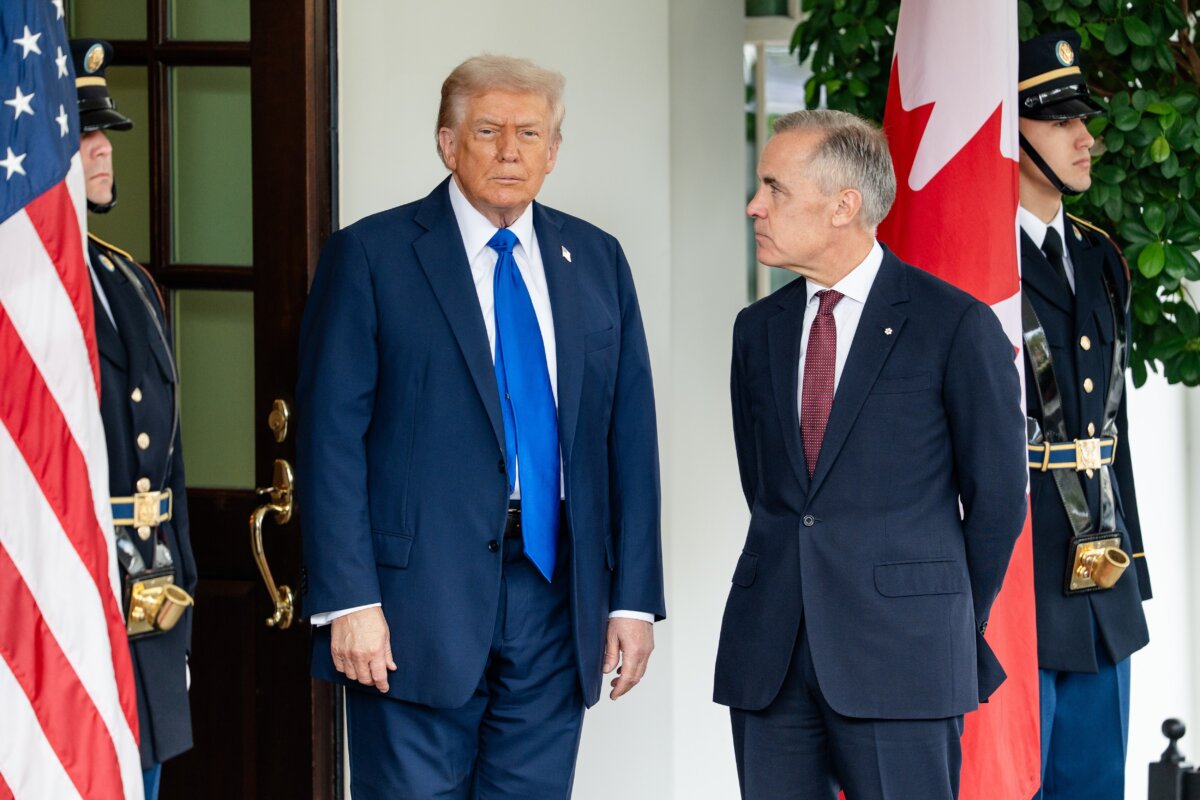

U.S. President Donald Trump referred to Prime Minister Carney as the “future Governor of Canada” on March 10 in a Truth Social post about working together with state governments to stop the environmental destruction caused by an invasive fish species.
Trump said he was working with Michigan Governor Gretchen Whitmer to “save the Great Lakes” from the Asian carp, which has been spreading in North America.
“I’ll be asking other Governors to join into this fight, including those of Illinois, Wisconsin, Minnesota, Pennsylvania, Ohio, Indiana, New York and, of course, the future Governor of Canada, Mark Carney, who I know will be happy to contribute to this worthy cause,” Trump added.
For several decades, Asian carp have been migrating from the Southeastern United States toward the Mississippi River and the Midwest region. The fish can outcompete native fish populations for food, as they can eat up to 10 percent of their body weight each day in plankton, which serves as the base of the food web in the Great Lakes.
Trump also said he would work to “save” the Great Salt Lake in Utah, which has been losing water for decades, “on top of everything else I am doing.”
The U.S. president’s post about Carney comes two days after the two leaders held a phone call, which the Prime Minister’s Office (PMO) said covered a “range of issues” like the economy, bilateral trade relations, and the U.S.-Iran War.
The PMO said the two leaders “agreed to remain in close contact,” during their March 8 call. The U.S. side issued no readout of the call, and Trump did not comment publicly on it.
Tensions between Carney and Trump have been elevated since the two leaders criticized each other’s policies in public speeches at the World Economic Forum in Davos, Switzerland, in late January. Carney criticized U.S. moves to take over Greenland in his speech on Jan. 20, and called for countries to not comply with unnamed “great powers,” saying the rules-based international order has undergone a “rupture.” He urged middle powers to band together to resist pressure from major powers, without specifying who the major powers are or making any distinctions.
This led Trump to say the following day that Carney “wasn’t so grateful” toward the United States, and that Canada “lives because of the United States.”
Trump also called Carney the “governor” of Canada in a Truth Social post on Jan. 24, saying “if Governor Carney thinks he is going to make Canada a ‘Drop Off Port’ for China to send goods and products into the United States, he is sorely mistaken.”
Trump threatened to impose 100 percent tariffs on Canada if it made a deal with China, which he said would “eat Canada alive.”
On Jan. 16, the Liberal government announced that Canada would reduce its tariffs on Chinese EVs from 100 percent to the “most-favoured-nation” tariff rate of 6.1 percent on 49,000 EVs per year, following a meeting between Carney and Chinese officials in Beijing.
The PMO said that in exchange for Canada cutting tariffs on EVs, it expects China to lower tariffs on Canadian canola to a combined rate of 15 percent from the current levels of roughly 85 percent “until at least the end of this year.” The PMO also anticipated Canadian canola meal, lobsters, crabs, and peas will not be subject to “relevant anti-discrimination tariffs” from March 1 until the end of the year.
Beijing announced on Feb. 27 the suspension of the 100 percent tariffs on Canadian canola meal and pea imports, and the 25 percent tariffs on lobster and crab, until the end of 2026.
 Friends Read Free
Copy
Facebook
Tweet
Friends Read Free
Copy
Facebook
Tweet