
A senior United Arab Emirates (UAE) official said the UAE could support any U.S.-led effort to secure the Strait of Hormuz, a key waterway for global oil supplies.
Anwar Gargash, diplomatic adviser to the president of the UAE, suggested that the country would aid multinational efforts targeted at opening the narrow waterway and ensuring that it is safe for ships.
“I can see us, for example, playing a role with other countries in ensuring the safety and security of the Strait of Hormuz,” Gargash said in an interview with American think tank the Council on Foreign Relations on March 17. “It is an international water. It’s been like that since the 15th and 16th century. And I think we all have a responsibility to ensure the flow of trade, the flow of energy, and so on and so forth.”
“This is something that is in the interests of everybody,” he said. “Everybody has a responsibility.”
The senior official also said UAE is not currently engaging in diplomacy with Iran.
Gargash has also taken to social media to criticize Iran’s actions in the region.
“The Iranian strategy, which reflects its inability to confront American and Israeli strikes by targeting Arab Gulf states, reveals a military impotence, a moral bankruptcy, and a political isolation,” he said in an X post on March 14. “Misleading media statements will not cover up this reality. A return to sound judgment begins with halting the targeting of neighbors and activating their mediation efforts.”
“And in the UAE, we prove every day that our steadfastness is stronger than the aggressor’s hatred,” he said.
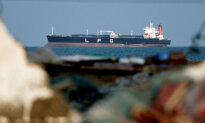
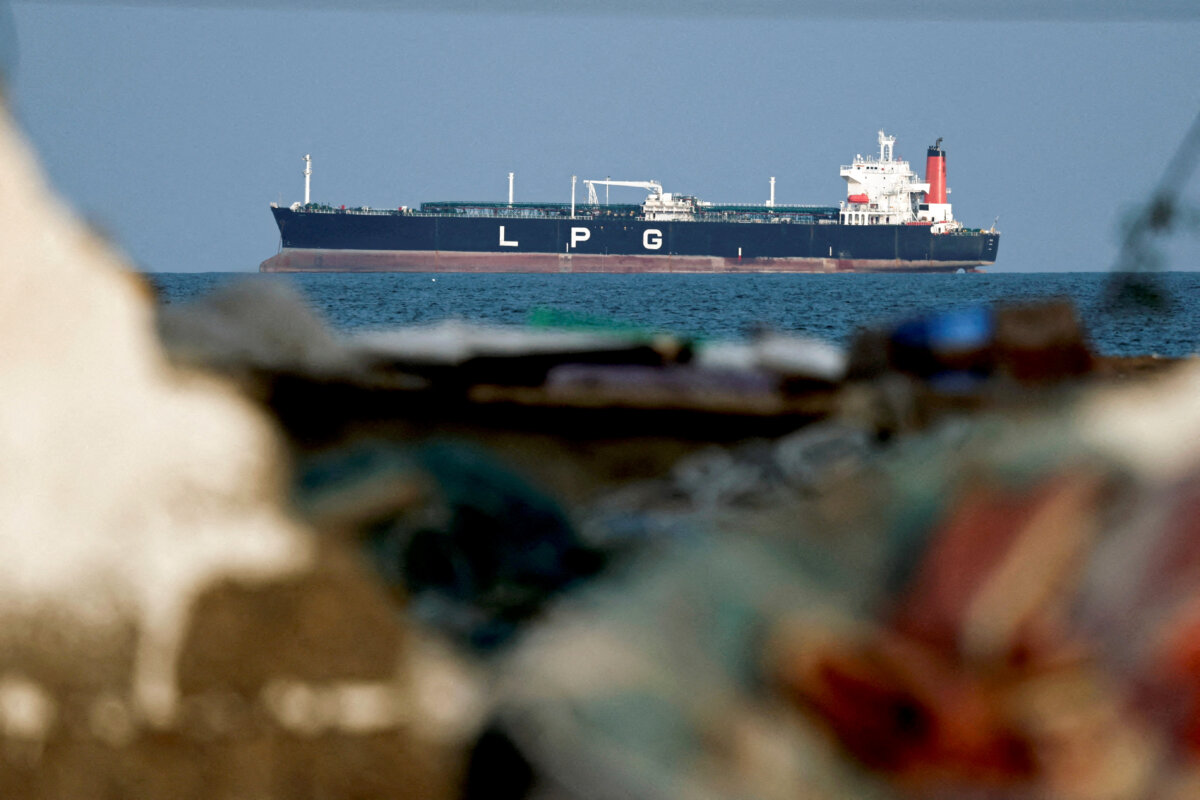
The Strait of Hormuz, linking the Persian Gulf to the Gulf of Oman, handles approximately 20 percent of the world’s oil shipments.
U.S. and Israeli operations in the region have caused concern over energy market volatility, as shipping traffic has fallen off because of security risks. Recent incidents include projectiles hitting several commercial ships, fires on vessels, and Iranian forces facing off against an international naval presence.
The Trump administration has said it is looking to have the U.S. Navy escort tankers through the strait and to provide government-backed insurance to protect maritime trade security. U.S. President Donald Trump has also asked nations that depend on the route to assist with its protection, and he has said that some nations have committed to join, while others have not.
Trump wrote on Truth Social on March 17, “The United States has been informed by most of our NATO ‘Allies’ that they don’t want to get involved with our Military Operation against the Terrorist Regime of Iran, in the Middle East, this, despite the fact that almost every Country strongly agreed with what we are doing, and that Iran cannot, in any way, shape, or form, be allowed to have a Nuclear Weapon.”
Gulf states, including the UAE, Saudi Arabia, Bahrain, and Kuwait, have intercepted Iranian missiles and drones targeting the region. The United States has led operations against Iranian naval assets, including the demolition of mine-laying boats near the strait.
The United States and partners have underscored deterrence efforts against attempts to close or disrupt the passage, as prolonged tensions in the region could drive oil prices higher.
“In the near term, oil markets will likely remain dominated by risk premiums tied to shipping security and military developments in the Gulf,” Peter Earle, director of economics and economic freedom at the American Institute for Economic Research, told The Epoch Times earlier this month.
“If crude remains near or above the $100–$120 range, gasoline prices in the United States could rise noticeably within a few weeks as higher wholesale costs filter through to retail markets.”
 Friends Read Free
Copy
Facebook
Tweet
Friends Read Free
Copy
Facebook
Tweet