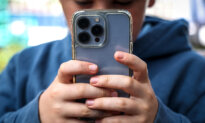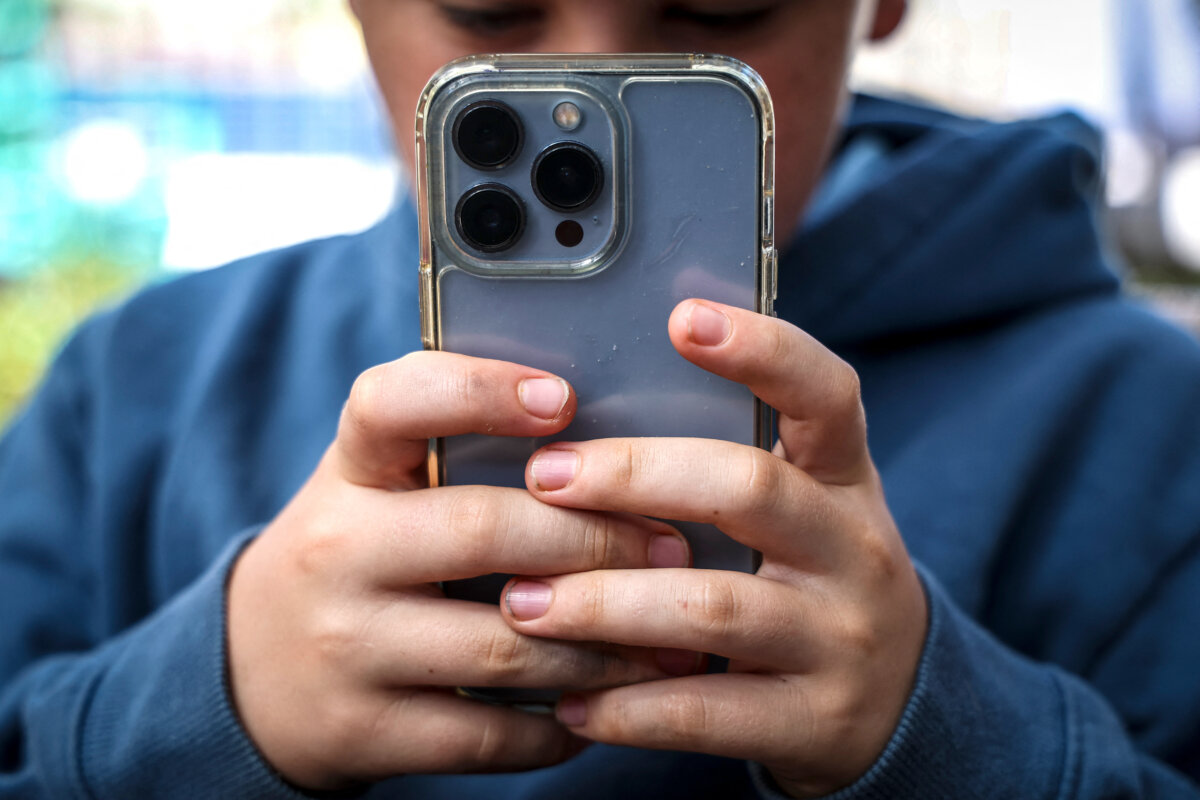

The UK government said on March 25 that it is launching a first-of-its-kind trial to test whether social media bans, time limits, and digital curfews can improve children’s lives.
Six-week pilots running across the UK will involve 300 families to test which measures work in practice before the government decides on a national policy, officials said in a statement.
Technology Secretary Liz Kendall said that the government was committed to building policy on real-world evidence.
“These pilots will give us the evidence we need to take the next steps, informed by the experiences of families themselves,” Kendall said.
The pilots run alongside a separate national consultation on children’s digital wellbeing. Nearly 30,000 parents and children have responded to the ongoing consultation, according to the government.
Families who sign up for the pilots will be split into four groups, each testing a different restriction.
The first group will use parental controls to block selected social media apps entirely.
The second group will cap daily use of popular platforms, including Instagram, TikTok, and Snapchat, at one hour. A third group will block access between 9 p.m. and 7 a.m., leaving the apps available before and after school.
A fourth group will serve as the control. Those families will make no changes to their children’s social media habits.
Researchers will interview both children and parents at the start and end of the trial to understand how restrictions affect sleep, schoolwork, and family life.
Officials are also asking participants about practical obstacles, such as whether parental controls are easy to set up, and whether teenagers find ways around them.
While the pilots and consultation run their course, the government launched a campaign called “You Won’t Know Until You Ask.” It aims to give parents immediate, practical tools to talk to their children about what they see online.
The campaign draws on behavioral research and academic insights. It offers guidance on safety settings, age-appropriate conversation starters, and advice on tackling harmful content, including what officials described as ragebait and misogynistic material.
The government and a panel of academics will review the data and responses to the public consultation, which closes on May 26.
On Jan. 21, the UK government was defeated in the House of Lords on an amendment that would have banned social media for under-16s. The government opposed the clause.
When the bill returned to the House of Commons on March 9, the Lords’ amendment was rejected. Government amendments were passed instead, giving ministers powers to require internet service providers to block or restrict children’s access to specific online platforms and features.
The bill was scheduled to return to the House of Lords on March 25.
Global Push
The UK pilots follow a wave of similar moves globally. Australia became the first country to legally ban social media for children under 16 in December 2025. France, Greece, Denmark, Spain, and Slovenia have since announced plans for comparable bans.
In the United States, no federal law has yet been enacted, while some states have enacted legislation to limit minors’ use of social media.
As of February 2026, at least 17 states, including Florida and Nebraska, had adopted laws addressing minors’ access to or treatment on social media or “addictive feeds,” according to the Age Verification Providers Association (AVPA).
Some laws are currently enforceable, while others have been blocked by court injunctions, and some have been enacted but are not yet in force or are awaiting rulemaking, AVPA states on its website.
 Friends Read Free
Copy
Facebook
Tweet
Friends Read Free
Copy
Facebook
Tweet