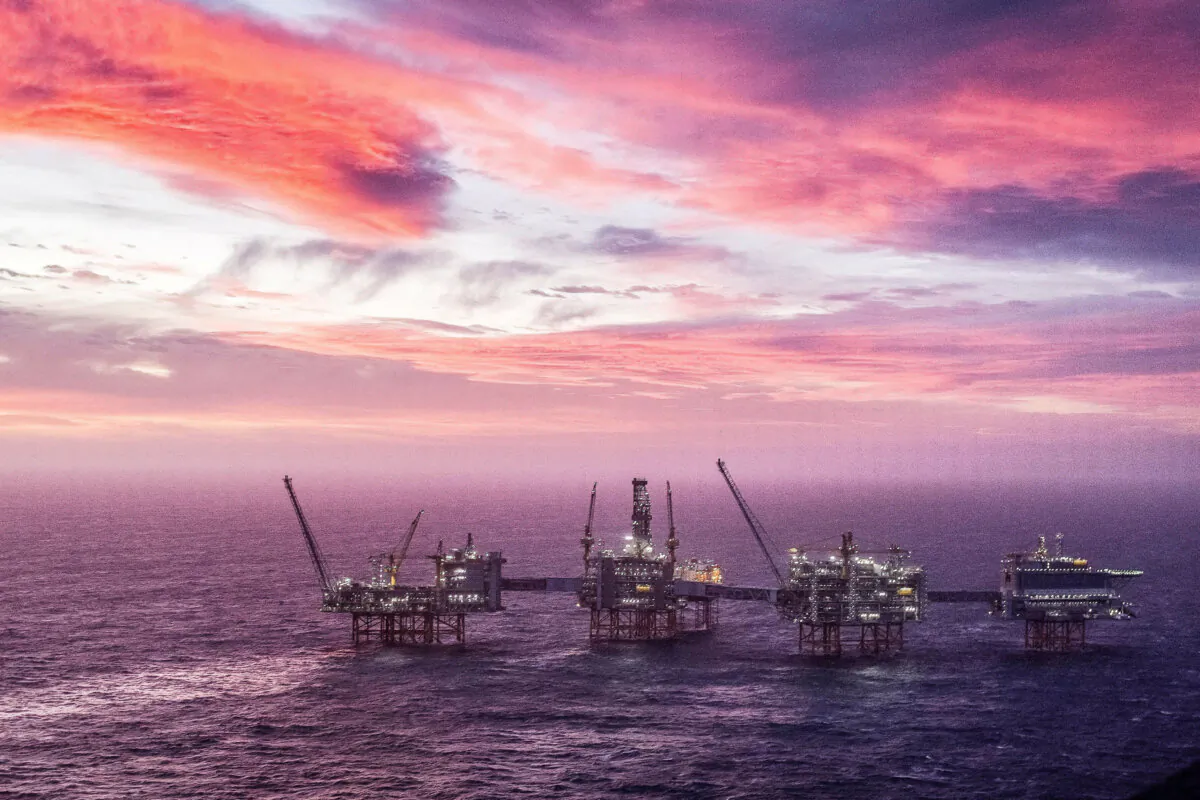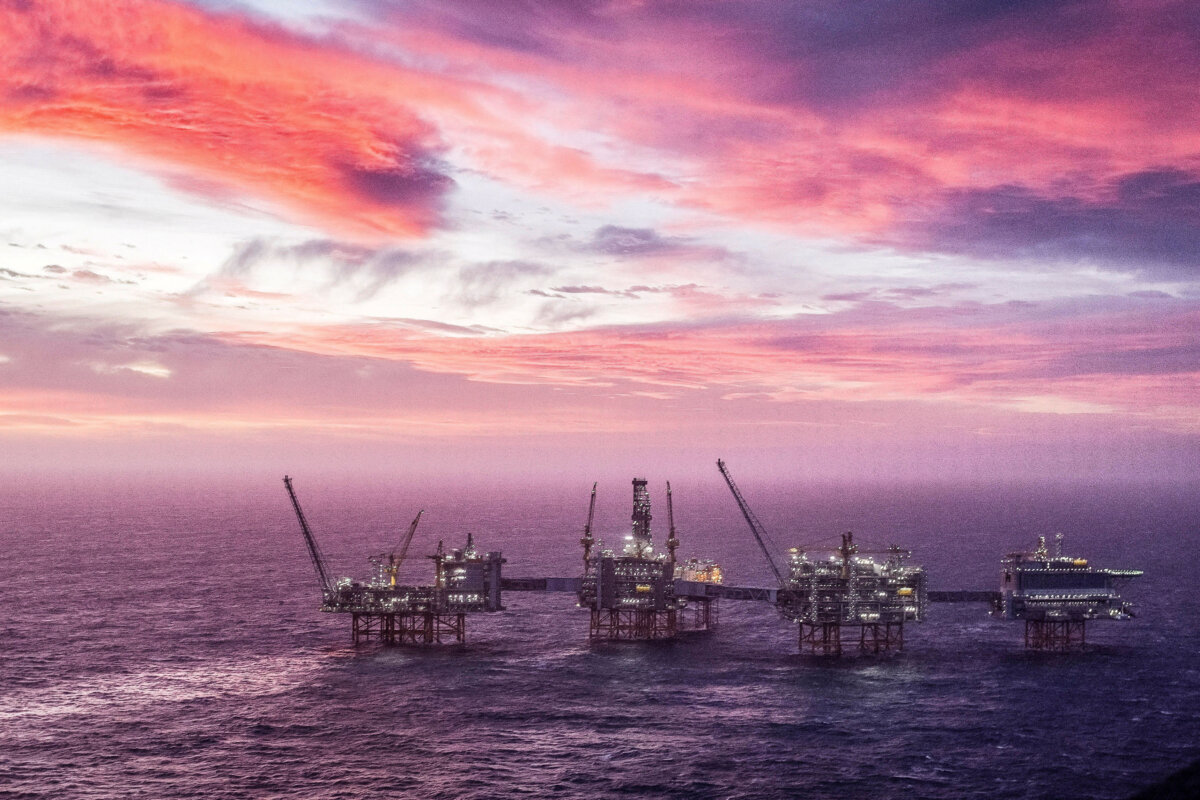

A combination of restrictive licenses, tax hikes, deepening investment uncertainty, and lack of political support for the oil and gas industry leaves the North Sea—a vital national asset for the UK—at risk of becoming a stranded opportunity, according to industry analysts and energy companies.
During his visit to Scotland last week, U.S. President Donald Trump described the oil and gas reserves in the North Sea as a “treasure chest” that the UK should urgently unlock.
His message was clear: Drill more, reduce taxes, and reap the economic rewards.
It lands in the political reality of the UK’s Labour government, which is holding firm on its climate commitments, including reaching net zero by 2050 and banning new oil and gas licenses in the North Sea.
Once responsible for meeting more than half of the UK’s oil and gas needs, the North Sea still holds significant potential, with an estimated 7.5 billion barrels of oil and gas remaining in UK waters.
Yet according to the North Sea Transition Authority (NSTA), current forecasts suggest the North Sea will not produce even 4 billion barrels, meeting under a third of the 13 to 15 billion barrels the UK is expected to use between now and 2050, even if all climate targets are met.
Companies operating in the North Sea face a tax on energy profits on top of existing taxes. Initially set at 25 percent by the Conservative Party in 2022, the Energy Profits Levy rose to 38 percent under Labour and is due to end on March 31, 2030.
Industry stakeholders have criticized the imposed levy, one of the highest globally, for discouraging investment and risking UK energy security.
Steve Brown, CEO of Orcadian Energy, which holds four licenses, three of them in the UK sector of the North Sea, told The Epoch Times that the current tax regime is undermining innovation and threatening the future of a long-established industry.
“It is time for the government to stop killing the golden goose—change the tax system so that innovators and risk-takers are rewarded, and unleash the capabilities of our industry, rather than prematurely shutting down what has been a vibrant sector since BP first produced gas from the West Sole gas field in 1967,” Brown said.
UK’s Reliance on Imports
UK energy prices spiked following the Russian invasion of Ukraine in 2022, with the cost of gas nearly doubling since the start of that war.
At the Energy Security Summit in April, British Prime Minister Keir Starmer called energy security a matter of national security.
He said that Britain could no longer afford to be exposed to the volatility of global fossil fuel markets. But rather than leveraging the North Sea’s potential, Starmer opted to continue prioritizing “homegrown clean energy,” which he said “is the only way to take back control” of the UK energy system.
Investment analysts, however, warn that the UK’s falling oil and gas production and growing dependence on imports leave it increasingly exposed to global energy prices and market volatility.
In a video released in April by UK investment bank Cavendish, which focuses on the natural resources and energy sectors, Research Director James McCormack said that declining domestic output does not reflect lower demand.
“That means we’ll have to import oil and gas from elsewhere, and once again be exposed to international energy markets and prices,” he added.
The UK already relies on imports for about half of its oil and gas, according to Offshore Energies UK (OEUK) data. Without further investment in the North Sea, OEUK warned, that figure could rise to more than 75 percent by 2030.
Fossil fuel critics, including Uplift, a UK group advocating a fossil fuel phaseout, argue that based on their analysis of NSTA projections, UK reliance on imported gas will continue to rise, even if new North Sea fields are developed.
However, according to the OEUK, under the right policies, the UK could produce up to half of its oil and gas needs through 2050, adding 150 billion pounds ($200 billion) to the economy, on top of 200 billion pounds ($270 billion) from existing fields.
Brown said that the UK needs oil and especially gas production for the long term.
“We are going to consume the oil and gas anyway, so it is much better to produce it here than abroad,” he said. “It is far better to pay employees and contractors in the UK who are working to very high standards than handing wads of cash to other producers.”
Investment Uncertainty
Analysts warn that the British sector of the North Sea is rapidly becoming unattractive to investors.
Regulatory ambiguity over future licensing, emissions rules, and post-2030 taxation has left companies unable to plan with confidence.
In January, energy consultancy Wood Mackenzie estimated that no new greenfield oil and gas projects would receive Final Investment Decisions (FID) in 2025, a first in the basin’s five-decade history.
It said that six major pre-FID projects, containing more than 460 million barrels of reserves and requiring more than $5 billion in capital, remain in limbo amid policy uncertainty.
Approval for new projects must now also take into account the environmental impact of emissions from using or burning the fuels extracted, the UK government announced last month.
These so-called downstream, or Scope 3, emissions were not previously part of the consenting process. Scope 3 emissions are indirect greenhouse gas emissions that occur outside of a company’s direct operations but are still a consequence of its activities.
Under the UK’s revised environmental regime, developers of the Rosebank and Jackdaw oil and gas fields will need to reapply for consent to continue operating,
The UK government has this year hinted at a more stable fiscal approach after 2030, a price-based tax mechanism that would apply only when oil and gas prices rise above set thresholds. But few details have been finalized.
For companies making long-term investments, often spanning 20 to 30 years, that uncertainty is a major deterrent, according to McCormack.
Mikey Lucas, founder of the American Energy Fund, told The Epoch Times that the risk that the North Sea becomes a stranded opportunity is very real.
“Capital doesn’t wait around for government promises. It flows where it’s welcomed,” he said.
Lucas said that in contrast to the UK, the United States is experiencing a resurgence in domestic energy investment because investors recognize that energy demand isn’t disappearing.
“The North Sea could be the UK’s Texas … or it could become its Detroit,” he said. “The difference? Policy that invites long-term capital, not chases it away.”
Complicating matters is the ticking clock on aging infrastructure. As investments dry up, decommissioning liabilities and the cessation of production are accelerating, McCormack said.
“As a result, there’s a potential that many of these fields could reach abandonment earlier than they were expected,” he said.
Contrasting Decisions in Europe
In March 2025, the UK government confirmed it would issue no new oil and gas exploration licenses, although existing licences will be allowed to proceed to development and production.
But while the UK tightens fossil fuel policies, other European countries are maintaining, or even expanding, domestic production.
Norway, Europe’s top oil and gas producer, continues to expand domestic output while pursuing its emissions targets. In January, the Norwegian government issued 53 new production licenses, including 33 in the North Sea, 19 in the Norwegian Sea, and one in the Barents Sea.
Other countries are also advancing upstream activity. In April, Shell signed a deal with Bulgaria to explore the 4,000-square-kilometer Block 1-26 Khan Tervel field in the Black Sea, seen by officials as key to future gas supply.
Last month, Germany and the Netherlands approved gas extraction from the N05-A North Sea field, where Dutch energy company One-Dyas aims to recover 4.5 billion to 13 billion cubic meters.
The UK oil and gas sector supports 200,000 highly skilled people across the country, according to the OEUK.
“This is about one percent of the working population in the UK and about three percent of the working population in Scotland,” McCormack said.
He warned that if fields are abandoned prematurely, much of the workforce could leave for countries with more supportive oil and gas policies.
The Epoch Times contacted the UK’s Department for Energy Security and Net Zero for comment on Trump’s remarks and the role of oil and gas exploration in the North Sea but did not receive a response by publication time.
 Friends Read Free
Copy
Facebook
Tweet
Friends Read Free
Copy
Facebook
Tweet