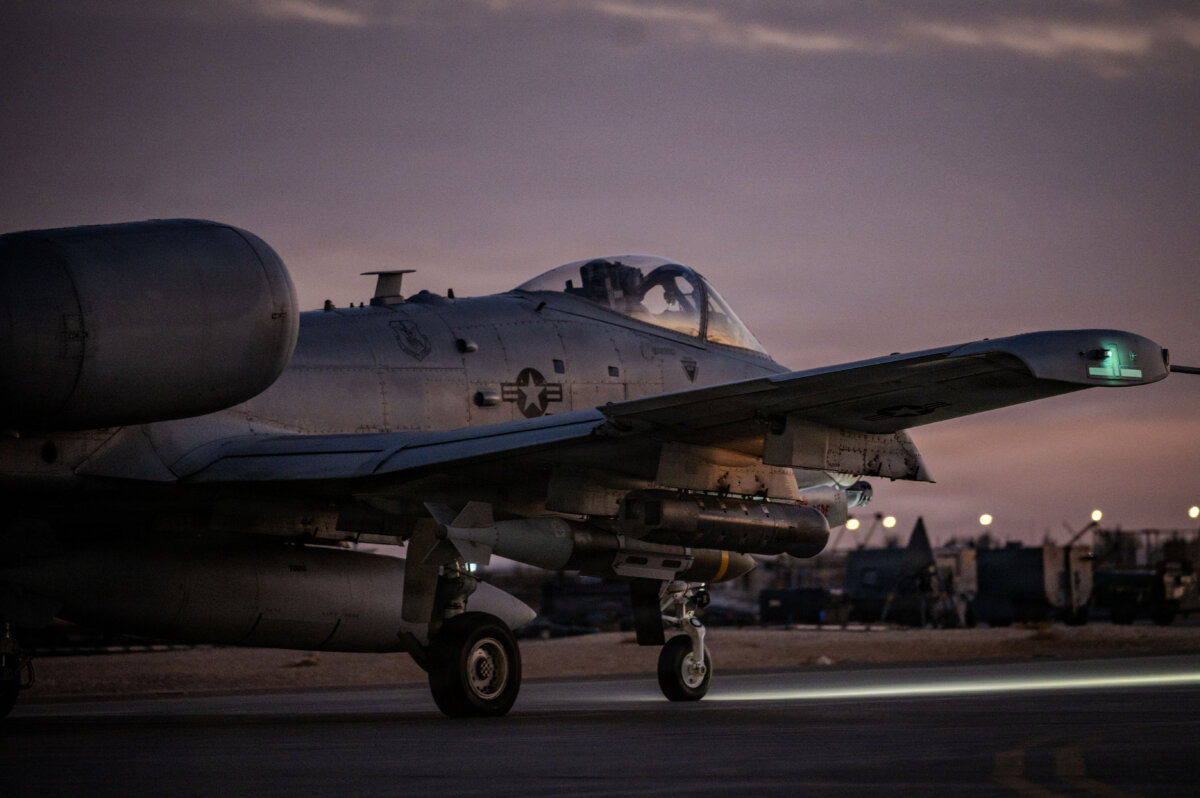

U.S. forces carried out five sets of strikes on ISIS terrorist group targets across Syria between Jan. 27 and Feb. 2, the U.S. Central Command (CENTCOM) announced on Feb. 4.
CENTCOM, which oversees U.S. military operations across the Middle East, said its forces recently located and dropped 50 precision weapons on a communication site, a key logistics hub, and weapons storage sites used by ISIS.
“Striking these targets demonstrates our continued focus and resolve for preventing an ISIS resurgence in Syria,” U.S. Navy Adm. Brad Cooper, CENTCOM commander, said.
These latest attacks are part of a broader campaign that U.S. forces launched in Syria, after ISIS claimed responsibility for an ambush shooting in which two U.S. soldiers and an American civilian interpreter were killed on Dec. 13, 2025.
Three more Americans were wounded during the ambush attack.
“After nearly two months of targeted operations, more than 50 ISIS terrorists have been killed or captured,” CENTCOM said of its retaliatory campaign, dubbed Operation Hawkeye Strike.
CENTCOM listed Bilal Hasan al-Jasim as one of the high-profile individuals killed as part of the operation.
The U.S. military described Jasim as a leader of terrorist group al-Qaeda who had direct connections with the ISIS gunman responsible for the Dec. 13 attack.
The Syrian Interior Ministry has said the gunman was a member of Syrian security forces.
Syria’s current government was formed after Sunni Islamist militants from Hay’at Tahrir al-Sham (HTS) drove former leader Bashar al-Assad from power and took over the capital city of Damascus in December 2024.
HTS began as a Syrian offshoot of al-Qaeda, and the U.S. government had considered it a foreign terrorist organization at the time the group seized power in Damascus.
Over the past year, the U.S. government has pursued more cooperative relations with Syria’s new leaders.
In the final weeks of President Joe Biden’s administration, the U.S. government retracted a $10 million counter-terror bounty against HTS leader Ahmed al-Sharaa, who is now serving as Syria’s interim president.
Under President Donald Trump’s administration, the U.S. government has also retracted the designation of HTS as a terrorist group.
Trump has since met with Sharaa and hosted him at the White House in November 2024.
Following the Dec. 13 ambush shooting, Trump said Sharaa’s government is not to blame for the attack.
The Trump administration has also worked to calm tensions between Sharaa’s interim government and the predominantly Kurdish Syrian Democratic Forces (SDF), with whom U.S. forces partnered during efforts to defeat ISIS.
Last week, the SDF and Syrian government announced they’d agreed on a framework to integrate the Kurdish force into the Syrian military and safeguard Kurdish interests in post-Assad Syria.
In its Feb. 4 statement, CENTCOM said U.S. forces are coordinating with partner groups in Syria to sustain military pressure to defeat ISIS.
 Friends Read Free
Copy
Facebook
Tweet
Friends Read Free
Copy
Facebook
Tweet