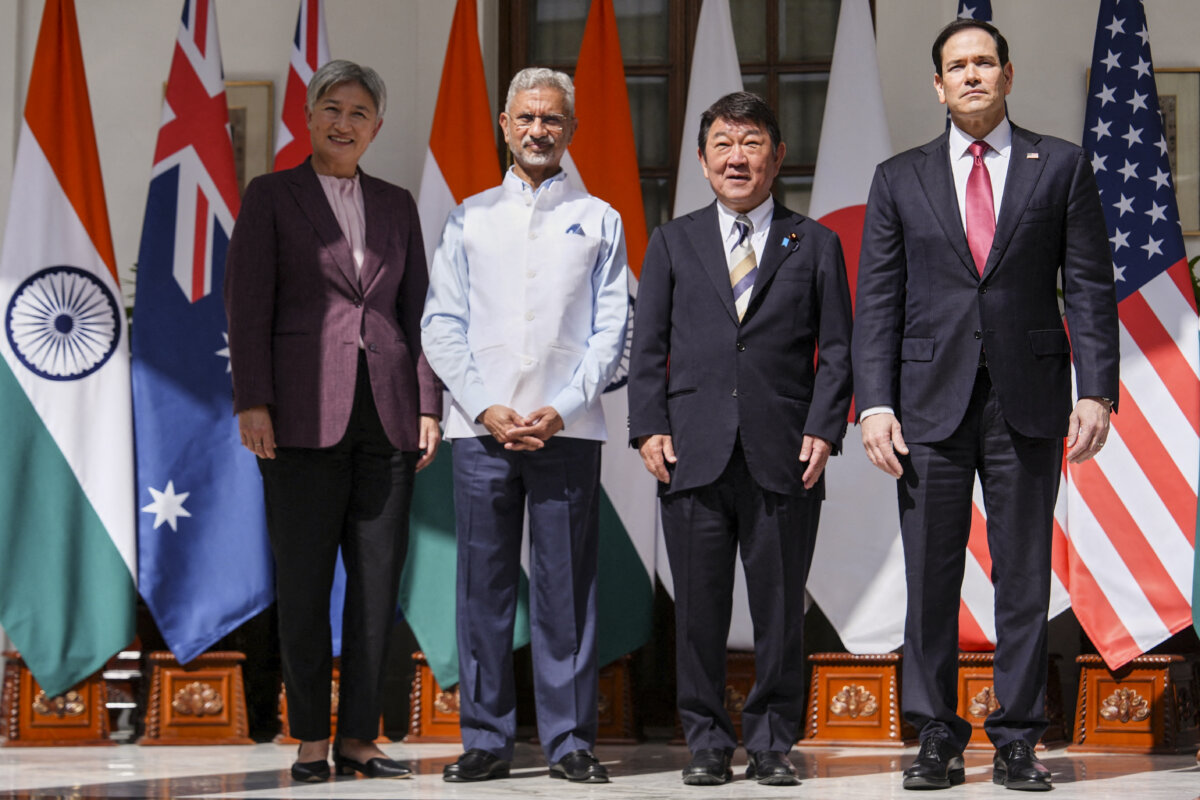

The foreign ministers of Australia, India, and Japan and the U.S. Secretary of State agreed on May 26 to deepen cooperation on critical minerals and energy security, as well as jointly develop a port project in Fiji.
The move marks a new push by the Quad grouping to expand its economic and strategic role in the Indo-Pacific.
The announcements followed a meeting in New Delhi between Secretary of State Marco Rubio, Indian External Affairs Minister S. Jaishankar, Australian Foreign Minister Penny Wong, and Japanese Foreign Minister Toshimitsu Motegi.
The talks marked the third Quad foreign ministers’ meeting since September 2024 and focused heavily on maritime infrastructure, supply chain resilience, and regional energy security.
“We are going to be partnering on issues of port infrastructure, in particular in response to insufficient port capacity in the Pacific Islands. We are announcing plans to work with Fiji,” Rubio told reporters on May 25 at Palam Air Base in New Delhi.
The Fiji port initiative represents the first jointly announced infrastructure project under the Quad framework. Officials did not disclose financing details or a construction timeline.
Rubio said the initiative would serve as “a practical demonstration of our collective ability to deliver high-quality, resilient infrastructure.”
The Quad, comprising the United States, India, Japan, and Australia, has increasingly emphasized practical economic and security cooperation amid growing concerns over supply chain vulnerabilities, maritime tensions, and energy disruptions across the Indo-Pacific.
India and the United States, according to a May 26 press release from India’s Ministry of External Affairs, separately signed a framework agreement on securing supplies of critical minerals and rare earths.
The agreement aims to expand bilateral cooperation in mining, processing, recycling, and investment across critical mineral supply chains.
The ministry said the framework seeks to strengthen “resilient and diversified supply chains” and improve financing and management of rare earth materials.
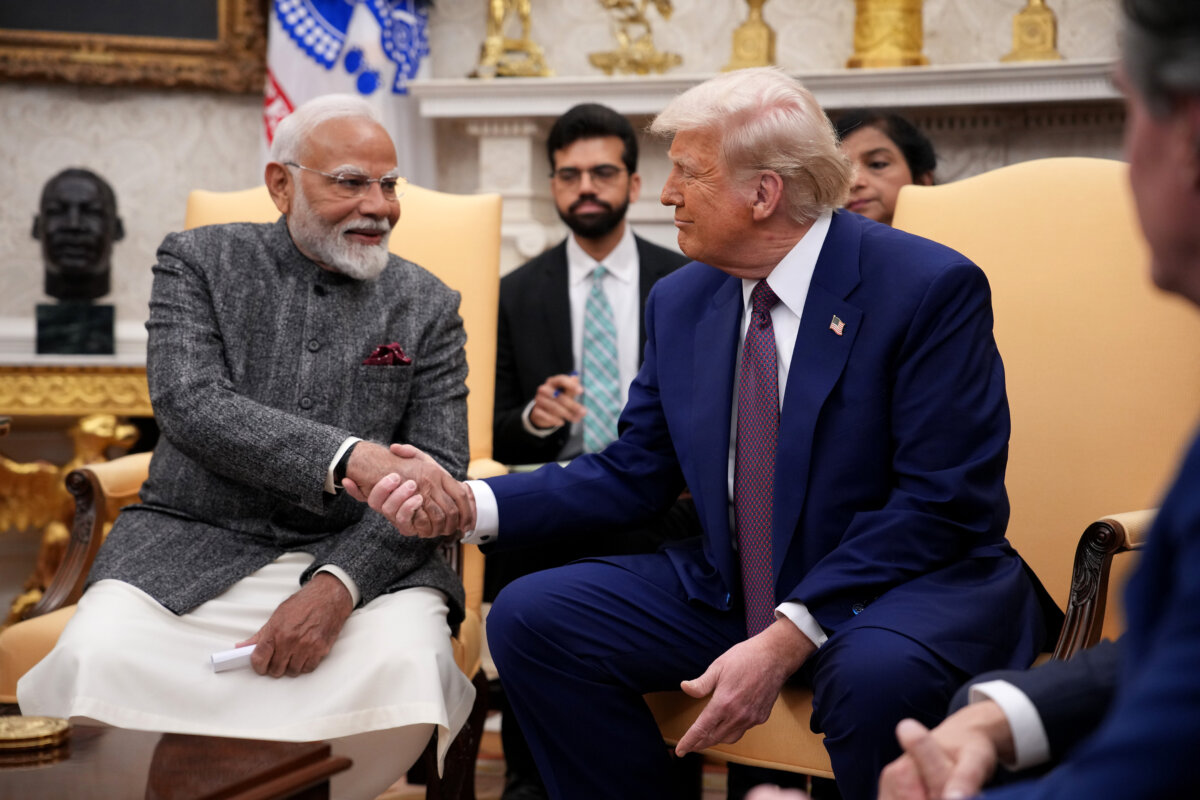
The Indian government said the framework advances commitments made during Prime Minister Narendra Modi’s February 2025 visit to Washington, where Modi and U.S. President Donald Trump identified critical minerals as strategically important for advanced manufacturing and emerging technologies.
Jaishankar said after the Quad meeting that the four countries finalized a broader “QUAD Critical Minerals Framework,” while India and the United States also concluded a separate bilateral pact.
“QUAD is working with other like-minded countries in this sector,” Jaishankar said in a May 26 post on X.
He added that the ministers agreed on an Indo-Pacific Maritime Surveillance Initiative, a common operating picture for maritime monitoring, cooperation on undersea cables, and an initiative focused on Indo-Pacific energy security.
Focus on Maritime, Energy Security
The Quad meeting took place against a backdrop of instability in the Middle East and continued concerns over global shipping routes, particularly the Strait of Hormuz.
Motegi said in a written interview published by Indian news outlet The Hindu on May 25 that disruptions to energy shipments through the Strait of Hormuz would heavily affect Asian economies and broader global supply chains.
“The impact will extend to all countries closely connected in the supply chain,” Motegi said.
Motegi also said critical minerals cooperation would be a major subject during the New Delhi talks, particularly as Japan seeks stronger supply chains for green energy technologies and advanced manufacturing.
Relevance, Long-Term Partnership
Wong said before the meeting that Australia viewed the Quad as an important vehicle for practical regional cooperation.
She said in a May 25 statement that Australia and India were deepening ties in defense, maritime security, climate and energy transition, technology, and education under their Comprehensive Strategic Partnership.
The Australian government, Wong said, would continue strengthening regional coalitions “in an ever less stable world.”
Officials also stressed the importance of the Quad’s long-term direction.
U.S. Ambassador to India Sergio Gor said in a May 26 post on X that the group remains “a vital force” that addresses “the region’s most pressing challenges.”
U.S. Assistant Secretary of State for Global Public Affairs Dylan Johnson has also reaffirmed Washington’s commitment to the Quad.
He said in a May 26 post on X that the U.S. Department of Energy will host Quad partners later this year for a fuel security forum.
Reuters contributed to this report.
 Friends Read Free
Copy
Facebook
Tweet
Friends Read Free
Copy
Facebook
Tweet