
The United States has not agreed to include Lebanon as part of its ceasefire agreement with Iran, U.S. Vice President JD Vance told reporters on Wednesday while on a state visit to Budapest, Hungary.
“I think this comes from a legitimate misunderstanding. I think the Iranians thought that the ceasefire included Lebanon, and it just didn’t. We never made that promise. We never indicated that was going to be the case,” Vance said.
“What we said is that the ceasefire would be focused on Iran, and the ceasefire would be focused on America’s allies, both Israel and the Gulf Arab states. Now, that said, the Israelis, as I understand it—again, I’m supposed to get a full report when I get on the plane—have actually offered to, frankly, check themselves a little bit in Lebanon because they want to make sure that our negotiation is successful. That’s not because that is part of the ceasefire.”
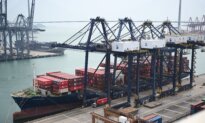
The two-week ceasefire between the United States and Iran, conditional on the safe reopening of the Strait of Hormuz, was announced late Tuesday. The strait is a critical oil shipping waterway that the regime has been blocking since the war began in late February, causing global oil prices to spike.
Meanwhile, Vance and a team of negotiators will be visiting Pakistan for peace talks with Iran while the ceasefire is in effect, with the first round of talks scheduled for Saturday local time in Islamabad.
In Budapest, Vance said that if Iran chooses to let the negotiations fall apart due to Lebanon not being included in the ceasefire, “that would be dumb, but that’s their choice.”
The vice president said the “straits are starting to reopen,” potentially referring to the Strait of Hormuz and the Bab el-Mandeb Strait, a strategic waterway in the Red Sea that the Iran-backed terror group the Houthis in Yemen had threatened to disrupt.
“[President Donald Trump has] been very clear, the deal is a ceasefire, a negotiation. That’s what we give, and what they give is: the straits are going to be reopened. If we don’t see that happening, the president is not going to abide by our terms if the Iranians are not abiding by their terms.”
Vance’s statement comes as Pakistan, whose government helped broker the ceasefire, said Lebanon is covered under the agreement.
Lebanese Prime Minister Nawaf Salam, however, said that “no one negotiates for Lebanon except for the Lebanese state,” while his political opponent Lebanese Parliament Speaker Nabih Berri, a key ally of Iran-backed terror group Hezbollah in Lebanon, also claimed that Lebanon was included in the ceasefire.
Israel, which was not a party to the negotiations, dismissed such claims. “The two-weeks ceasefire does not include Lebanon,” the office of Prime Minister Benjamin Netanyahu said Wednesday on X.
Israel’s offensive against Lebanon started after the Iran war broke out, following Hezbollah’s rocket attacks against the Jewish state.
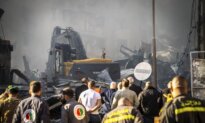
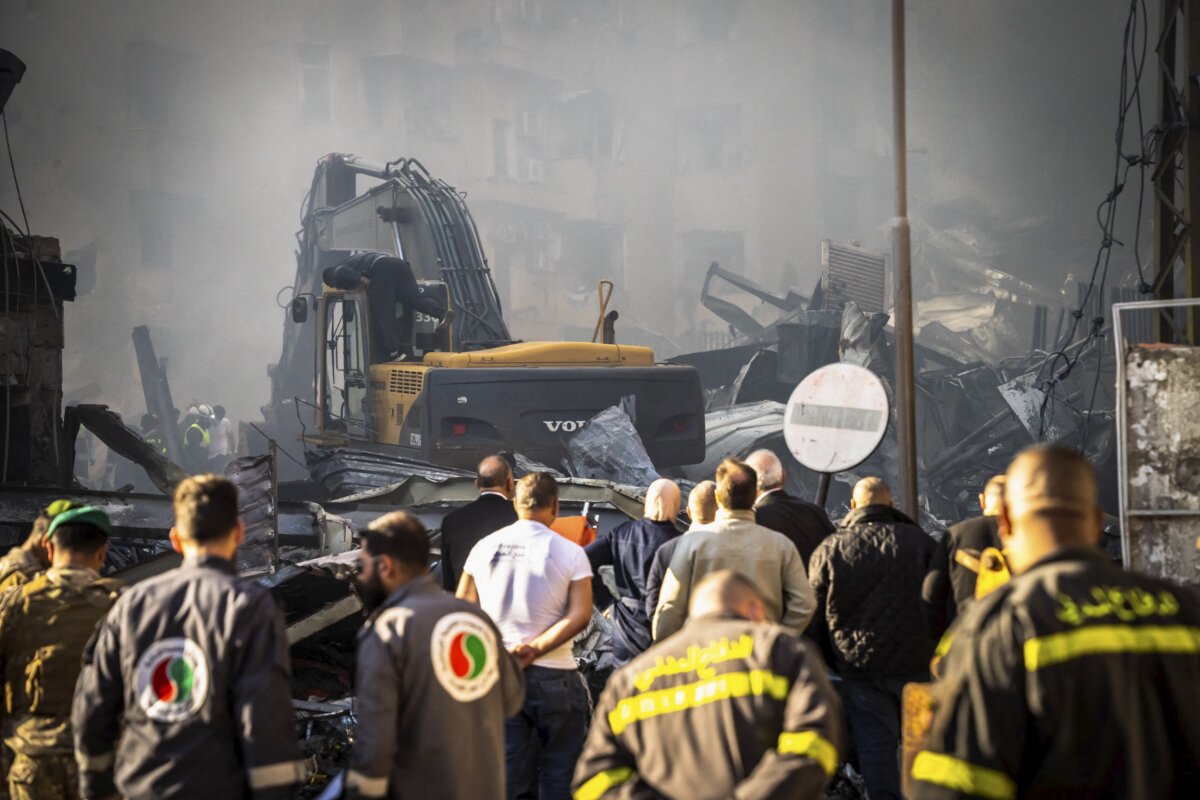
On April 8, a day after the ceasefire was announced, Israel conducted one of its heaviest strikes on Lebanon.
In an April 8 X post, the Israel Defense Forces (IDF) said it had targeted over 100 Hezbollah headquarters, military arrays, and command-and-control centers in Lebanon’s capital Beirut, as well as the Bekaa Valley and southern Lebanon.
“In 10 minutes, the IDF completed the largest coordinated strike across Lebanon since the start of Operation Roaring Lion,” the IDF said in the X post.
Meanwhile, Trump threatened tariffs on nations providing weapons to Iran. While Trump did not explicitly name them, the countries include China, Russia, and their allies.
“A Country supplying Military Weapons to Iran will be immediately tariffed, on any and all goods sold to the United States of America, 50 percent, effective immediately. There will be no exclusions or exemptions!” Trump wrote in an April 8 Truth Social post.
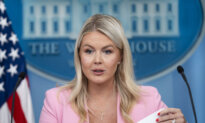
As for the Strait of Hormuz, White House press secretary Karoline Leavitt was asked by a reporter during an April 8 press briefing about Iranian state media reports that Tehran has closed off the Strait of Hormuz despite the ceasefire agreement in response to Israel’s attacks on Lebanon.
“That is completely unacceptable,” Leavitt said. “And again, this is a case of what they’re saying publicly is different. Privately, we have seen an uptick of traffic in the strait today.”
“I will reiterate the President’s expectation and demand that the Strait of Hormuz is reopened immediately, quickly, and safely. That is his expectation, and it has been relayed to him privately that that is what’s taking place, and these reports publicly are false.”
She did note that as a result of the success of Operation Epic Fury, the United States “completely dismantled Iran’s command and control center, which makes it difficult for them to pass messages up and down the chain. And so we understand that.”
“I would caution a little bit of patience,” she said of seeing the complete reopening of the Strait, “but of course we want to see the ceasefire effectuated and abided by by all parties as quickly as possible.”
Secretary of War Pete Hegseth told reporters at the Pentagon on Wednesday that the U.S. military will remain in Iran to ensure that Tehran complies with the terms of the ceasefire deal and all ships are allowed to pass through the Strait of Hormuz.
 Friends Read Free
Copy
Facebook
Tweet
Friends Read Free
Copy
Facebook
Tweet