
The Treasury Department proposed a rule on Aug. 28 to revoke an Egyptian bank’s branches’ access to U.S. financial institutions as the Trump administration targets Iran’s economic lifelines.
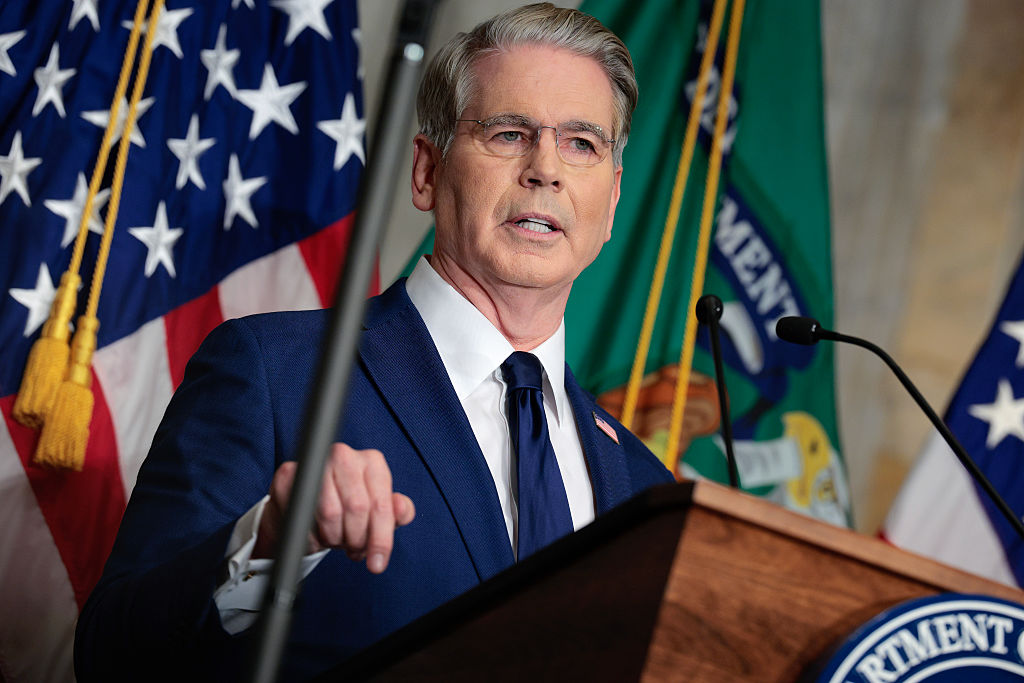
“Treasury promised to sever every economic lifeline Tehran has left and finally end the threat of the Iranian regime,” Treasury Secretary Scott Bessent said in a statement on Friday. “We also warned that Iran’s enablers cannot continue to enjoy access to the U.S. dollar and the global financial system.”
In a Friday press release, the Treasury proposed revoking Banque Misr UAE’s access to financial institutions in the United States. The Treasury assessed that the Egyptian bank’s branches in the United Arab Emirates served as a “critical node” for Iran’s access to American dollars.
The Treasury’s proposal followed the launch of the Trump administration’s Operation Economic Outcast, which is intended to isolate Iran’s economy. The administration’s new economic strategy comes as the Iran war remains ongoing six months after the United States and Israel launched the first strikes against the regime on Feb. 28.
The Treasury accused Banque Misr UAE on Friday of processing roughly $1.8 billion between Jan. 2024 and June 2026 for 103 companies that were potentially part of Iran’s shadow banking networks. The department said Iran uses its shadow banking networks to “launder funds, procure weapons, and bankroll its regional terrorist proxy groups.”
Customers of the Egyptian bank’s branches in the United Arab Emirates included front companies used by the Iranian Ministry of Defense and Islamic Revolutionary Guard Corps (IRGC) to evade U.S. sanctions and launder funds for Iranian Supreme Leader Mojtaba Khamenei, the department said.
“Banque Misr UAE decided to find out the hard way, and today, we are taking the first step in holding it accountable for its continued, egregious support of the Iranian regime,” Bessent said on Friday.
In addition to the rule proposal, the Treasury’s Office of Foreign Assets Control sanctioned Reza Mohammad Taeedi, the manager of Iran’s Bank Melli branch in Dubai, UAE, on Aug. 28. The U.S. government accused the Iranian state-owned bank of facilitating billions of dollars in transactions through accounts controlled by the IRGC Quds Force.
Bank Melli allowed the IRGC and the IRGC Quds Force to move funds both inside and outside of Iran, according to the Treasury. The department added that accounts used by the IRGC Quds Force at Bank Melli have been used to fund Iran-aligned partners and proxies, including those in Iraq.
Kameng Trading Limited, a front company based in Hong Kong, was also sanctioned by the Treasury’s Office of Foreign Assets Control on Friday. The Treasury said Pedram Pirouzan Exchange House, a sanctioned Iranian entity, used Kameng Trading Limited to launder money for the regime.
“Today’s action intensifies our pressure campaign against Iran. As the regime prioritizes its malign activities above the needs of its people, we will sever the economic lifelines sustaining it,” State Department spokesperson Tommy Pigott said in a statement on Friday.
“We will target individuals and entities that engage in illicit financial practices on behalf of the Iranian regime, including those working for Iranian banks outside the country.”
On Aug. 24, Bessent announced a new round of sanctions against Iran as part of the administration’s Operation Economic Outcast. He said the United States was launching an “economic onslaught” against Tehran’s financial connections around the world.
“Those who stand with the United States will reap the rewards of our partnership,” Bessent said. “Those who tether themselves to Tehran should expect to share in the isolation of a withering regime.”
The Trump administration’s new sanctions allow the U.S. government to sanction any entities or individuals operating in Iran’s shipping, aviation, technology, digital asset, and gold sectors. The administration has also warned that foreign entities that continue to do business with Iran could be penalized with secondary sanctions.
Iran’s Ministry of Foreign Affairs warned other countries on Friday against imposing the Trump administration’s new sanctions.
“The U.S. economic sanctions against Iran, regardless of their name and title, are completely illegal and unjustified measures that violate the U.N. Charter, international humanitarian law, and human rights,” it said in a statement on social media.
The Iranian foreign ministry said that participating in the U.S. sanctions against Iran was “tantamount to complicity in imposing the illegal will of a state on independent states and disrupting their legitimate economic and trade relations.”
 Friends Read Free
Copy
Facebook
Tweet
Friends Read Free
Copy
Facebook
Tweet