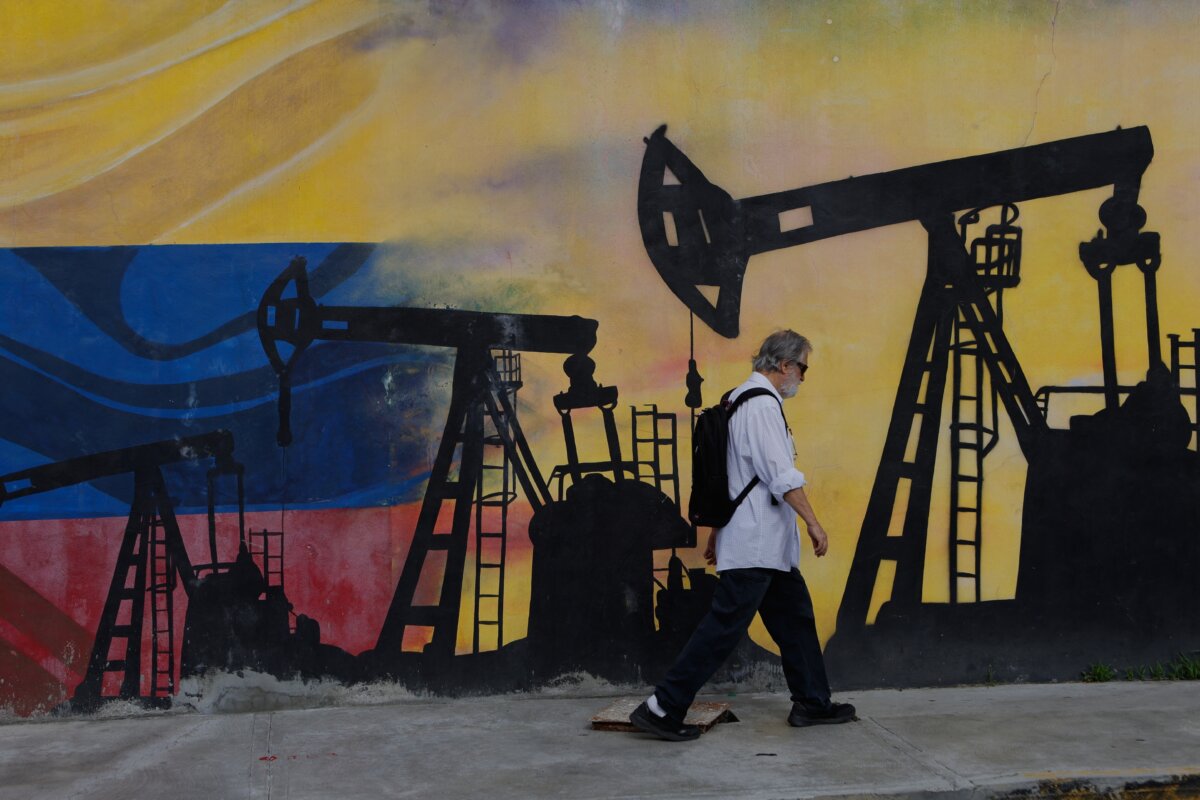

U.S. President Donald Trump announced on Aug. 28 that the United States had reached what he called “the biggest oil deal in world history,” giving the United States majority control over the development of more than 65 billion barrels of Venezuela’s proven heavy crude reserves.
While oil-rich Venezuela remains significantly behind Canada in oil production after years of infrastructure neglect and political isolation, experts say the country’s potential return to the global oil market could increase pressure on Canada from its neighbour to the south and largest energy export customer.
Venezuelan interim President Delcy Rodríguez has said the deal will last 25 years, cover 17 oilfields, and target production of more than 1.5 million barrels per day.
Canada ‘Struggling to Adapt’
Michael Binnion, CEO of Calgary-based Questerre Energy, said the importance of the U.S.-Venezuela agreement goes beyond how many Venezuelan barrels reach the U.S. market, and enters into the fundamental dynamics of the U.S.-Canada trade relationship.
“I think that Canadians have sort of got a generational, cultural narrative that America needs our resources, and so therefore they need us,” he told The Epoch Times. “I don’t think Canada can sit and assume that the world will never change and America will need us forever.”
The largest proportion by far of Canadian crude oil exports continues to go to the United States, according to the Canada Energy Regulator. Canada exported 4.3 million barrels per day of crude oil in 2025, and 90.1 percent, or 3.9 million barrels per day, went to the United States.
But Binnion notes that major geopolitical and energy shifts can happen rapidly. He pointed to the U.S. shale oil and gas revolution starting in the 2000s, which significantly boosted U.S. energy output and lessened the need for some completed and planned pipelines that had been slated to carry imported oil into the American market.
“America just doesn’t need us the way they used to need us, and Canada seems to be struggling to adapt to a changing reality,” he said.
Binnion noted that refineries on the U.S. Gulf Coast were built partly to process Venezuela’s heavy oil and pose a more direct competitor to Alberta, as well as a more direct route via southern ports.
“If we want to compete with Venezuelan oil, we better make sure we have a cheap way to get it to the Louisiana Gulf Coast, which means we need a pipeline there to compete,” he said.
CIBC analysts cautioned in January this year that increased Venezuelan oil production could put downward pressure on the price of Western Canadian Select (WCS), projecting that the Canadian heavy crude benchmark would trade at an average discount of US$14.25 per barrel to the West Texas Intermediate (WTI), the U.S. light oil benchmark, in 2026. That would be wider than the US$11.30-per-barrel differential recorded in 2025.
Neither Trump nor Rodríguez have specified when production to satisfy the new agreement will come online or reach the target of 1.5 million barrels per day. Trump has said the deal will “greatly increase” U.S. oil supply and bring down gas prices “long into the future.”
 Venezuela’s acting President Delcy Rodriguez addresses supporters in Caracas, Venezuela, on April 30, 2026. (AP Photo/Perdro Mattey)
‘A Lot of Question Marks’
Richard Masson, an executive fellow at the University of Calgary’s School of Public Policy and former CEO of the Alberta Petroleum Marketing Commission, said significant challenges remain in bringing more Venezuelan oil to market following years of infrastructure neglect.
He said Canada remains years ahead of Venezuela when it comes to developing and producing heavy crude.
“Venezuela’s [production] declined down to just over a million barrels a day, and has a rickety industry that’s desperate for investment and talent,” he told The Epoch Times in an interview.
“Getting the billions of dollars and expertise and legal structure in place to enable that to happen is very, very difficult.”
Masson also noted that Canada has effectively turned the tables on Venezuela, which was pulling ahead of Canada in developing its heavy-oil industry in the late 1990s and early 2000s.
“There was a time when we had two upgraders, Syncrude and Suncor, and Venezuela grew to have four upgraders, and so they were actually growing quicker than us,” he said. “They were ahead of us.”
However, things have changed markedly in recent decades, with years of underinvestment, U.S. sanctions, and nationalization contributing to a steep decline in oil production. Aging and deteriorating equipment, an unreliable electrical grid, and inadequate infrastructure continue to hamper Venezuela’s oil industry.
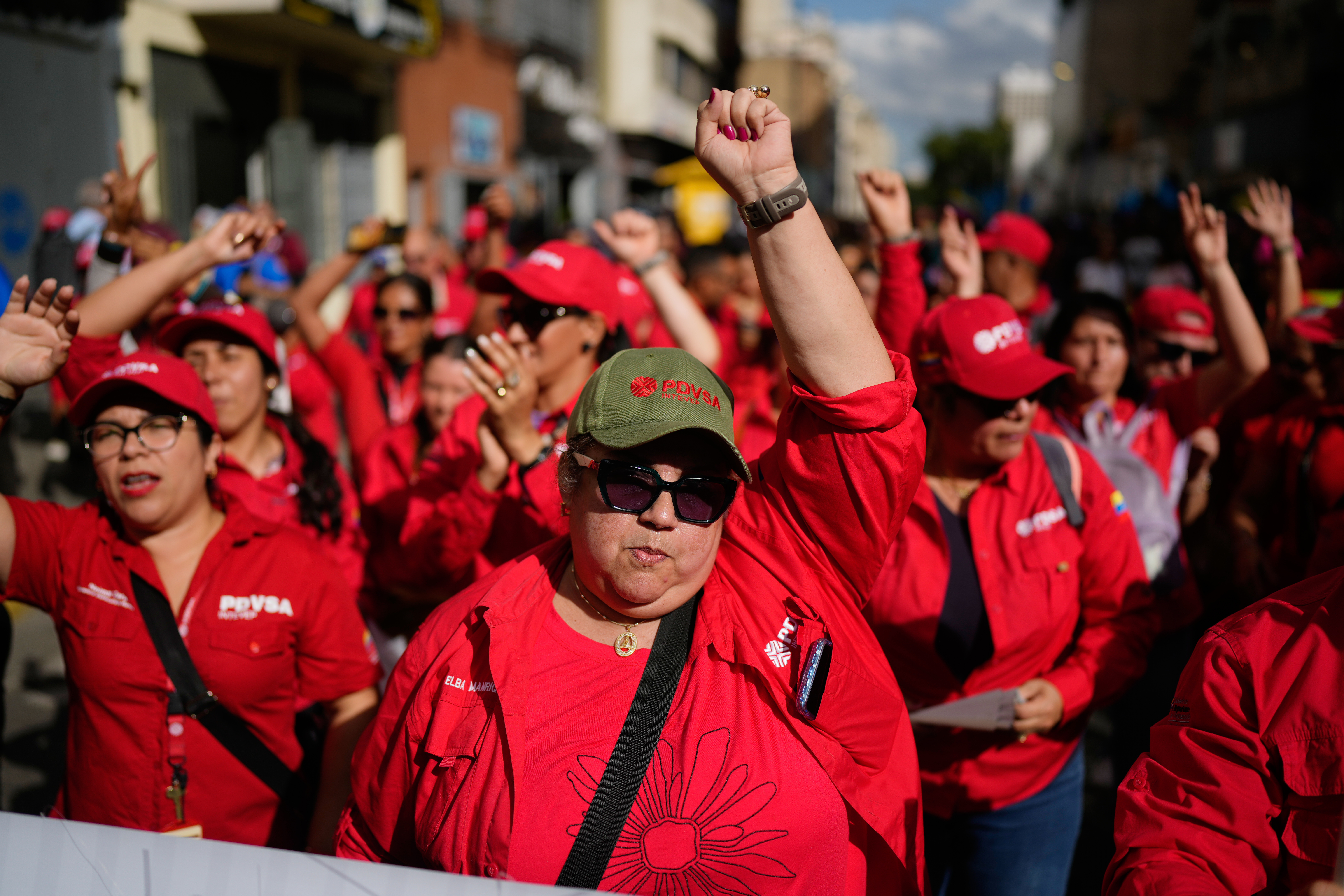 Workers of Venezuela’s state-owned PDVSA oil company rally to back an oil reform bill proposed by acting President Delcy Rodriguez to loosen state control and open the industry to private and foreign investment, in Caracas, Venezuela, on Jan. 29, 2026. (AP Photo/Ariana Cubillos)
Masson said Canada now produces more than 4 million barrels per day of heavy crude and has four upgraders that process heavy bitumen into lighter synthetic crude, which is generally easier and more profitable to refine.
“I think the Canadian folks understand that we are very good at what we do now,” Masson said.
Major oil companies have also remained cautious about returning to Venezuela in the early stages following Nicolás Maduro’s ouster, with some signalling that significant hurdles remain before they are prepared to make major investments. Exxon Mobil CEO Darren Woods, for example, called the country “uninvestable” in January. Trump said on Aug. 31, however, that ExxonMobil and other major oil companies will soon be operating in Venezuela.
Masson also pointed to uncertainty surrounding Venezuela’s state-owned oil company, Petróleos de Venezuela, S.A. (PDVSA), and how it fits into the new agreement with the United States.
“Of course, PDVSA, their state company, we don’t know what role they would play, if any,” he said of the agreement. “And so there’s a lot of question marks about whether this deal hangs together.”
Political Pressure
Despite the questions remaining about implementation of the U.S.-Venezuela deal and issues with Venezuela’s oil industry, Masson acknowledged that Trump may try to use it for political leverage against Canada.
For his part, Binnion said Canada can no longer take access to the U.S. energy market for granted. While Washington is likely to remain a major buyer of Canadian crude, he said shifting geopolitical realities—including the agreement with Venezuela—mean Canada will have to contend with greater competition.
“It doesn’t necessarily mean that they don’t want it,” Binnion said. “It means that they’ll just want it under more competitive circumstances.”
 Friends Read Free
Copy
Facebook
Tweet
Friends Read Free
Copy
Facebook
Tweet