Exxon Mobil is among a group of companies planning to do business in Venezuela, President Donald Trump said on Monday, nearly two decades after the company was forced out in a nationalization drive.
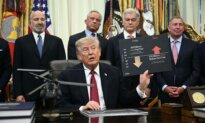
“We have Exxon going in, we have Chevron going in, we have our big oil companies going in, and everybody’s bidding,” Trump said at a press event in the Oval Office.
“We’re making a fortune, and they’re making a fortune. They’re starting to make real money.”
Exxon Mobil operates in Stabroek Block in neighboring Guyana, which currently produces more than 900,000 barrels of oil a day.
The announcement of the deal comes as gas prices in the United States have remained high six months into the conflict with Iran, and roughly nine months after American military forces captured Venezuelan leader Nicolás Maduro.
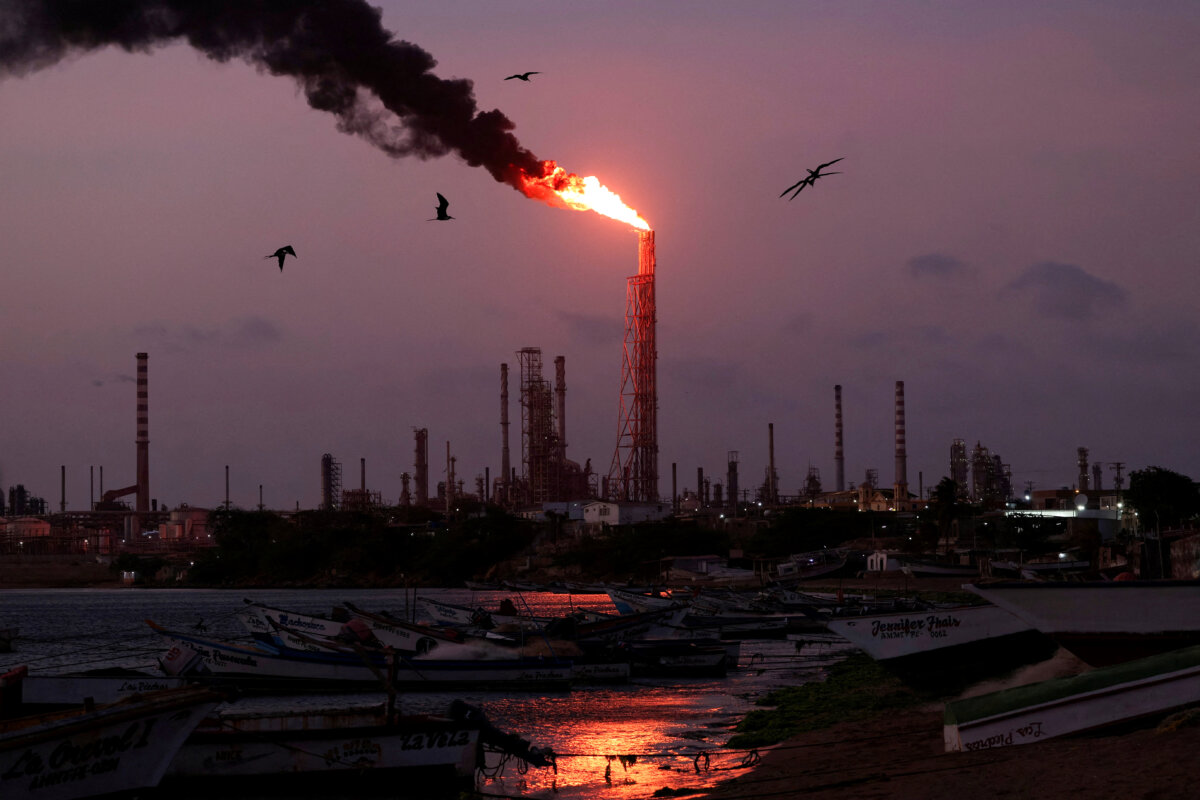
Venezuela holds the world’s largest proven oil reserves, estimated at 303 billion barrels. However, oil production declined under the Maduro regime because of mismanagement and underinvestment.
On Aug. 31, Trump said he secured U.S. majority control of more than 65 billion barrels of proven oil reserves in Venezuela, which he said “vastly” expanded the United States’ current territorial proven reserves of roughly 46 billion barrels.
“This deal secures our energy dominance for the next century, all at zero cost to the United States,” he said.
The White House said in an Aug. 31 statement that the deal, signed by Secretary of State Marco Rubio and Secretary of War Pete Hegseth, “gives the U.S. government powerful governance rights, economic ownership, and guaranteed low-cost off-take from a new private Venezuelan oil champion, which will be the second-largest private oil company by reserves in the world.”
It added that the Venezuelan interim authorities have granted North American Blue Energy Partners (NABEP), a privately held oil company that is the second-largest private Venezuelan oil producer, 100-year concessions for 17 oil fields with proven reserves of approximately 65 billion barrels.
It said that NABEP has granted the Department of War’s Office of Strategic Capital a 35 percent equity stake in its corporate parent.
In January, Exxon Mobil CEO Darren Woods called Venezuela “uninvestable” during a White House meeting.
“If we look at the legal and commercial constructs—frameworks—in place today in Venezuela, today it’s uninvestable. And so significant changes have to be made to those commercial frameworks, the legal system, there has to be durable investment protections, and there has to be a change to the hydrocarbon laws in the country,” he said at the time.
However, he added that the company was “confident that with this Administration and President Trump working hand‑in‑hand with the Venezuelan government that those changes can be put in place.”
In March, Exxon Mobil said it would send a technical team to study opportunities in the country.
Exxon Mobil Senior Vice President Jack Williams said during a Morgan Stanley conference on March 3, “We know the resource pretty well. We had a very successful operation there.”
Exxon’s assets in Venezuela were taken over twice. In 1976, the Venezuelan oil industry was nationalized, and Exxon was absorbed into the new state company PDVSA (Petróleos de Venezuela).
In 1999, Exxon and Mobil joined to form Exxon Mobil Corporation.
Then, in 2007, communist revolutionary President Hugo Chavez pushed Exxon Mobil, as well as U.S oil giant ConocoPhillips, out of Venezuela in a nationalization drive after they refused to give PDVSA majority control of their Orinoco extra-heavy oil projects.
Chevron says it is one of the leading private oil companies in Venezuela and has been in the country since 1923. The company works in partnership with PDVSA affiliates on three onshore production projects in Western and Eastern Venezuela.
The Epoch Times has contacted Exxon Mobil and Chevron for comment.
Emel Akan and Reuters contributed this report.
 Friends Read Free
Copy
Facebook
Tweet
Friends Read Free
Copy
Facebook
Tweet