
Twenty-one months into the Israeli offensive launched after the Oct. 7 attack by terrorist group Hamas, the situation on the ground in Gaza has become one of the most complex and contested crises.
International organizations warn of looming famine, limited access to clean water, failing hospitals, and displacement affecting 90 percent of the population.
Meanwhile, Israel says there is no famine in Gaza and blames Hamas for obstructing aid distribution.
How exactly is aid supposed to reach Gaza? Who’s blocking what—and why?
This is a breakdown of what we know about how aid delivery to Gaza works, why it’s faltering, and how global actors are responding.
Who Delivers Aid and How?
Before the Hamas attacks that killed more than 1,200 Israelis and foreign citizens and kidnapped 251 on Oct. 7, 2023, humanitarian aid reached Gaza primarily by land, with some limited air and sea deliveries in emergency contexts.
Key players would include the United Nations Relief and Works Agency (UNRWA), the World Food Programme (WFP), the World Health Organisation (WHO), international NGOs, and national aid bodies.
Since October 2023, delivery has faced immense challenges: border closures, fighting, and lawlessness.
Truck convoys pass through tightly monitored land crossings like Rafah (Egypt-Gaza) and Kerem Shalom (Israel-Gaza), but volumes are far below what’s needed.
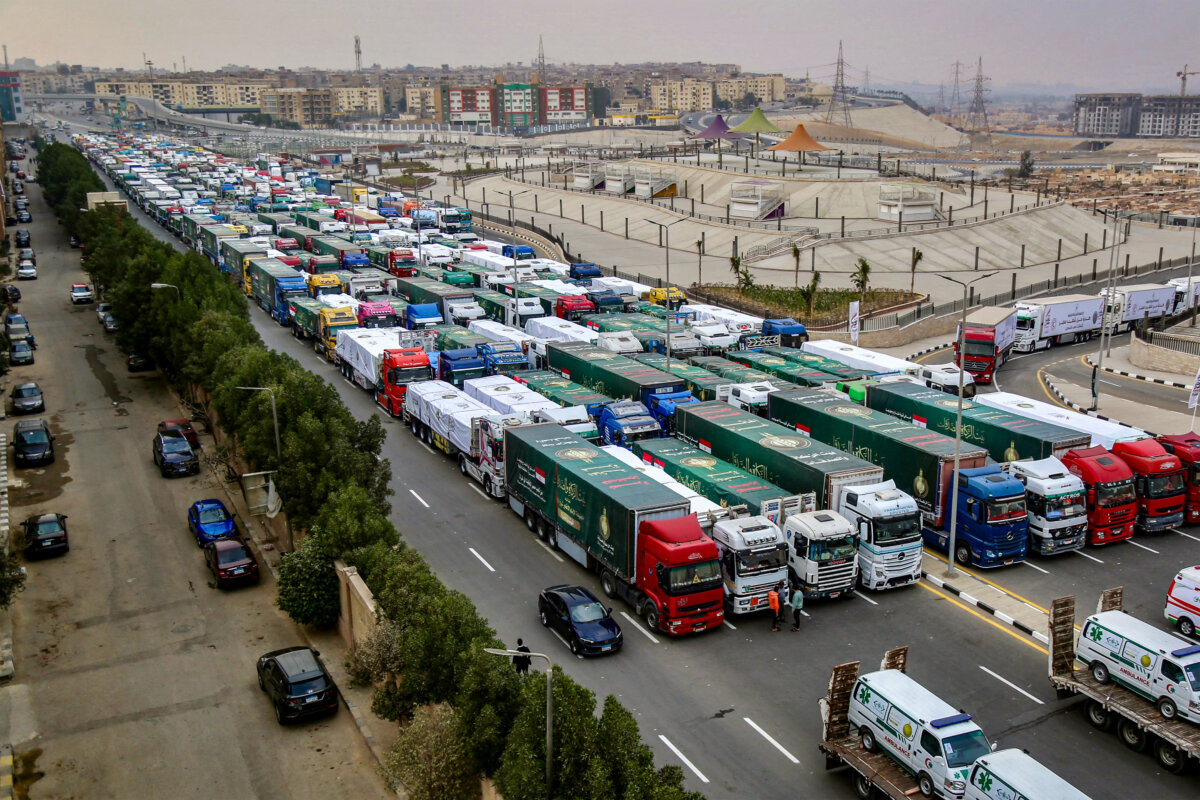
The United Nations and the WFP said that aid shipments, regardless of origin, must be coordinated with Israeli authorities. After Israel opened additional access points in mid-2024, convoys were still halted frequently due to security concerns, according to the groups.
By early 2025, U.N. agencies reported that access had become so restricted and conditions so dangerous that many convoys simply stopped moving.
Today, Gaza’s aid delivery system is fragmented and dysfunctional.
Why Did Israel Block UN Aid?
On March 2, Israel imposed a full blockade, cutting off food, fuel, and medicine in an effort to pressure Hamas into releasing Israeli hostages.
The move followed the collapse of a two-month cease-fire on March 18 and the reignition of military operations.
Israel said the blockade was needed to prevent Hamas from diverting aid to terrorists. The group denies the accusations.
Humanitarian groups say the blockade created a deadly bottleneck, worsening disease and malnutrition.
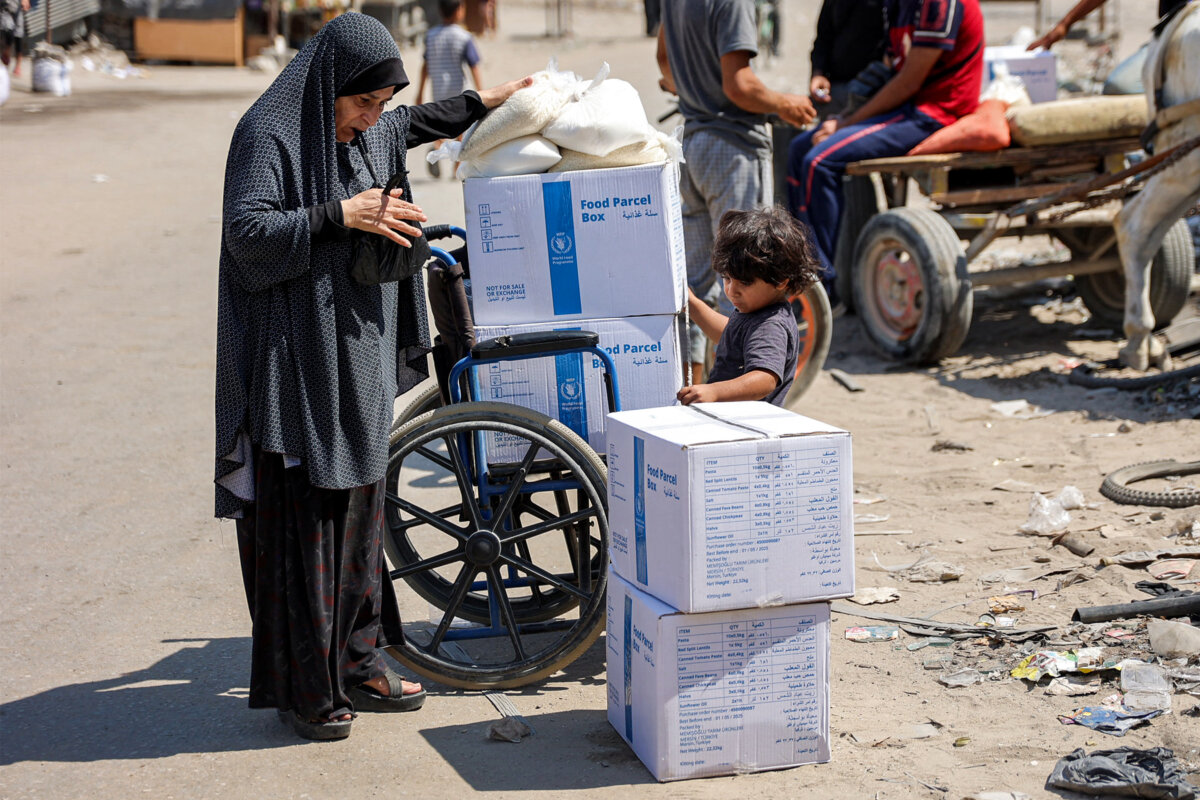
After international pressure, Israel announced a partial easing of restrictions on May 18, allowing limited aid to prevent famine. Aid groups said the supplies were still insufficient.
More than 40 countries have joined a U.N. case at the International Court of Justice, saying the blockade violated humanitarian law.
Israeli Foreign Minister Gideon Saar said the court hearings were a systematic persecution and delegitimization of his country. He accused the U.N. and the UNWRA of weaponizing international law to deprive Israel of its right to defend itself.
Israel also alleged that UNRWA is a compromised actor infiltrated by Hamas, following reports that several of its staff participated in or supported the Oct. 7 attacks.
UNRWA investigated 19 staff over Oct. 7 allegations, and nine were dismissed over possible links. One was cleared, and nine lacked evidence.
What Is Gaza Humanitarian Foundation?
Established in May 2025, the Gaza Humanitarian Foundation (GHF) is a U.S.-backed, Israeli-initiated alternative to U.N.-led relief efforts. The move followed Israeli allegations that Hamas had exploited previous aid channels.
Operating from four sites in southern and central Gaza, GHF distributes aid, funded in part by a $30 million U.S. State Department grant, with coordination from Israeli authorities. The model features private contractors and Israeli military security.
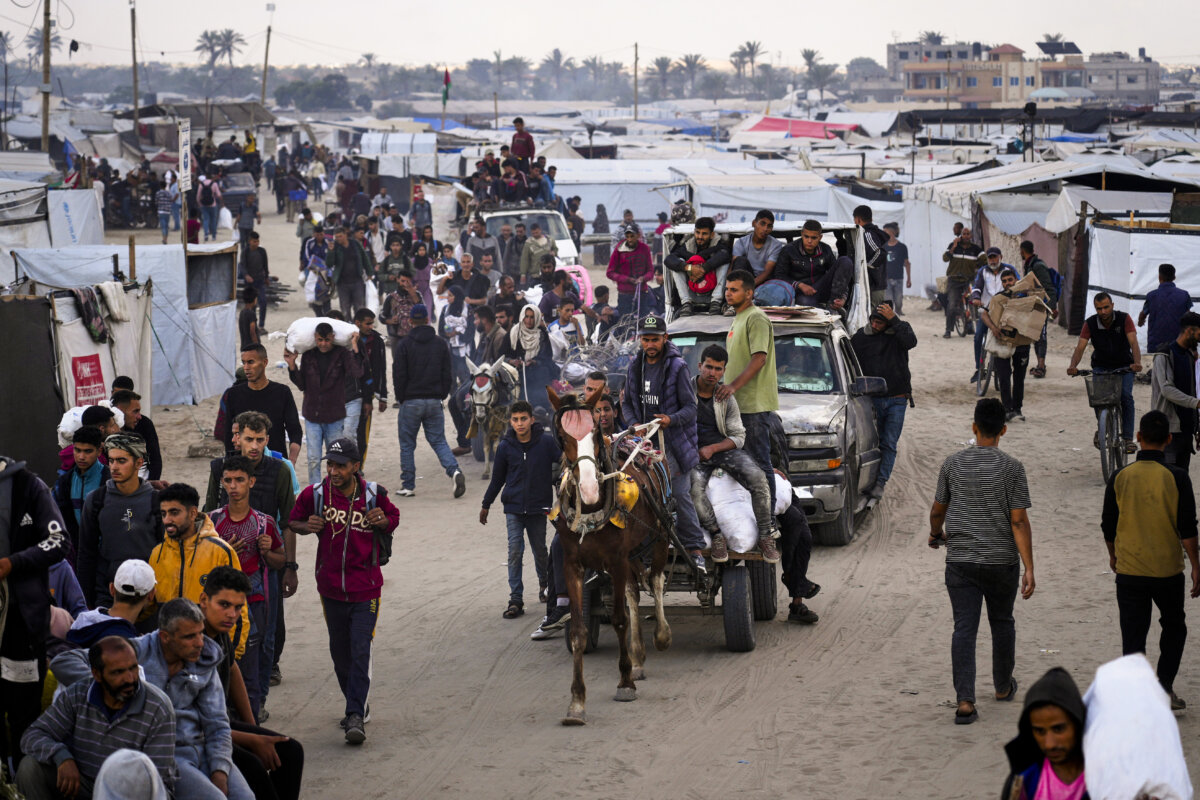
Major aid groups such as U.N. agencies, Oxfam, and Médecins Sans Frontières, among others, have refused to join, citing concerns over civilian safety, military involvement, and incompatibility with humanitarian principles.
On May 25, GHF executive director Jake Wood, who has held the role for two months, resigned, saying the aid plan could not be carried out while upholding core humanitarian principles.
The GHF continues to distribute aid amid ongoing criticism and calls from multiple countries to restore access for U.N. agencies.
According to its latest figures, the foundation has delivered nearly 89 million meals.
How Has Aid Distribution Become Deadly?
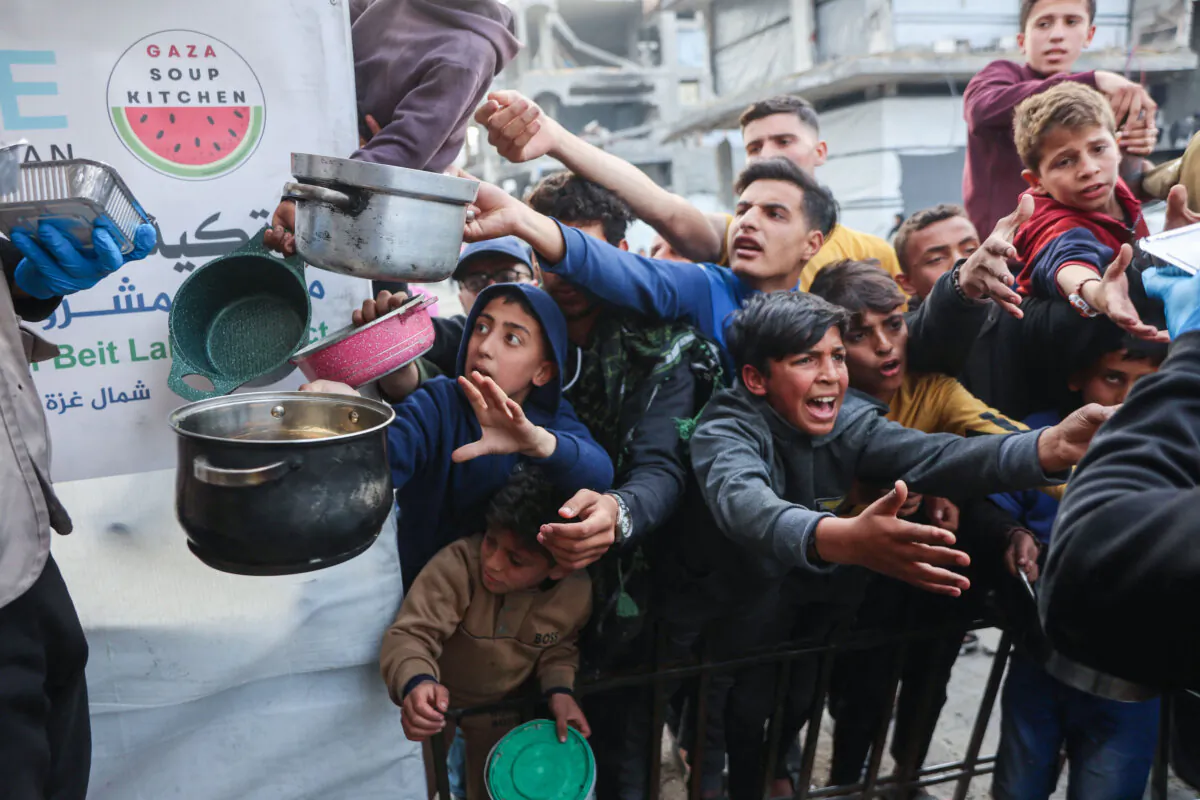
In Gaza, hunger is no longer the only threat at food distribution sites—violence has made the simple act of seeking aid potentially deadly.
According to a U.N. statement citing the Hamas-controlled Gaza Ministry of Health, more than 1,050 Palestinians have been killed between May 27 and July 21 while attempting to access food.
It said that at least 766 died in the vicinity of GHF aid sites and 288 around U.N. and other aid convoys.
The figures could not be independently verified by The Epoch Times.
Civilians desperate for food are caught in a volatile mix of overcrowding, poor coordination, and military activity.
Eyewitness accounts and media reports describe chaotic scenes—people surging toward aid trucks, minimal crowd control, and gunfire erupting in some cases.
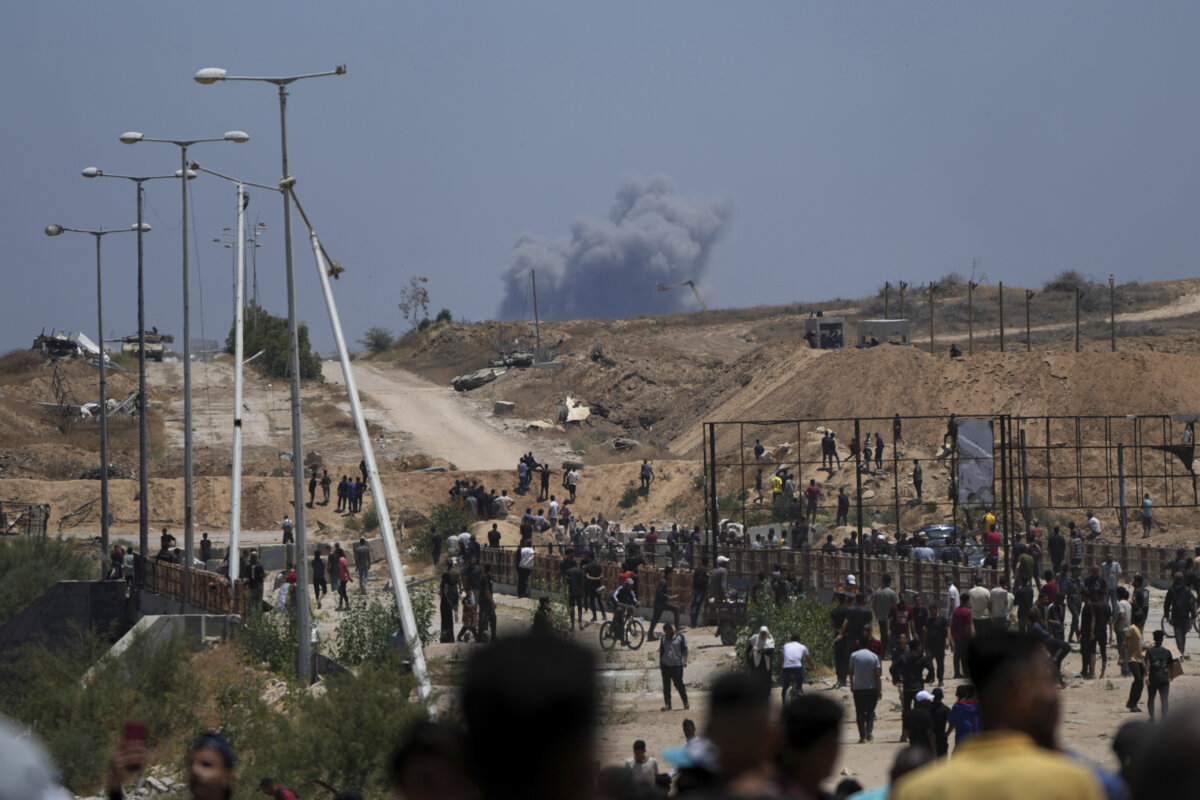
The U.N. and Hamas-run health authorities alleged that Israeli troops have opened fire on unarmed civilians. The Israeli military denied the allegations and accused Hamas of spreading misinformation and of trying to prevent Palestinians from receiving aid by shooting at them.
The U.N. also said GHF bypasses the established U.N.-led system. Meanwhile, Israel said the U.N.-led structure enables the diversion of aid to terrorist groups and fails to ensure accountability or neutrality in Gaza.
Meanwhile, GHF has offered to distribute all international aid in Gaza free of charge to prevent spoilage.
The organization, alongside U.S. officials, said that aid from the U.N. and other groups is piling up near the borders and inside Gaza without reaching those in need.
The U.N. said it is struggling to deliver aid in Gaza due to Israeli military restrictions and security threats, including incidents of looting. It reported that more than half of its aid movement requests, 506 out of 894 submitted in May, June, and July, were either denied or obstructed by the Israeli military.
In April, the International Rescue Committee (IRC) called Gaza the most dangerous place in the world to be an aid worker and a civilian. In June, the U.N. Office for the Coordination of Humanitarian Affairs (OCHA) said that since October 2023, at least 463 aid workers have been killed in Gaza.
Citing military strikes on aid convoys, several aid organizations suspended operations in Gaza in April, including the World Central Kitchen and Anera.
How Critical Is Gaza’s Food Shortage?
More than 19 months into the war, Gaza is facing a man-made food catastrophe that international organizations say is increasingly likely to cross the threshold into famine.
According to the Integrated Food Security Phase Classification (IPC), a global standard for assessing the severity of food insecurity, the entire Gazan population is facing serious levels of hunger.
Nearly half a million are in what the IPC classifies as “catastrophic” conditions, meaning they are at immediate risk of starvation.
The U.N. reports that essential goods are either already exhausted or expected to run out imminently, while all WFP-supported bakeries closed in early April due to a lack of ingredients.
Hot meal kitchens have run out, and even preventive nutrition supplies in U.N. warehouses are depleted.
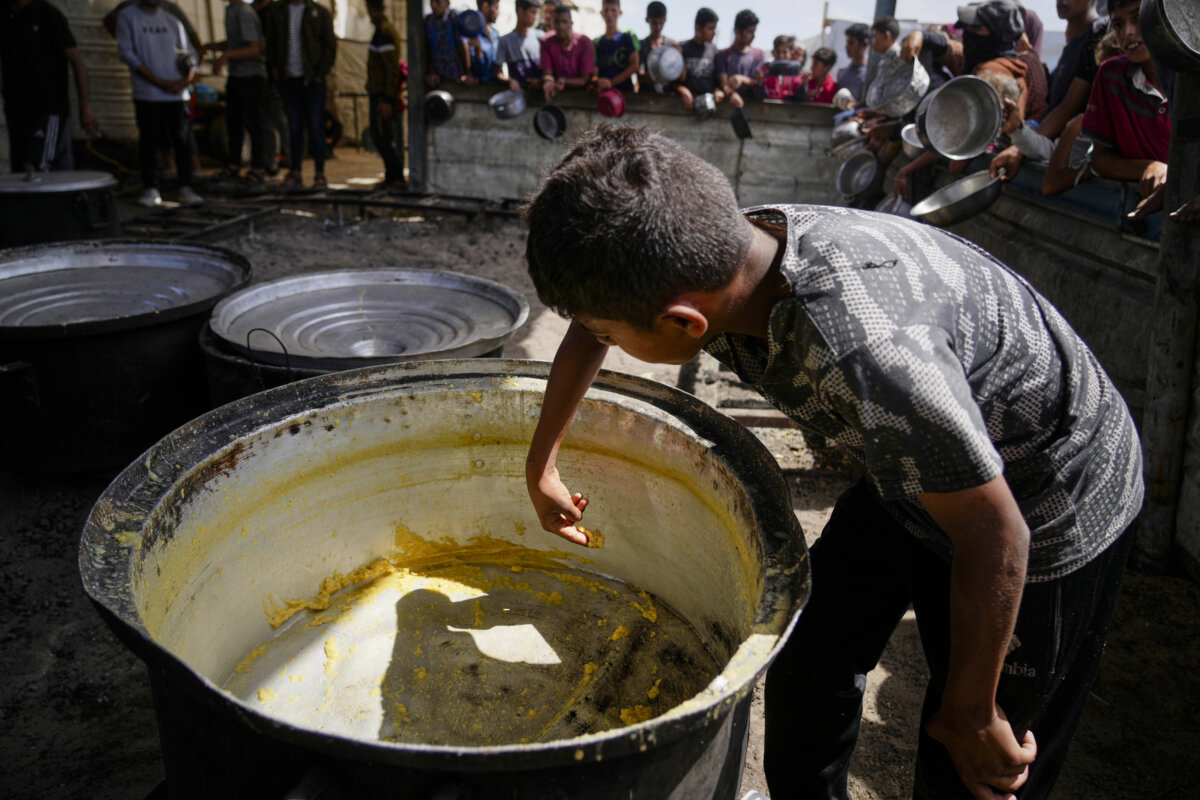
Malnutrition, particularly among children, is worsening rapidly, according to the IPC analysis, which anticipates more than 70,000 cases of acute malnutrition among children under 5 in the coming year.
Pregnant and breastfeeding women are also acutely affected, with 17,000 expected to require treatment for malnutrition. North Gaza, Gaza City, and Rafah are forecasted to reach critical levels of acute malnutrition by September.
While pockets of Gaza may not yet meet the technical criteria for area-wide “famine” classification, such as documented mortality levels, without a drastic change in access and a rapid scale-up in aid delivery, Gaza is on a path toward full-scale famine, based on the assessments.
According to figures reported by OCHA, Gaza’s health, shelter, and sanitation systems are also on the brink of collapse.
Israel said the U.N. assessment was an exaggeration. Its military arm, the Coordinator of Government Activities in the Territories (COGAT), says there is “no famine in Gaza,” and the phrasing is “inaccurate and alarmist.”
In May, COGAT criticized the U.N.’s analysis for overlooking the large influx of aid during the hostage-release deal, 25,200 trucks, mostly carrying food. It added that the IPC relies on U.N. data, which during the cease-fire captured only about one-third of the actual aid delivered.
In its own analysis, Israel said the IPC report excluded Israeli-supplied data and omitted significant improvements in aid delivery, such as expanded crossings, airdrops, field hospitals, and private sector contributions.
Israel accused the report of bias for downplaying Hamas’s role in worsening humanitarian conditions and for misrepresenting trends in conflict intensity, casualty rates, and infrastructure damage.
What Are Other Countries Saying?
International criticism of Israel’s handling of aid and civilian protection in Gaza is intensifying.
On July 23, a joint statement from 28 Western-aligned countries condemned what they called “the drip feeding of aid and the inhumane killing of civilians.”
The signatories, including the UK and France, rejected proposals involving the forced relocation of Palestinians and demanded that Israel lift restrictions on aid and enable U.N. agencies and humanitarian NGOs to operate safely.
Israel said Hamas is responsible for prolonging the conflict by refusing cease-fire terms and holding onto hostages. The Israeli position remains that military pressure will continue until Hamas is defeated or disarmed.
Meanwhile, U.S. officials have disagreed with putting the blame on Israel, instead directing pressure toward the terrorist group.
“Strongly worded letters won’t stop Hamas,” a State Department spokesperson said, affirming that the United States is leading diplomatic efforts to end the war.

Cease-fire talks in Qatar recently ended, with U.S. envoy Steve Witkoff accusing Hamas of not engaging in good faith.
He indicated that Washington may now explore other options to resolve the crisis.
Tensions also rose following France’s announcement that it will formally recognize a Palestinian state in the coming months, a symbolic shift that drew Israeli condemnation.
The move comes just ahead of a U.N. conference, co-hosted by France and Saudi Arabia, centered on reviving the two-state solution.
 Friends Read Free
Copy
Facebook
Tweet
Friends Read Free
Copy
Facebook
Tweet