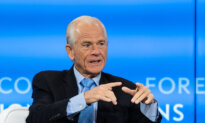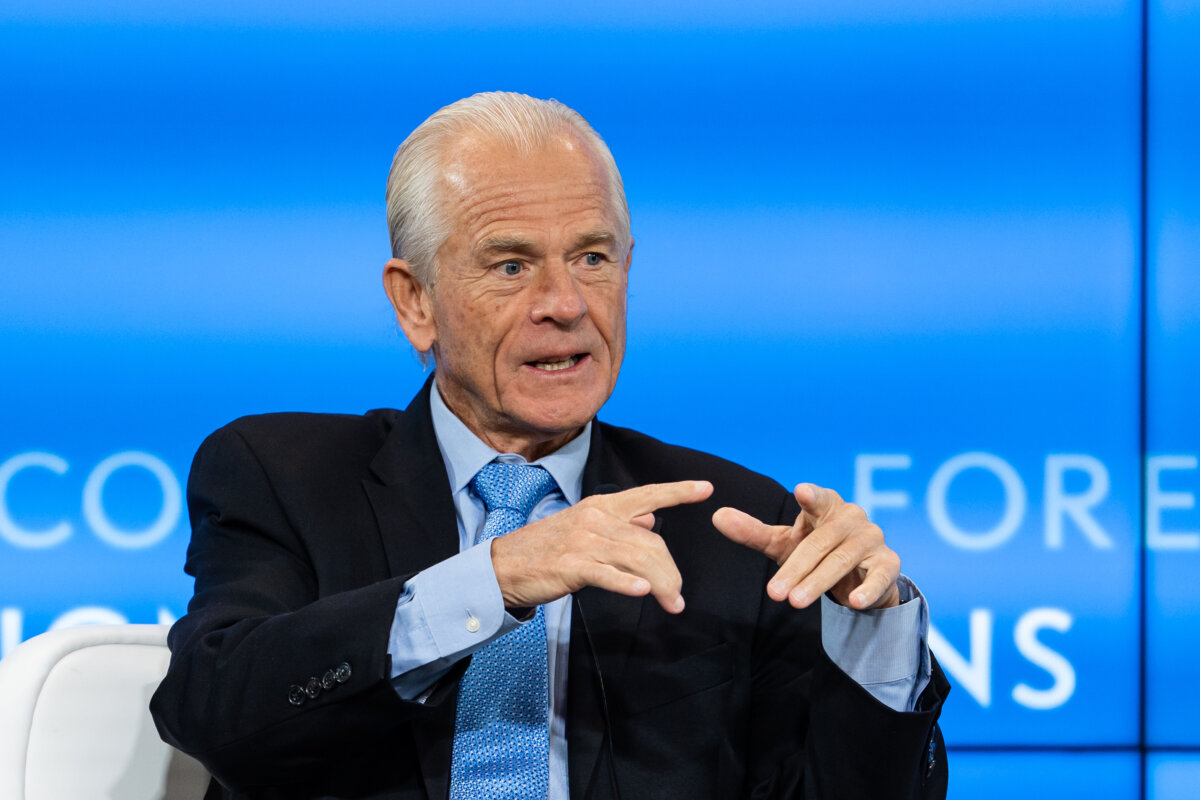

White House senior counsellor for trade and manufacturing Peter Navarro said Canada’s past success in lobbying Washington is over, telling Canadian lobbyists that their efforts to influence U.S. policy would no longer be effective.
Navarro, a longtime trade adviser to U.S. President Donald Trump, made the comments Sept. 29 at the American Growth Summit in Washington, a conference with a number of leading American business and political figures in attendance centred on U.S. trade, energy, and economic policy.
“Canada economically is like a rowboat. We’re an aircraft carrier. Well, how’s that going to end?” Navarro told attendees.
“And any Canadians here, please, if you’re on K Street, get the hell out of our country because the problem you have is you lobby this country, and you’ve been successful in the past, and you think you can keep doing that,” he said. “Memo to Canada: You cannot do that. Okay, that game is up,” he added.
Navarro’s reference to “K Street” is an area in Washington known as a major hub for lobbyists and advocacy organizations. Navarro also warned there would be repercussions for Canada if it “interferes” in the upcoming U.S. midterm elections, without elaborating.
“If you interfere in our elections in Maine or Michigan you will pay even more dearly,” he said.
Asked about Navarro’s remarks at a press conference on Sept. 29, Prmie Minisiter Mark Carney said he has no response.
Navarro’s remarks come on the day that U.S. import bans on certain Canadian alcoholic beverages, some dairy products, and motorcycles came into effect. The bans were announced by U.S. President Donald Trump on Sept. 8 under Section 338 of the Tariff Act of 1930.
U.S. Trade Representative Jamieson Greer said the measures were intended as a response to what Washington considers discriminatory practices by Canada, including provincial restrictions affecting American alcohol sales, Canada’s dairy supply management system, and Canadian tariffs on U.S. autos.
Ottawa says its remaining tariffs on U.S. autos are countermeasures responding to U.S. tariffs and maintains that Washington’s measures violate the free-trade provisions of of the United States-Canada-Mexico Agreement.
Washington has also moved to restrict Canadian-made goods in U.S. federal procurement. Trump has also said Bombardier would be barred from selling aircraft in the United States unless it builds them there.
Meanwhile, Trump recently said that he believes a trade deal with Canada is likely in the near future.
“I think what’s going to happen is over the next three or four weeks, they’re going to come to us and they’re going to say, ‘We’re going to get rid of all the tariffs,’” Trump told media at the White House Sept. 28.
“I think a deal will be made, but it’s going to be a fair deal.” Trump said, adding that Canada’s government “call us all the time” and have “treated the United States very unfairly” in the past few decades.
Navarro said on Sept. 28 that Canada has been the “most difficult and arrogant” country on trade negotiations regarding steel, aluminum, lumber and dairy.
“The Canadian people are wonderful, but they cheat us on just about everything they can,” he said.
Trade talks between Canada and the U.S. collapsed the evening of Aug. 21 and Washington subsequently imposed previously announced tariffs of 50 percent on Aug. 22 on $27.6 billion of Canadian goods. Canada imposed counter-tariffs of 15, 25 and 50 percent on a matching value of U.S. imports on Sept. 8.
Carney has said that the United States put forth “new terms that were uneconomic, unfair, and undermined the net benefits to Canada” on lumber, automobiles, and measures that would undercut Canada’s French language protections.
The United States says Canada introduced last-minute demands that were not previously agreed upon, and that it has no issues with Canada’s French-language protection endeavours.
The remarks came days after U.S. Trade Representative Jamieson Greer said on Sept. 25 that there was “no urgency” on the U.S. side to reach a deal with Canada.
Carney has said he remains open to negotiating with Washington and striking a new deal.
As the U.S. import bans go into effect the office of Canada-U.S. Trade Minister Dominic LeBlanc said their priority is Canadian workers.
“As has been the case for the last 18 months, our first priority remains on protecting and supporting Canadian workers, farmers, families, and businesses from these unjustified actions,” LeBlanc’s office said in a Sept. 28 statement.
 Friends Read Free
Copy
Facebook
Tweet
Friends Read Free
Copy
Facebook
Tweet