
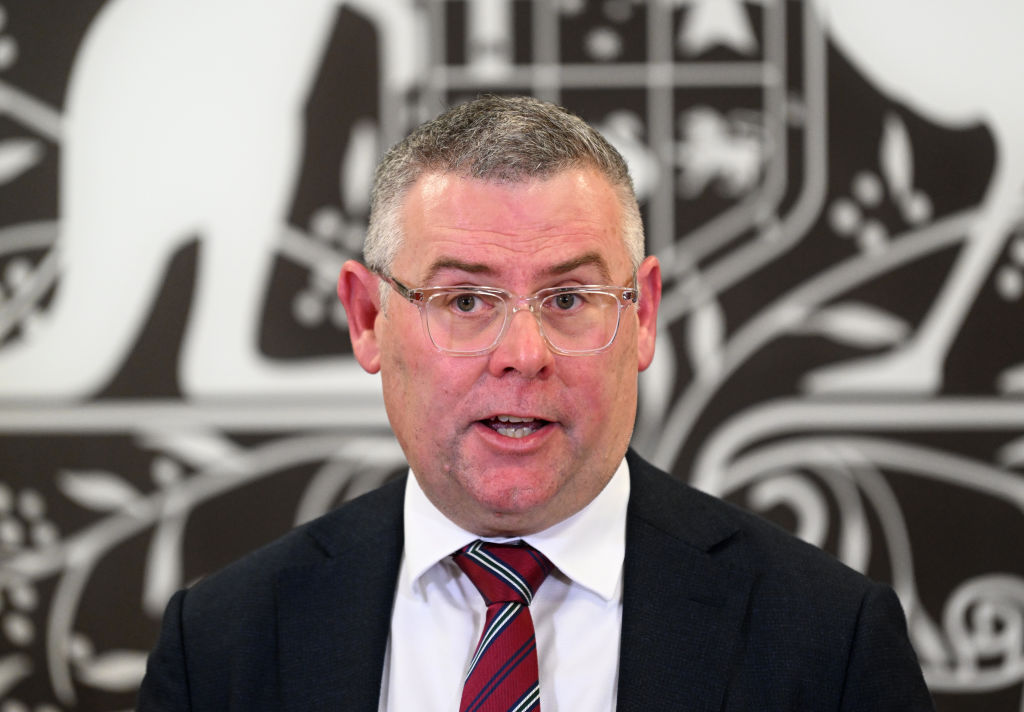
Australian Energy Minister Murray Watt has granted approval to multinational energy company Woodside to extend the life of its North West Shelf gas project until 2070.
This is amid ongoing criticism from Pacific Island leaders, some environmental groups, and those concerns about Aboriginal rock art.
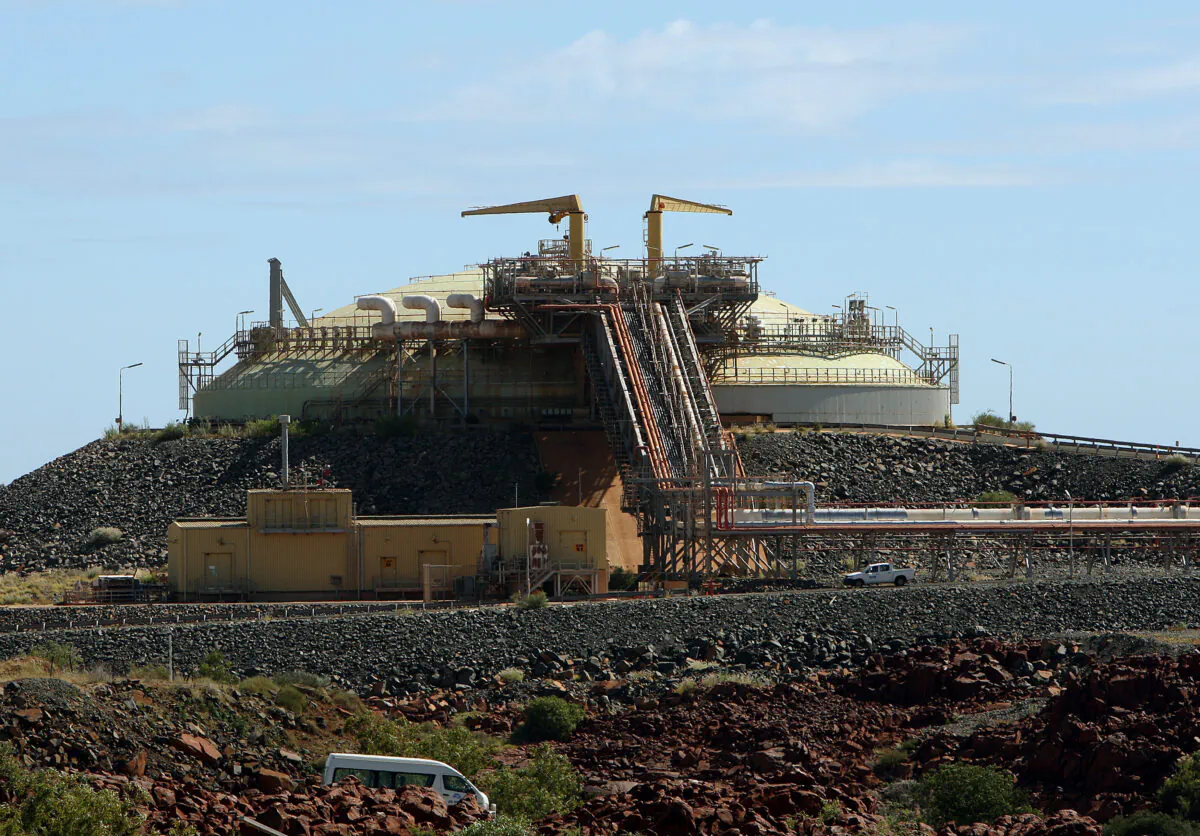
The extension allows Woodside to continue operating its Karratha plant, which processes gas and liquefies it for export, beyond 2030.
The facility is situated just metres from 50,000-year-0ld World Heritage-listed rock art, which local Aboriginal groups and environmentalists say is being damaged by its nitrous oxide emissions.
Watt has been negotiating with the company since May and says he has imposed 48 conditions on the extension related to restricting and monitoring what it releases into the atmosphere, including requiring a reduction in some gas emissions of 60 percent by 2030.
The project will also be required to reduce its emissions every year and reach net zero greenhouse gas emissions by 2050.
He also granted a “partial” protection order for the site under the Aboriginal and Torres Strait Islander Heritage Protection Act, after an application was made more than three years ago by Raelene Cooper, of the Save Our Songlines group.
Watts says this requires Woodside to “do what they have said they will do in cultural heritage management plans” and consult Aboriginal owners on how best to manage the area.
Opposition to the Project
There are critics of the project however.
The Australia Institute argues that emissions from current gas exports are greater than those of 153 individual countries and greater than all of Australia’s coal power stations combined.
The current volume is 182 million tonnes CO2 annually, and the planned expansion of WA’s gas exports are potentially even greater: up to 250 mt CO2e annually and 15 billion tonnes over the lifetime of these projects, equivalent to 33 years of Australia’s entire emissions (459.7 mt).
Greenpeace Australia Pacific called it “a betrayal of Australian and Pacific communities facing worsening climate impacts” and urged the government to “stop favouring fossil fuel corporations and start protecting the people who voted them in.”
It claims the decision risks advancing Woodside’s “dangerous” plans to drill for gas at Scott Reef, and “recklessly flouts the scientific consensus that new fossil fuels are incompatible with limiting global warming to 1.5°C.”
Leaders at the Pacific Island Forum (PIF) in the Solomon Islands had called for a refusal of the extension, saying Australia has a responsibility to uphold the 1.5C target by setting a science-aligned climate plan that includes a plan to end fossil fuels.
“Pacific leaders must judge actions, not promises,” said Rufino Varea, regional director at Pacific Islands Climate Action Network.
“If Australia truly wants to partner with the Pacific for COP31, it must prove it with a genuine and strong climate plan. Approving the North West Shelf gas extension will break trust and undermine any claim to be a ‘Pacific’ partner.
“Partnership is concrete. It is real emissions cuts. It is no new fossil projects. It is funding for loss and damage. It is meaningful Pacific leadership in the room where decisions are made. Partnership means protecting Pacific lives and livelihoods, not locking us into deeper harm.”
Vanuatu’s climate and energy minister, Ralph Regenvanu, had warned that an approval could mean Australia will be legally accountable for its greenhouse gas emissions following a recent ruling by the International Court of Justice.
“The advisory opinion of the International Court of Justice made it clear that going down the fossil fuel production expansion [route] is an internationally wrongful act under international law,” he said. “So that’s something that Australia should consider.”
The group Pacific Elders, made up of senior leaders from across the region, said the decision showed that “Australia is not being a trustworthy Forum partner in tackling the Pacific’s number one security threat … [and] efforts by Australia in securing the support of Pacific Island countries to cohost COP31 seriously compromise the security of our Pacific communities and grossly undermine the spirit of partnership and trust in our Pacific family.”
Earlier, Albanese told journalists in Honiara that Australia would determine its own climate policies, regardless of what Pacific leaders may say.
“What we’re doing is transitioning in a way that ensures that there’s energy security, that ensures that there’s community support for action,” he said. “My government’s committed to action on climate change.”
 Friends Read Free
Copy
Facebook
Tweet
Friends Read Free
Copy
Facebook
Tweet