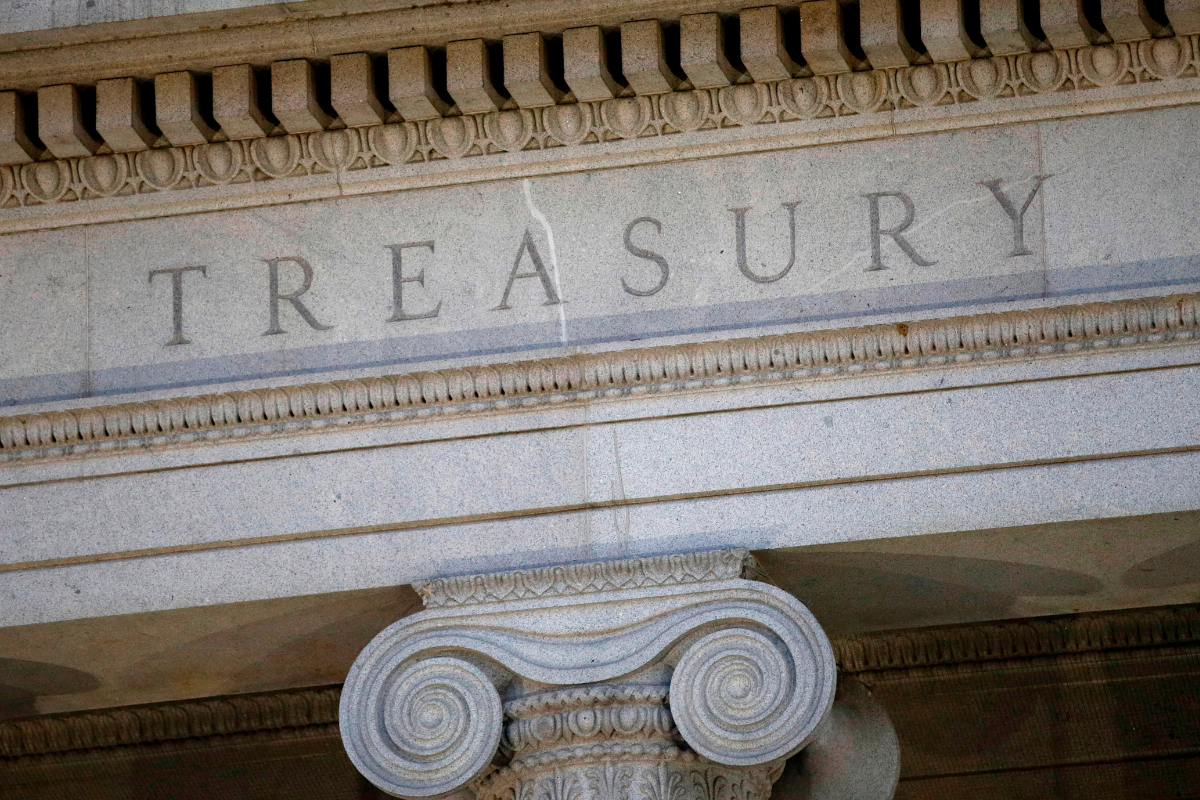

Norway’s $2.3 trillion sovereign wealth fund has proposed trimming its holdings of global government bonds, including U.S. Treasury securities.
In a Sept. 1 letter to the Ministry of Finance—made public three days later—the heads of Norges Bank Investment Management said they are seeking to diversify their risk exposure and bolster returns.
Under the new direction, the fund would lower its government subindex of bond holdings from 70 percent to 50 percent, a level “sufficient to cover the liquidity needs, including in periods of turbulence in financial markets.”
U.S. government bonds would be most affected as the fund’s Treasury holdings would decrease from 34.1 percent to 21.9 percent.
The fund would also reduce its euro area bond holdings from 16.8 percent to 14.1 percent. Conversely, it would lift its share of Japanese government bonds from 4.6 percent to 7.4 percent.
Changes would also focus on adjusting the weights of bond holdings by market value rather than by gross domestic product, “since high government debt is now a general feature of developed economies rather than a distinctive feature of a few countries,” according to the letter.
Officials may consider expanding the bond index to other areas.
“Mortgage-backed securities are of particular interest here, because they over time have provided a risk premium while at the same time contributing to reduced volatility in crisis periods,” the letter reads.
A mortgage-backed security is an investment vehicle backed by a pool of home mortgages. Investors receive cash flows generated by homeowners’ monthly payments.
Overall, these changes are expected to deliver a “marginally higher expected return and marginally lower volatility,” the fund wrote.
Yields Rising
Across advanced economies, government bond yields—returns investors receive for holding these instruments—have been surging, with long-dated securities reaching their highest levels in decades.
The United States has captured the spotlight as a mix of fiscal worries, war-driven inflation, monetary policy, and corporate debt issuance drives up Treasury yields.
Treasury yields rose across the curve after the stronger-than-expected August jobs report on Sept. 4.
The U.S. economy created 162,000 new jobs last month, topping the consensus estimate of 56,000. The unemployment rate held steady at 4.1 percent.
Despite the upbeat number, stocks slumped amid fears that nonfarm payrolls will prompt the Federal Reserve to raise interest rates this month or, at least, keep rates higher for longer.
 Federal Reserve chairman Kevin Warsh speaks during a press conference in Washington on July 29, 2026. (Madalina Kilroy/The Epoch Times)
“While today’s labor report shifted September hike expectations sharply, the outcome is not a sure bet, and additional signals that confirm inflation has peaked will make the Fed’s decision to hike even tougher at the September meeting,” Ripley told The Epoch Times in an emailed note.
CME FedWatch data show a 60 percent chance of the Fed raising the benchmark federal funds rate by 25 basis points to a new target range of 3.75 percent to 4 percent.
Although U.S. debt and budget deficits have captured attention, monetary policy is likely the chief culprit behind the rise in long-dated rates, according to research by Apollo’s chief economist Torsten Slok.
“There has been no deterioration over the past year in how the market prices U.S. fiscal sustainability or Fed credibility,” Slok said in a note emailed to The Epoch Times.
Additionally, he said, based on the U.S. term premium—the additional compensation investors demand for holding a long‑term Treasury bond—which has moved sideways over the past 12 months, markets could be “less worried about the US fiscal situation compared with the fiscal situation in Germany and Japan.”
“Put differently, the Fed went into 2026 expecting several cuts, and now the [Federal Open Market Committee] is leaning toward hiking. With this backdrop, it is not surprising that long rates are higher,” Slok added.
The Treasury Department is still trying to bring down yields on the long end of the curve.
Soon after Treasury Secretary Scott Bessent outlined plans to double the government’s debt buybacks—by retiring longer‑dated bonds and replacing them with short‑term issuance—new auction data show Washington carried out a $12.5 billion buyback on Sept. 3.
Since early August, the Treasury has repurchased almost $26 billion in government bonds, according to an Epoch Times review of the department’s data, in addition to nearly $200 billion in buybacks since the start of the year.
 Friends Read Free
Copy
Facebook
Tweet
Friends Read Free
Copy
Facebook
Tweet