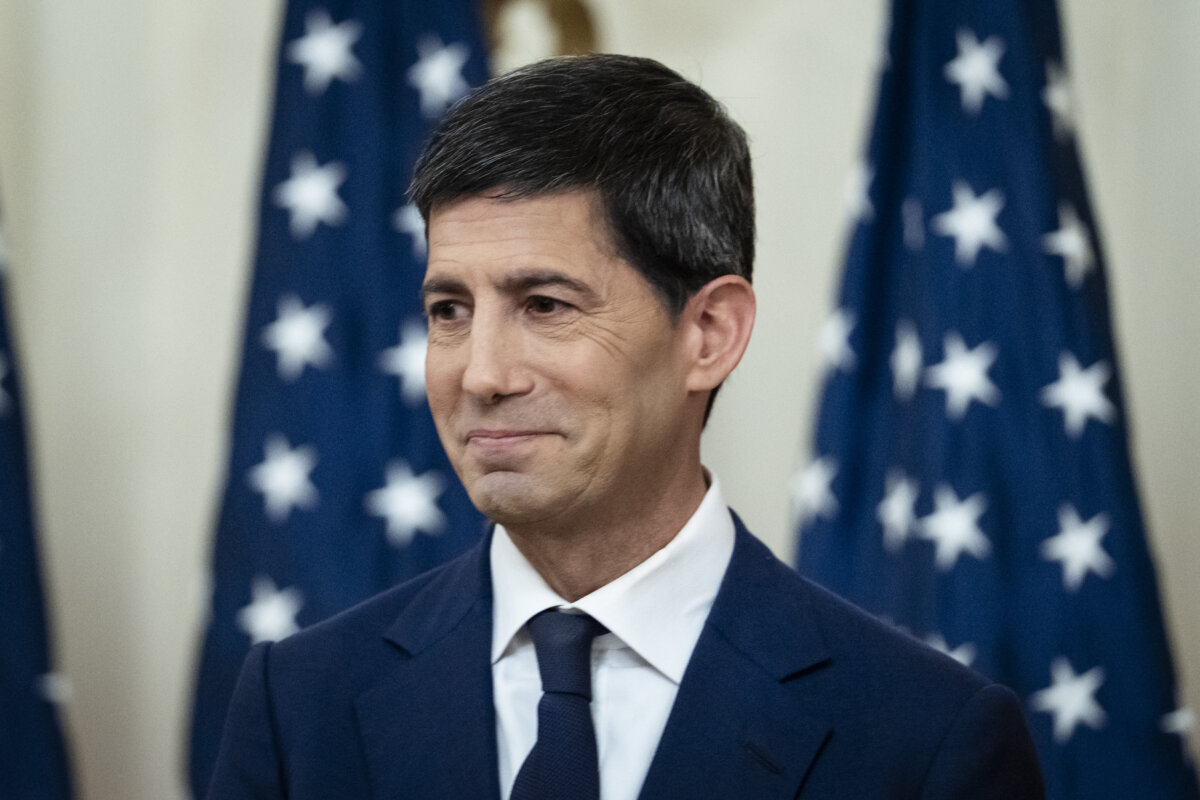

The Federal Reserve commenced its two-day policy meeting on June 16—Kevin Warsh’s first as chairman of the U.S. central bank.
Investors widely expect the Fed to leave interest rates on hold for the fourth straight meeting as monetary policymakers assess current economic conditions.
Officials have left the benchmark federal funds rate—a key rate that influences borrowing costs for businesses and households—in the current target range of 3.5 percent to 3.75 percent.
Traders have increasingly made a rate hike their base-case scenario as early as the December meeting to clamp down on renewed inflationary pressures, according to futures market data.
The 2-year Treasury yield, which typically tracks Fed policy expectations, remains above 4 percent.
This is in sharp contrast to what Warsh has said for almost two years: Interest rates need to be lower as the artificial intelligence (AI) boom ignites a disinflationary period.
Still, with the three-month-old war in Iran ostensibly winding down, the Fed could maintain a wait-and-see approach for the time being to determine whether the oil price shock will filter through the broader economy.
But while the spotlight is on Warsh, eyes should also be on the overall language in the post-meeting statement, says Jay Woods, chief market strategist at Freedom Capital Markets.
“Watch the overall Fed language in their statement and potential dissenters. At the last meeting there were four dissents,” Woods said in a note emailed to The Epoch Times.
“One wanted a cut and three others wanted language that was leaning towards a possible hike,” he said. “Can he unite the committee to have a message they all agree on to start his tenure?”
The last time a meeting had four dissents was in October 1992.
Art of Warsh Talk
A key element of a Warsh-led Federal Reserve could be less talking, more thinking.
Warsh, throughout his Senate confirmation hearing, teased possible changes to the Federal Reserve System’s public communication.
Beginning under Chairman Alan Greenspan in the early 2000s, the institution has been more open rather than lurking behind the curtain. The idea behind issuing forward guidance—teasing out policy plans—is to allow financial markets to do much of the work for monetary policymakers. This might come to an end.
The bell may also toll, or at least reform, for the Summary of Economic Projections and the dot plot. This is a quarterly outlook, put together by policymakers, that forecasts policy and the economy over a period of several months and years.
“The Fed tells the whole world what their dots are going to be, what their forecasts are going to be. The Fed’s human. Then they hold on to those forecasts longer than they should,” Warsh said in April.
“I think these are big changes that are needed.”
Since a rate pause has been largely priced in, what Warsh says will be front and center for economic observers and investors, notes Woods.
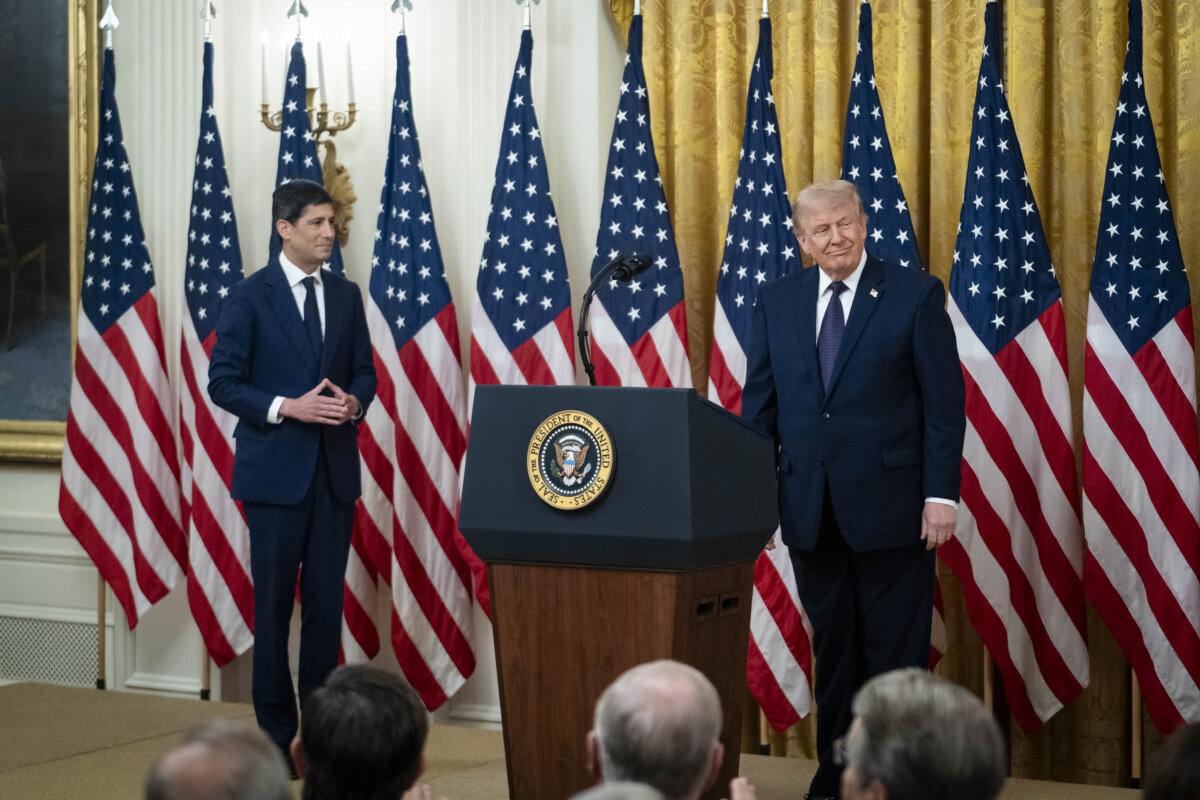
“What we want to know is how the new Fed Chair will put his stamp on this meeting and subsequent meetings going forward,” he said.
“Communication will be the key. Market participants have become accustomed to a post-FOMC decision press conference. Will Mr. Warsh continue this dialogue?”
Inside the Inflation Data
Data could be the Fed’s primary focus, and it has plenty of up-to-date numbers to sift through, particularly on the inflation front.
Consumer inflation has surged since the start of the Iranian conflict.
The annual inflation rate surged past 4 percent last month, and pipeline indicators suggest consumers could be paying higher prices in the coming months.
At the same time, structural inflation trends are tamer.
Core inflation, which strips out volatile energy and food categories, ticked up to 2.9 percent in May.
April’s 12-month trimmed-mean personal consumption expenditures price index—Warsh’s preferred measure to gauge inflation since it removes outliers—was 2.3 percent, according to the Dallas Fed.
The Fed’s Beige Book—a periodic report summarizing the economic conditions of the central bank’s 12 districts—is not providing a clearer picture either.
While energy-related costs spilled into shipping, groceries, and fertilizer, businesses have been reluctant to raise their prices.
“The ability to pass on higher costs remained mixed across sectors, particularly among consumer-facing firms,” the report stated. “Consumer uncertainty and concerns about fuel prices impacting households were noted by several Districts.”
Ultimately, a positive development has been the decline in energy costs, which have driven much of the inflation since March.
U.S. crude oil prices plummeted below $90 a barrel on June 15 upon news of a U.S.–Iran deal to end the conflict. The national average for a gallon of gasoline has plunged, inching closer to $4, according to the American Automobile Association.
 Friends Read Free
Copy
Facebook
Tweet
Friends Read Free
Copy
Facebook
Tweet