
Small-business optimism in the United States fell in October from the previous month amid lower sales and increasing costs, the National Federation of Independent Business (NFIB) said in a Nov. 11 statement.
NFIB’s small business optimism index declined by 0.6 points in October from September, to hit 98.2. The index is calculated based on a survey of NFIB members.
Bill Dunkelberg, chief economist at the federation, attributed the decline to small-business owners reporting “lower sales and reduced profits.”
A net negative 13 percent of survey respondents reported higher nominal sales over the previous three months, down by 6 points from September. Moreover, the net percent of owners expecting to see higher real sales volumes fell by 2 points during this period, NFIB stated.
Meanwhile, the frequency of reports of positive profit trends decreased by 9 points in October from September. The majority of owners reporting lower profits blamed the situation on weaker sales, followed by an increase in the cost of materials.
The producer price index, which measures inflation at the wholesale level, grew by 2.6 percent in August from a year ago, according to data from the Bureau of Labor Statistics. The rate has remained higher than 2 percent for every single month since April 2024.
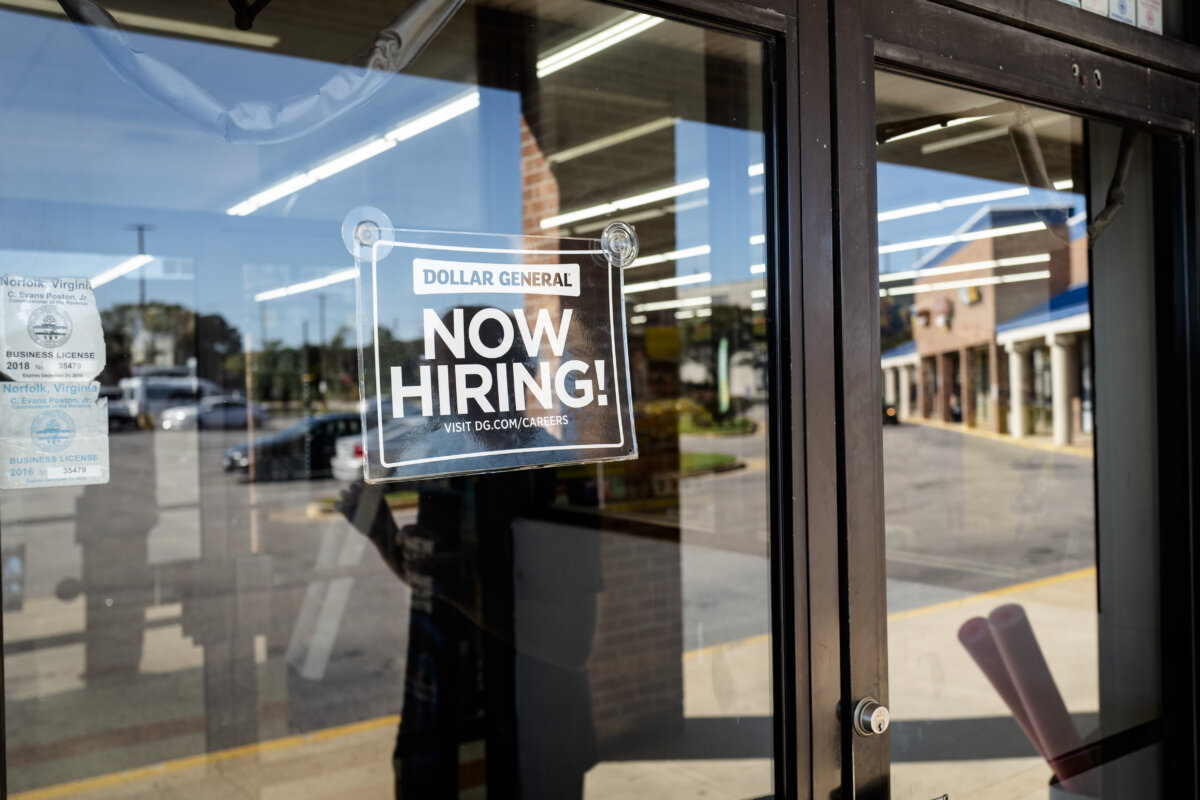
“Many firms are still navigating a labor shortage and want to hire but are having difficulty doing so, with labor quality being the top issue for Main Street,” Dunkelberg said.
In the survey, 27 percent of owners cited labor quality as their single most important challenge, the highest level since November 2021, NFIB stated.
In a Sept. 16 statement, the Georgetown University Center on Education and the Workforce said the United States is facing a “skills shortage crisis” when it comes to critical occupations.
“Without massive and immediate increases in educational attainment, 171 occupations of the 561 we analyzed will face skills shortages through 2032,” said Nicole Smith, chief economist at the center. Fields facing a shortage risk include teaching, engineering, nursing, and management.
According to a 2024 survey, business owners were facing difficulties in hiring and retaining Generation Z employees.
“Employers gave a failing report card to Gen Z in the workplace,” the report from the PublicSquare platform states. A majority considered members of Gen Z to be less reliable than workers in other generations. They also said they tend to cause “division and toxicity” in the workplace.
More than 70 percent of employers said Gen Z is the “most likely group to have a workplace mental health issue.”
Although optimism fell in October, concerns among owners about the business environment eased, with the uncertainty index declining by 12 points on a monthly basis, the report states. The index is at its lowest reading this year.
Overall Outlook
Even with slightly lower optimism, business activity in the United States is robust, according to a Nov. 5 statement from S&P Global.
All sectors tracked in S&P’s U.S. sector purchasing managers index “posted a rise in output volumes” in October, it stated.
The purchasing managers index is based on responses received from purchasing managers of more than 1,000 private sector companies in the United States. It tracks seven sectors in total: basic materials, consumer goods, consumer services, financials, health care, industrials, and technology.
“October data illustrated improving household spending patterns, as both consumer goods and consumer services recorded steeper rates of output growth,” the report states. “The latest upturn in consumer services activity was the fastest since December 2024.”
The federal government shutdown has had a negative effect on businesses.
In a Nov. 10 update, the Chamber of Commerce stated that its analysis showed that 65,500 small-business contractors in the country stand to lose $3 billion per week for every week of a shutdown.
The shutdown began on Oct. 1 and is already the longest in U.S. history at more than 40 days; the previous longest shutdown of 2018 to 2019 lasted for 34 full days.
On Nov. 10, the Senate approved a bill to end the shutdown. The bill now heads to the House. If the House also passes it, the bill will head over to the desk of President Donald Trump for final approval.
As for the overall outlook of the U.S. economy, consulting services company Deloitte stated in a Sept. 30 report that it expects business investment growth to remain strong per its baseline scenario.
“Business investment remains strong as companies continue to pour money into [artificial intelligence-related] investments,” the report reads. “Even with the headwinds expected next year, real business investment is expected to grow by 3 percent before accelerating to 4.4 percent in 2028.”
Deloitte expects U.S. gross domestic product to grow by 1.8 percent this year, down from 2.8 percent in 2024.
In the third quarter of 2025, the U.S. economy had grown by 3.8 percent, exceeding expectations and easily besting the 0.6 percent contraction of the second quarter.
“America’s economic resurgence under President Trump continues: revised data show even stronger real [gross domestic product] growth of 3.8 percent in second quarter 2025 thanks to the Trump agenda of tax cuts, deregulation, tariffs, and energy abundance,” White House deputy press secretary Kush Desai said in a Sept. 25 X post.
 Friends Read Free
Copy
Facebook
Tweet
Friends Read Free
Copy
Facebook
Tweet