News Analysis
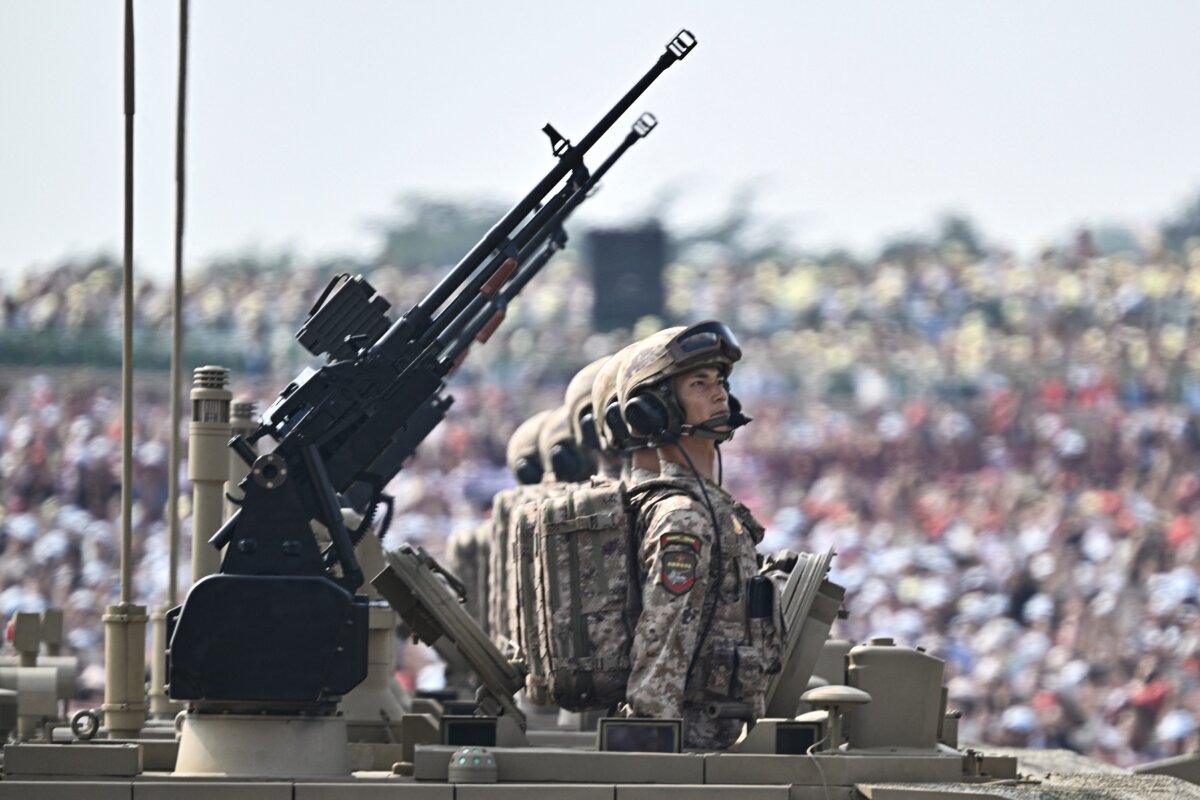
When the Chinese military marched through Beijing in September to commemorate the 80th anniversary of the end of World War II, the spectacle appeared to project discipline, power, and loyalty—core images that the Chinese Communist Party (CCP) seeks to associate with its armed forces.
However, beneath the polished facade, morale in the People’s Liberation Army (PLA) is strained, according to current and former service members, veterans’ advocates, and analysts who recently spoke with the Chinese-language edition of The Epoch Times. They cite economic pressures, uncertainty about post-military life, and corruption within the PLA as key factors.
Economic Pressures Drive Many Recruits
For much of the Mao Zedong era (1949–1976)—and especially during the Cultural Revolution—joining the military was one of the few ways rural Chinese youths could change their lives. That appeal has steadily eroded since the late 1970s, as market reforms expanded civilian opportunities. Furthermore, observers say that the former one-child policy further complicated military life, as long deployments left aging parents without caregivers.
Since then, Beijing has taken steps to ensure the military remains politically reliable. Soldiers are no longer allowed to serve in their home provinces, a policy designed to prevent them from siding with local populations in the event of unrest.
Today, recruitment still draws heavily from rural areas, but the educational bar has been raised. China’s Military Service Law in 2021 and the Regulation on the Conscription Work in 2023 prioritize college students, sidelining those with only secondary education.
Wu Wei, a staff member at a veterans’ vocational institute, told The Epoch Times that the change has been dramatic.
“Before 2023, there were still many recruits with only a high school education. After that, the numbers dropped sharply,” said Wu, who used a pseudonym out of fear of potential retaliation by authorities.
Amid high youth unemployment, many recruits are drawn to military service for financial reasons rather than patriotism, despite state media campaigns glorifying it.
“For many young people, it’s about making some money,” Wu said. “You can work two years [in civilian jobs] and still not save 100,000 yuan [about $14,000], so they choose the military. In some places, officials even demand bribes just to let you enlist.”
According to Wu, a two-year conscript typically receives about 50,000 yuan (about $7,000) upon discharge, plus a modest monthly allowance during service.
Veterans Say CCP Promises Often Go Unfulfilled
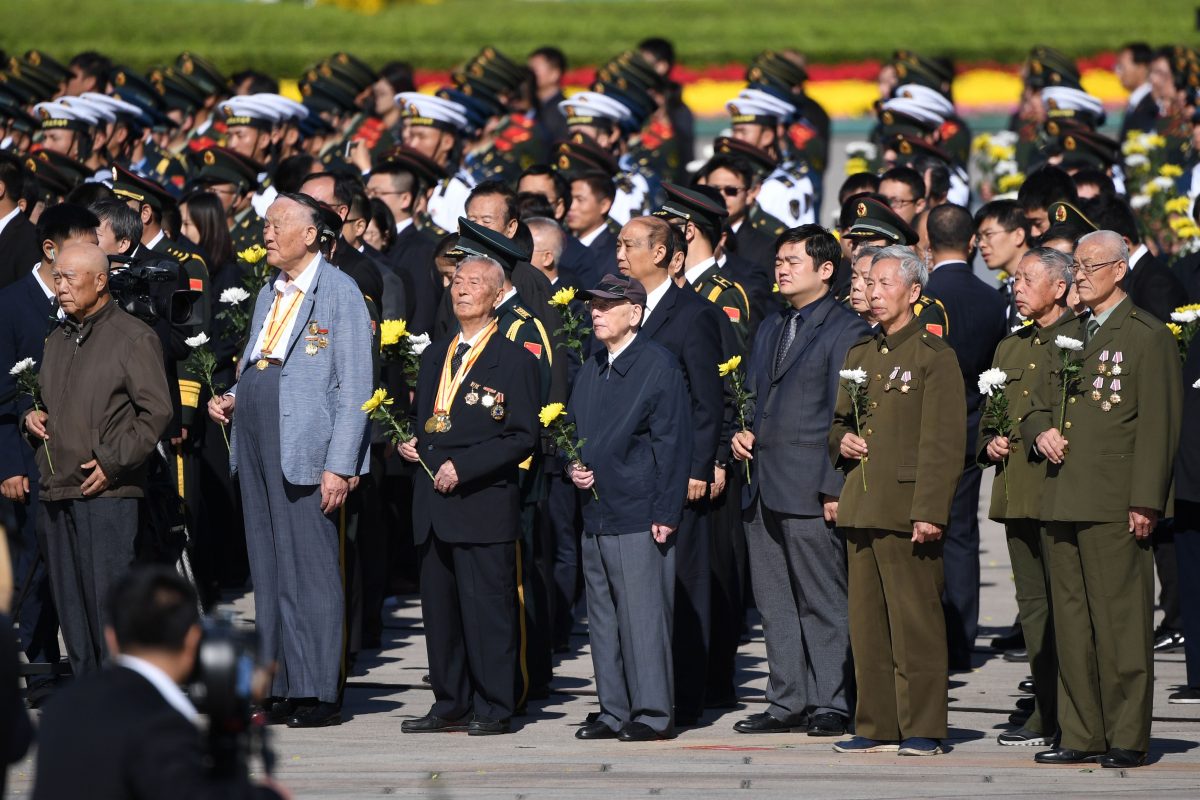
On paper, local governments are responsible for veterans’ pensions and job placement, including positions reserved in state-owned enterprises. In reality, these commitments are frequently delayed or ignored, triggering waves of protests over the years.
Veterans of the 1979 Sino–Vietnamese War—now largely absent from official narratives emphasizing friendship with Hanoi—have been particularly vocal. In 2016, thousands of veterans surrounded the headquarters of the Central Military Commission in Beijing. Similar protests took place all over the country in 2018.
In response, Beijing established a Ministry of Veterans Affairs in 2018 in an attempt to improve benefits. However, the veterans who spoke with The Epoch Times did not notice a significant change in the treatment of veterans, and discontent remains.
In June this year, a video circulated online showing an elderly Chinese veteran shouting at a railway station in Jiangsu Province, saying, “Joining the army was a mistake. Joining the CCP was a mistake.” The clip quickly disappeared from Chinese social media platforms.
Active-duty soldiers have occasionally spoken out when their families face injustice. In July 2024, a female soldier posted a video online accusing local authorities in Jiangsu Province of illegally demolishing her family’s factory while she was on duty, and claiming that her parents were injured and detained. The Epoch Times could not independently verify the claim.
On Dec. 26, the Ministry of Veterans Affairs announced that it had raised subsidies for certain disabled veterans and the families of fallen soldiers starting in August this year. The interviewees told The Epoch Times that the increases are limited in scope and may be difficult to fund amid fiscal strain due to China’s sluggish economy.
Few Pathways Back to Civilian Life
Returning to civilian life can be harder than entering the military.
Xiao Hua, a veteran from Henan Province who served two years as a conscript and three more as a non-commissioned officer, said he received approximately 180,000 yuan (about $25,600) after five years of service, which was not enough to secure a stable future.
“Finding work is really difficult,” said Xiao, who spoke to The Epoch Times using a pseudonym out of fear of potential retaliation by authorities. “In the army, I did logistics—answering phones, cleaning offices. None of that helps outside.”
Wu said many veterans find themselves worse off than fresh college graduates. Skills learned in specialized military roles—such as explosive ordnance disposal and tank maintenance—rarely translate into civilian jobs. Government job placements are typically reserved for those who serve 12 years or more.
As a result, many veterans retrain in fields such as video production or social media marketing, or end up as security guards, factory workers, or private enforcers, according to Wu.
Unlike in the United States, China lacks a comprehensive veterans’ education or health care system.
“The ones with higher education or technical communications roles do better,” Wu said. “But those who left secondary school early often spend their severance quickly and have nowhere else to go.”
Corruption Within the Ranks
Wu and Xiao said that disillusionment began while they were still in uniform.
Promotion opportunities for non-commissioned officers are limited, and corruption is widely perceived as systemic. Multiple senior generals—some promoted under CCP leader Xi Jinping—have fallen from grace in recent anti-corruption purges, reinforcing the sense that bribery and favoritism are entrenched, they said.
Both Wu and Xiao alleged that remaining in the military beyond the mandatory service of two years often requires paying bribes of 100,000 yuan (about $14,000) or more, which they said undermines a sense of honor.
Bai Liusu, a former female soldier who also used a pseudonym out of fear of potential retaliation by authorities, told The Epoch Times that she once experienced and witnessed abuse and extortion during basic training in an army communications unit in Beijing, including being forced to pay money to superiors and witnessing sexual exploitation.
Sheng Xue, a Canada-based journalist and Chinese pro-democracy activist, told The Epoch Times that “corruption at the top of the Chinese military has become systemic, while mid-level officers often carry out orders passively, and rank-and-file soldiers are reduced to mere compliance, lacking genuine combat capability or strong morale.”
Isolation, Surveillance, and Political Control
Life on base is austere. Housing is often basic, entertainment is scarce, and deployments are long—especially in remote border regions. Some soldiers spend as little as 40 days a year with their spouses. Permission to live with family can take a decade or more, and military spouses face legal hurdles in seeking divorce.
While daily routines resemble those of militaries elsewhere—training, maintenance, drills—the PLA places exceptional emphasis on political loyalty. Political commissars oversee ideological education and monitor the attitudes of officers and enlisted personnel.
Smartphones were banned until 2015 and remain tightly controlled. Xiao said he was allowed access only on Sundays, with devices stored collectively the rest of the week.
Recent PLA media reports indicate that commanders face difficulties balancing discipline with practical measures—excessive restrictions can hinder communication, whereas too few restrictions may lead to intelligence leaks and distractions. Earlier this year, PLA media outlets published an article warning people against circumventing China’s internet firewall.
Sheng, the pro-democracy activist, told The Epoch Times that the emphasis on ideological control reflects deeper anxiety among CCP officials.
“In the past, Chinese soldiers had little access to the outside world,” Sheng said. “That is no longer the case. Many service members still find covert ways to access uncensored information.”
Cracks Beneath the Surface
Despite intense indoctrination, not all soldiers internalize the message.
Wang Yonghong, a former PLA officer now living in the United States, told The Epoch Times that a decade of service failed to turn him into a loyalist. After leaving the military, he became an anti-corruption whistleblower and later a political activist, spending years in prison before fleeing China.
Independent Chinese commentator Du Zheng, writing in Taiwan-based outlet Up Media and citing leaked accounts from within regional commands, reported that some officers quietly discuss resisting orders during a major political crisis, such as a leadership struggle or a conflict over Taiwan. The Epoch Times cannot independently verify this claim.
“There are still people of conscience in the military,” Sheng said. “They may not lead a rebellion, but in a true political turning point, they could refuse to suppress the people. History shows that matters.”
Although Beijing continues to project strength through parades and polished imagery, Sheng said that many PLA personnel face “a reality far removed from the slogans”—one shaped by isolation, limited prospects, and disillusionment that state messaging alone cannot conceal.
Ning Haizhong and Gu Xiaohua contributed to this report.
 Friends Read Free
Copy
Facebook
Tweet
Friends Read Free
Copy
Facebook
Tweet