
The Chinese regime has imposed sanctions on senior officials from Paraguay and Belize over their support for Taiwan, ramping up pressure on the self-ruled island’s remaining diplomatic partners.
The measures against Gustavo Villate, Paraguay’s communication minister, and Francis Fonseca, Belize’s foreign minister, were meant to defend China’s “national sovereignty, security, and development interests,” the Chinese communist regime’s foreign ministry said in statements on Oct. 12.
The ministry said certain politicians in Paraguay and Belize were “stubbornly supporting” their governments in maintaining diplomatic ties with Taiwan, a self-governed democracy Beijing claims as its own territory.
Villate and Fonseca are barred from entering China, including Hong Kong and Macao.
According to the statements, entities and citizens within China are prohibited from doing business or cooperating with the two officials.
Beijing’s sanctions are likely to be symbolic, as officials from Taiwan’s partners usually do not visit China.
The regime has previously imposed sanctions on foreign lawmakers who advocate closer cooperation with Taipei, as part of its strategy to isolate Taiwan internationally.
In June, Beijing threatened to impose a one-year travel ban on four New Zealand lawmakers unless they apologized for their May visit to Taiwan—a demand none has accepted.
In March, China announced sanctions on a Japanese lawmaker over his trip to Taiwan, drawing condemnation from Tokyo.
The Chinese Communist Party has never ruled Taiwan, but its leaders have repeatedly vowed to bring the island under Beijing’s control, by force if necessary.
Under the regime’s influence and pressure, the number of countries that officially recognize Taiwan has shrunk to just 12, from 20 in 2017.
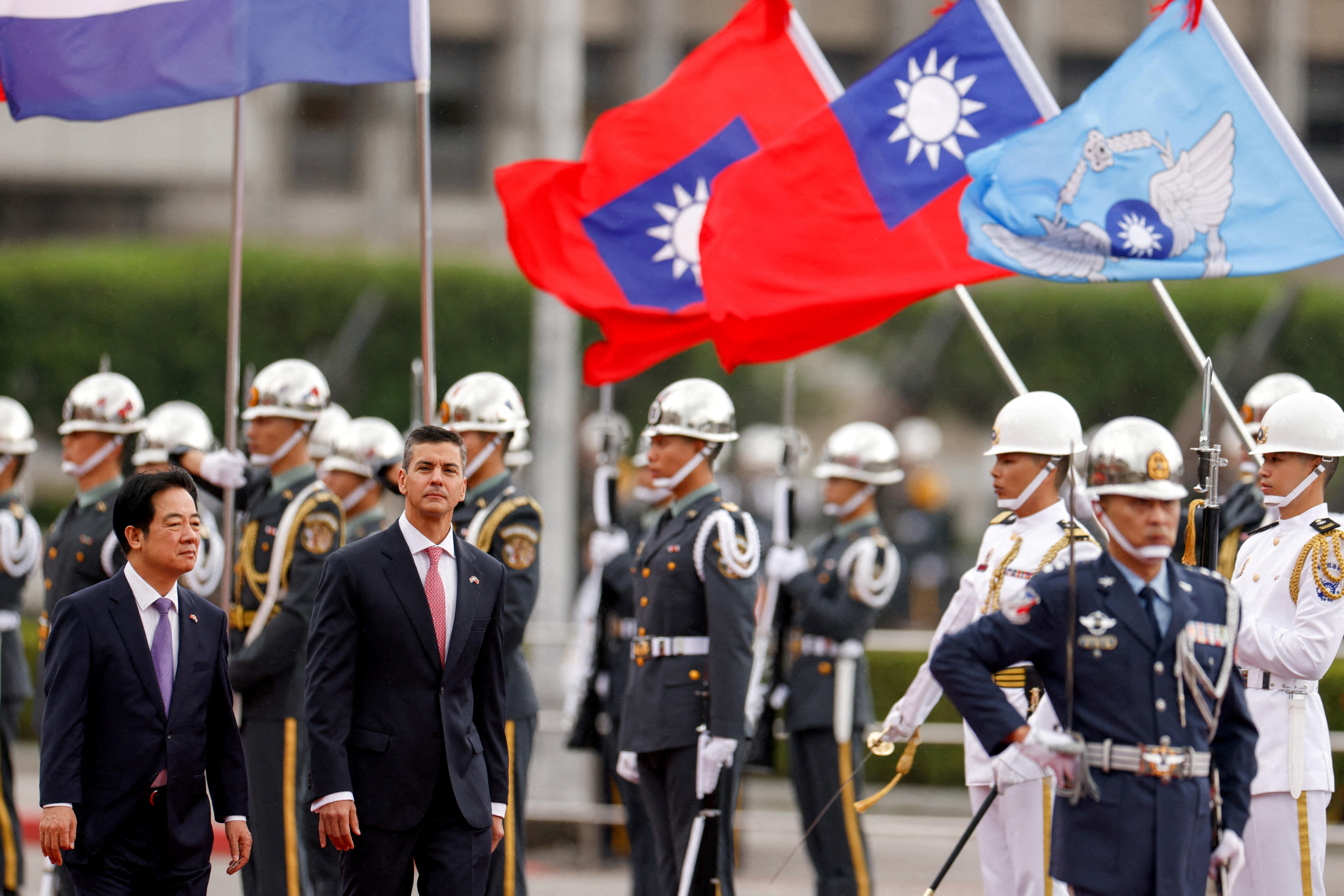 Paraguay President Santiago Pena attends a welcoming ceremony with Taiwanese President Lai Ching-te in Taipei, Taiwan, on May 8, 2026. (Ann Wang/Reuters)
In July, it applauded Papua New Guinea’s decision to close Taiwan’s representative offices—a move the United States called “another example of Beijing’s intimidation campaign.”
‘Blatant Interference’
Taiwan’s foreign ministry condemned Beijing’s sanctions as a “blatant interference” in other countries’ sovereignty and diplomacy.
The actions “laid bare Beijing’s futile attempt to use political intimidation and transnational repression to coerce other countries into submission to its political agenda,” the foreign ministry said in an Oct. 12 statement, according to Taiwan’s semi-official Central News Agency.
There was no response from Paraguay’s government, the only South American country with formal diplomatic relations with Taiwan.
Villate told local media that China’s sanctions would not affect Paraguay’s cooperation with Taiwan, calling the move “expected.”
“We are very calm. We are going to continue working with the projects we have and push this harder,” Villate told ABC Color.
Just two days before Beijing announced the sanctions, Villate marked Taiwan’s national day in a post on X.
“Paraguay reaffirms a relationship of friendship and cooperation, based on shared values and principles: the self-determination of peoples, human rights, and democracy,” Villate wrote on Oct. 10.
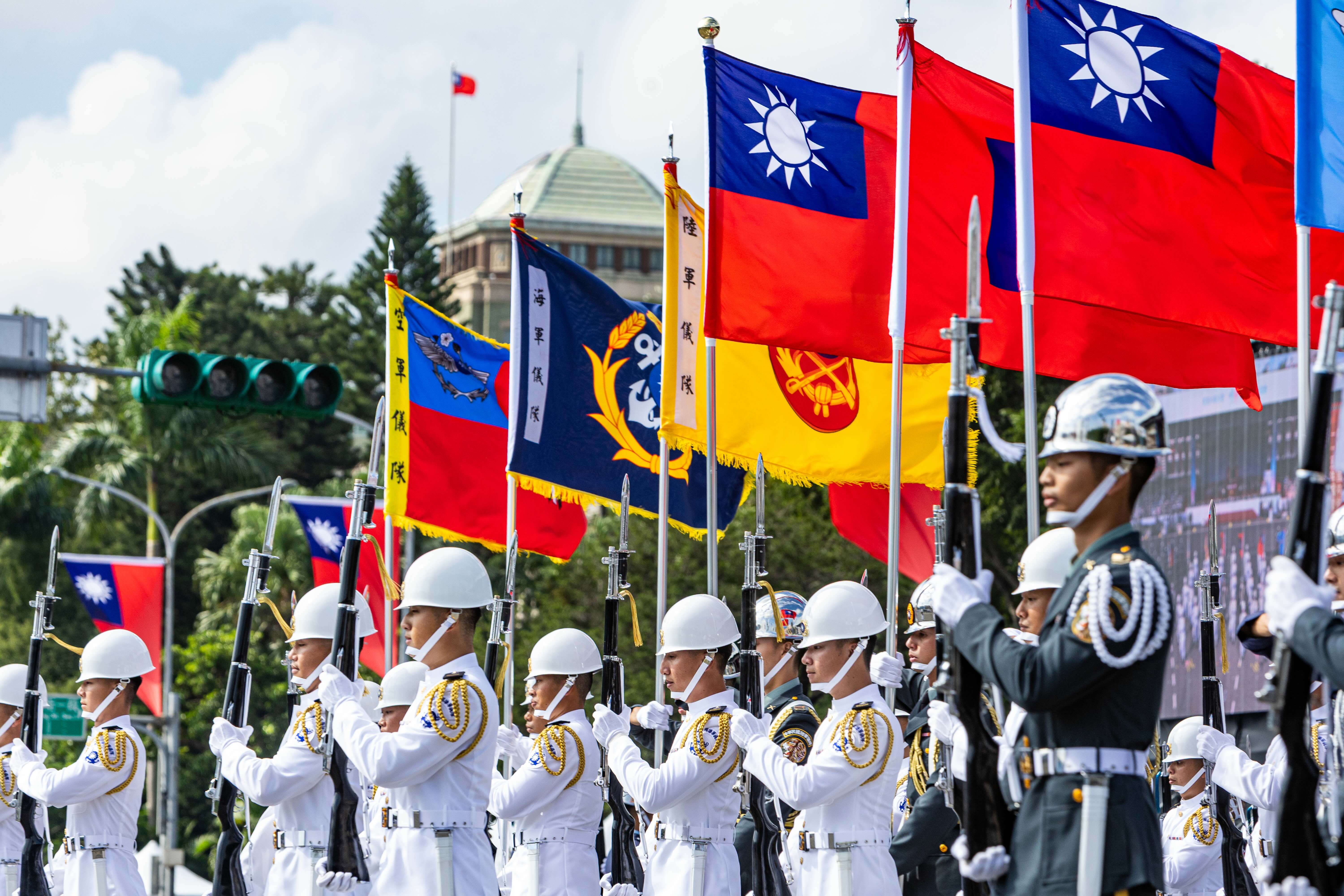 Members of Taiwan’s Joint Armed Forces Honor Guard in front of the Presidential Office Building during the National Day celebrations in Taipei, Taiwan, on Oct. 10, 2026. (Cheng Chia Huang/Getty Images)
On Oct. 11, the Belize Embassy in Taiwan marked 37 years of the country’s diplomatic relations with Taiwan.
“Together, we look forward to a future of growth, opportunity, and lasting friendship,” the embassy wrote on Facebook.
Fonseca also reaffirmed his country’s partnership with Taiwan in late September when hosting Taiwan’s foreign minister, Lin Chia-Lung.
They signed an agreement to cooperate on training each other’s diplomatic staff, according to a readout from Belize’s government.
The regime’s sanctions came as its military escalates pressure on Taiwan.
Wellington Koo, Taiwan’s defense minister, told reporters on Oct. 12 that Taipei is closely monitoring Chinese live-fire drills.
Over the past week, Chinese local maritime authorities have issued a series of no-sail notices, saying that drills would be held in five areas across the Bohai Sea, Yellow Sea, East China Sea, and South China Sea this week.
 Friends Read Free
Copy
Facebook
Tweet
Friends Read Free
Copy
Facebook
Tweet