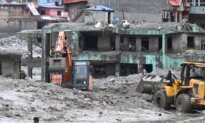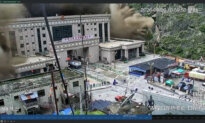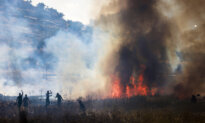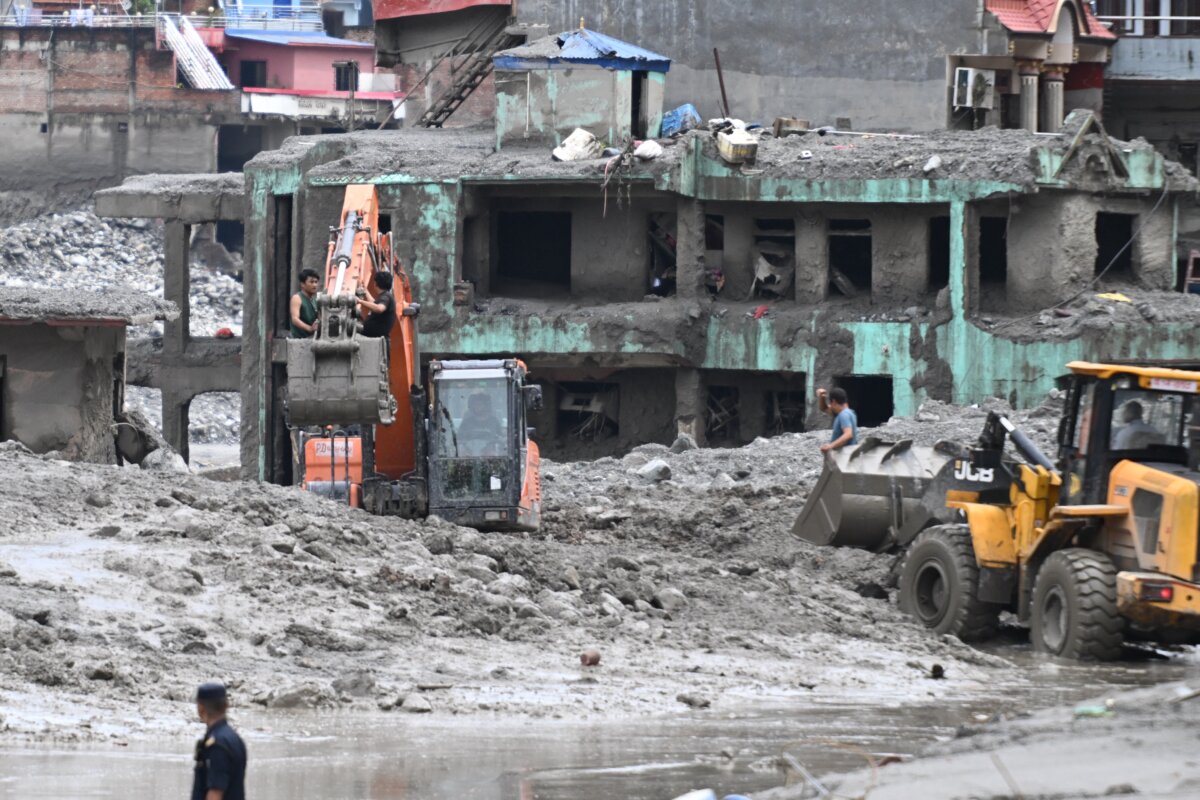

The United States said on Aug. 30 that about 85 Americans remain missing following last week’s devastating flood, which engulfed villages along the border between China and Nepal and wrecked critical infrastructure in the region.
The updates from U.S. State Department spokesman Tommy Pigott came hours after the Nepali authorities issued a fresh warning of a possible flood, and Beijing released its first country-by-country counts of those missing on its side of the border.
“As of 6:00 a.m. this morning, I can say we now have 85 Americans approximately that are unaccounted for,” Pigott told ABC News’s “This Week.” “We’ve also now seen nine Americans be safely evacuated. We are currently unaware of any U.S. citizen deaths at this time.”
The United States has activated $3.6 million in emergency humanitarian assistance, including up to three months of emergency food for up to 10,000 flood-affected households, according to Pigott. U.S. assistance will also be used to rehabilitate roads and mobilize specialized transport options to reach hard-hit, remote areas, he added.
“Our embassies in Beijing and Kathmandu are working 24/7 in terms of communicating and coordinating with local officials, trying to get that reliable information,” he said. “If any American is in the region, please register for the Smart Traveler Enrollment Program. That is so essential, so we know how to contact you, also know where you are.”
A U.S. disaster-area response adviser is on the ground, coordinating with Nepali authorities to offer any needed assistance, Pigott noted.
“Our priority is the safety and security of the American people,” he said. “As you mentioned, the remoteness of this location makes getting reliable information difficult. But our dedication remains.”
More Than 3,000 Missing
The death toll from the flash flood on the Nepali side of the border has climbed to 781, with 2,502 people still missing, according to an Aug. 30 statement from Nepal’s National Disaster Risk Reduction and Management Authority.
In a separate social media update, the Nepal Tourism Board said as many as 591 foreign tourists are still “out of communication.”
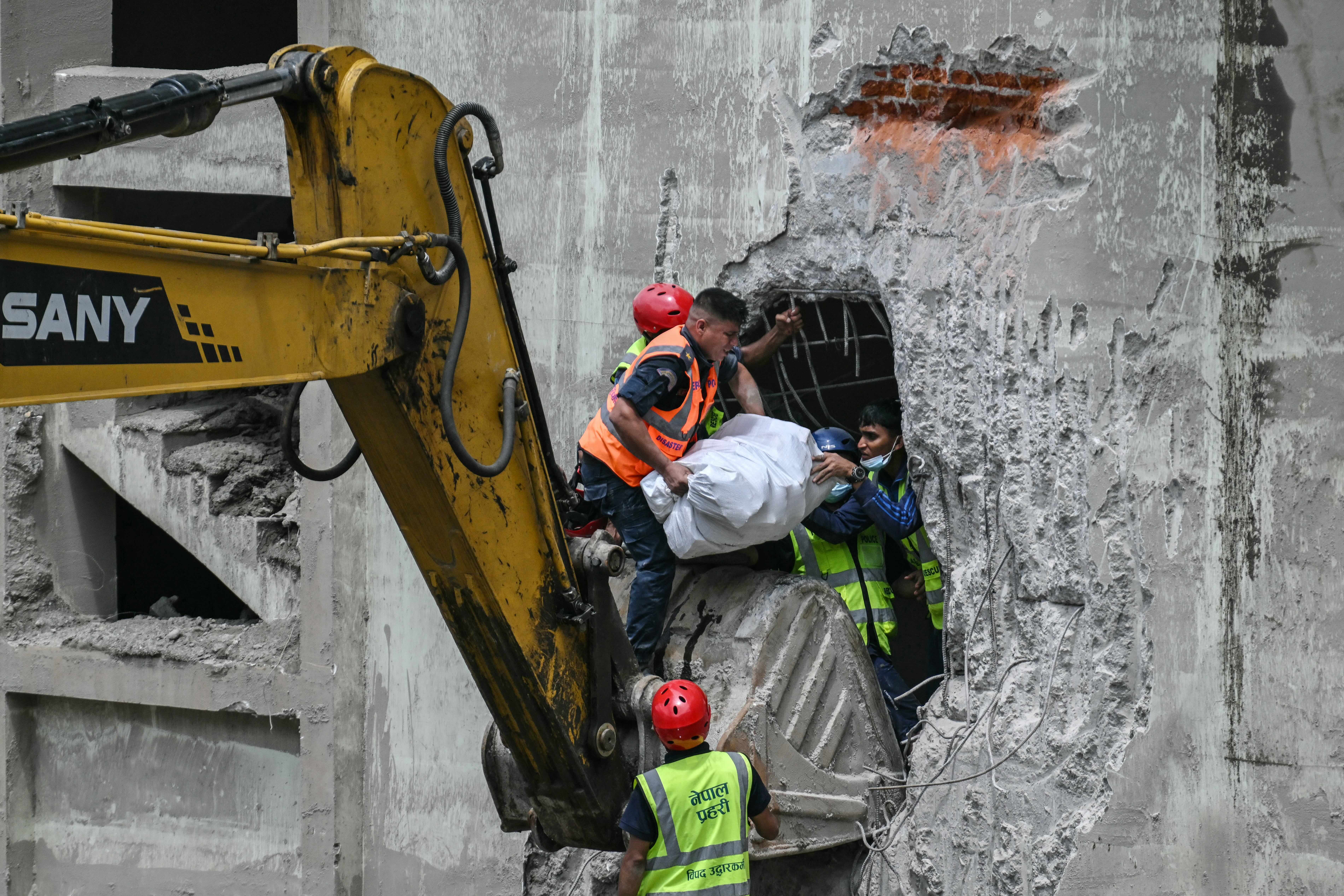 A team of Nepal police and National Disaster Risk Reduction and Management Authority retrieves money and documents from a bank covered in sludge in the aftermath of flash floods at Trishuli in Nepal’s Nuwakot district on Aug. 30, 2026. (Arun Sankar/AFP via Getty Images)
At a press conference in Tibet, officials said 261 missing foreign tourists were from 23 countries, with the largest group being 104 Nepalese citizens, according to a transcript issued by state broadcaster CCTV.
Among the missing were 49 Indians, 33 Latvians, 18 Americans, 15 Britons, 6 Canadians, 6 Australians, and 4 South Africans.
The update marked the first time Beijing released a breakdown by nationality of foreign nationals out of contact in Tibet.
Tibet is one of the most repressive regions in China. The communist regime has maintained a harsh approach against any dissent in the area since its troops seized control of the territory in 1951. Foreign journalists need a special travel permit to enter the region, which U.S. officials have said is rarely granted.
Since the flooding occurred last week, Chinese news agencies have largely relied on state media reports, making it hard to know the real situation in the remote Himalayan region beyond the official narrative.
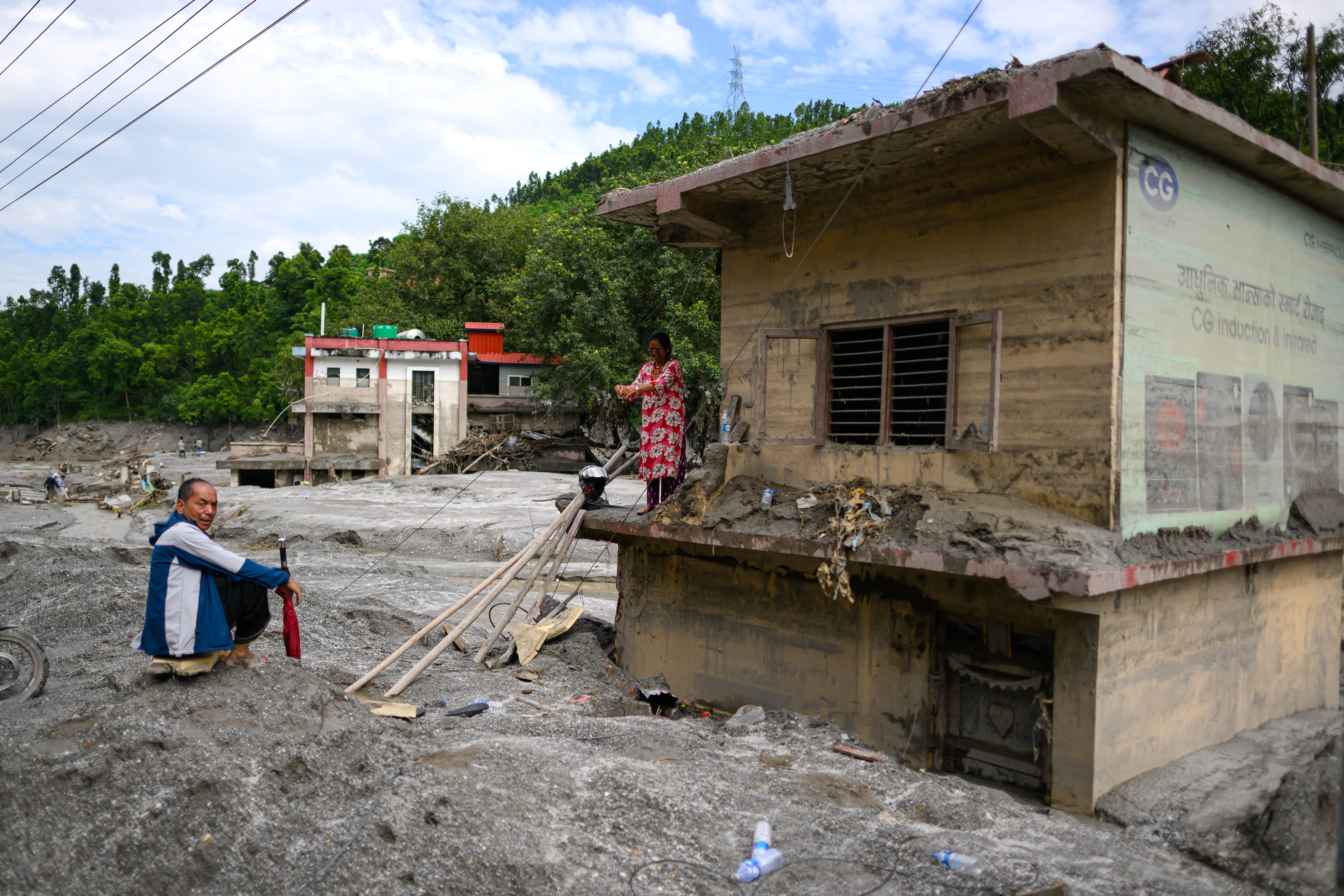 A woman (R) stands atop her house covered in mud in the aftermath of flash floods at Baireni in Nepal’s Dhading district on Aug. 30, 2026. (Manan Vatsyayana/AFP via Getty Images)
Initial Assessment of Cause
The U.S. Geological Survey has determined that “a glacial collapse and debris flow” was responsible for “subsequent catastrophic impacts downstream” near the Nepal–China border.
At a briefing on Aug. 30, Su Pengcheng, a researcher at state-backed Chinese Academy of Sciences, offered a similar assessment in more detail.
Around 10:52 a.m. local time on Aug. 28, a glacier on the north slope of Langtang Lirung peak, a subrange of the Nepalese Himalayas at roughly 5,200 meters (17,060 feet), suddenly broke apart.
The falling ice and rock quickly descended to around 4,000 meters (13,100 feet), scraping and picking up mountain debris along the way, and creating a “massive debris flow,” Su said.
It then moved along the rivers at high speed and hit Gyirong Port—a main border crossing between China and Nepal—at an elevation of 1,800 meters (5,905 feet).
The entire process took only six to seven minutes, Su noted.
It left approximately 173 acres of the area devastated, sweeping away about 27 buildings and associated facilities, destroying roads leading to the crossing, and cutting off communications and electricity, he added.
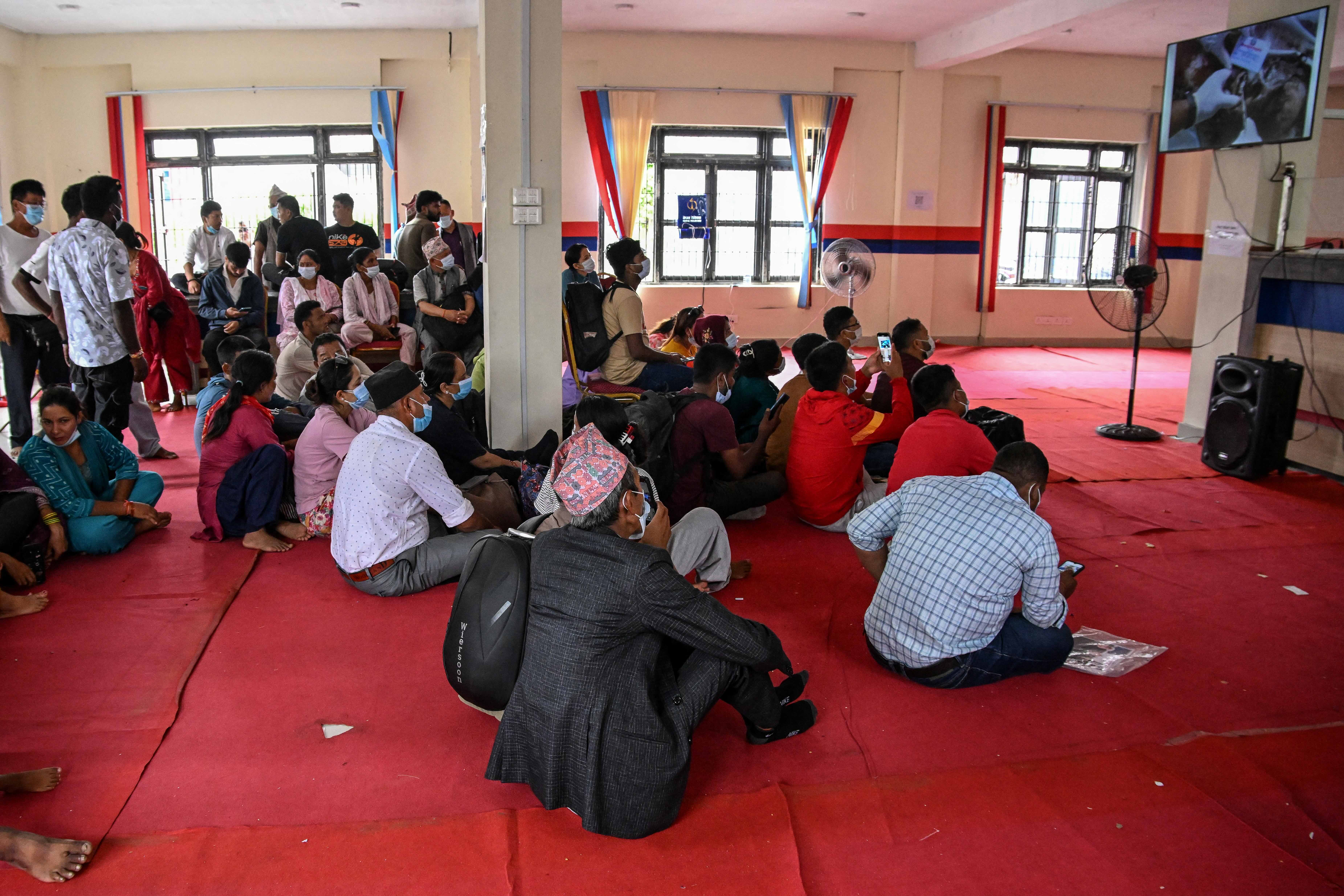 Family members watch a screen displaying identities of victims at a mortuary in the aftermath of flash floods, in Bharatpur of Nepal’s Chitwan district on Aug. 30, 2026. (Prakash Mathema/AFP via Getty Images)
Beijing’s Censorship
In recent years, the Chinese Communist Party has further tightened its control over the flow of information related to disasters and tragic incidents, with criticism or questions about the official narrative often vanishing quickly from social media. The regime also has a record of concealing information deemed harmful to its image.
Chinese media coverage has been centered on the CCP’s response to the flood. Footage and photos aired by domestic outlets showed soldiers, police, and other rescue workers wading through the mud to search for survivors, rather than the stories of those impacted.
On Aug. 30, state broadcaster CCTV said that police had punished two citizens for spreading what the authorities called false information in the comment sections of flood reports.
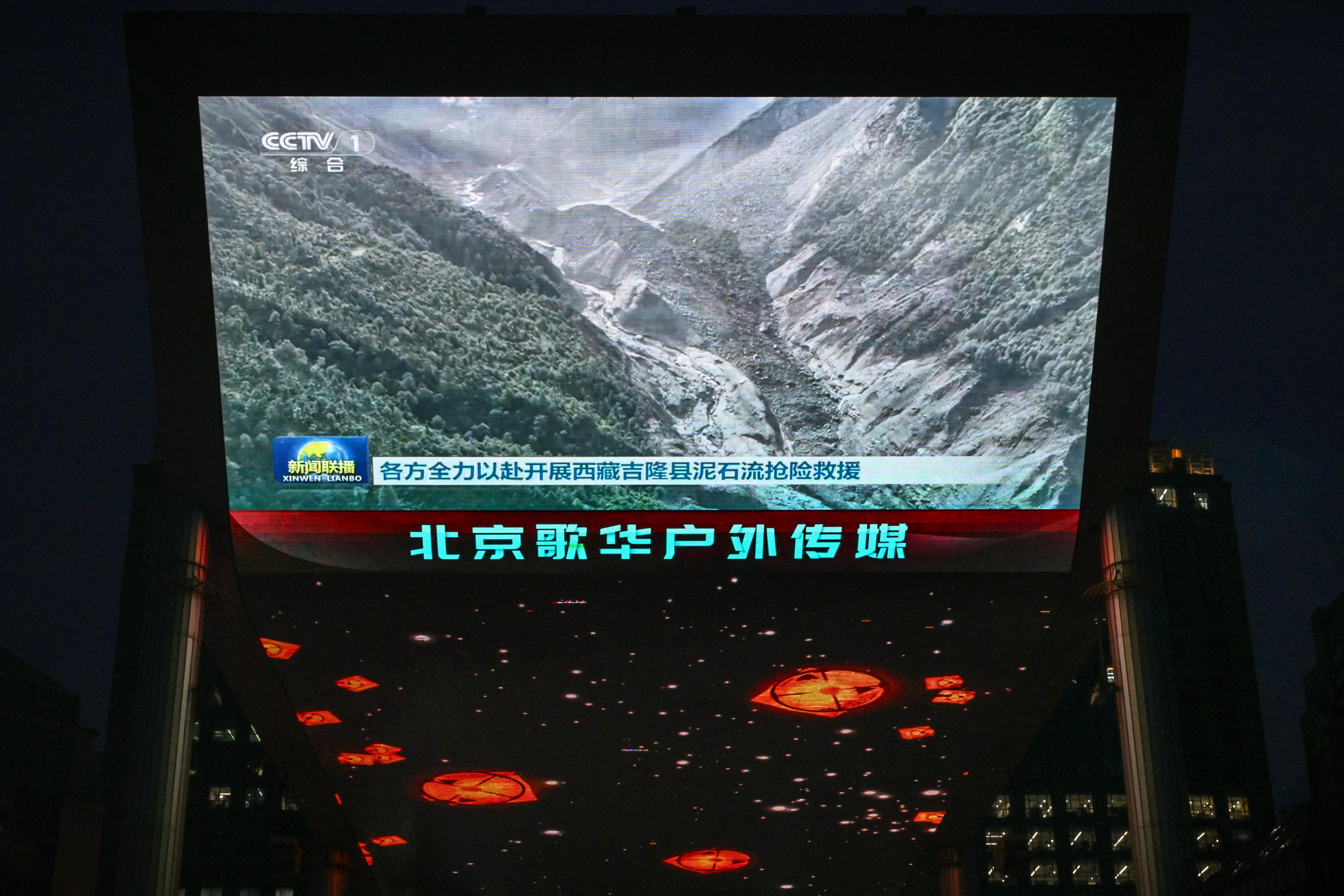 A giant screen outside a shopping mall in Beijing shows a news report featuring an image of a landslide in Gyirong County, in China’s western Tibet region near the border with Nepal on Aug. 27, 2026. (Greg Baker/AFP via Getty Images)
Another 43-year-old woman, surnamed Xu, received “criticism and education” for allegedly “fabricating false explanations about the cause of the disaster,” CCTV said. It didn’t specify what Xu’s claim was, saying only that Xu had deleted her post and signed a pledge to comply with internet laws.
 Friends Read Free
Copy
Facebook
Tweet
Friends Read Free
Copy
Facebook
Tweet