



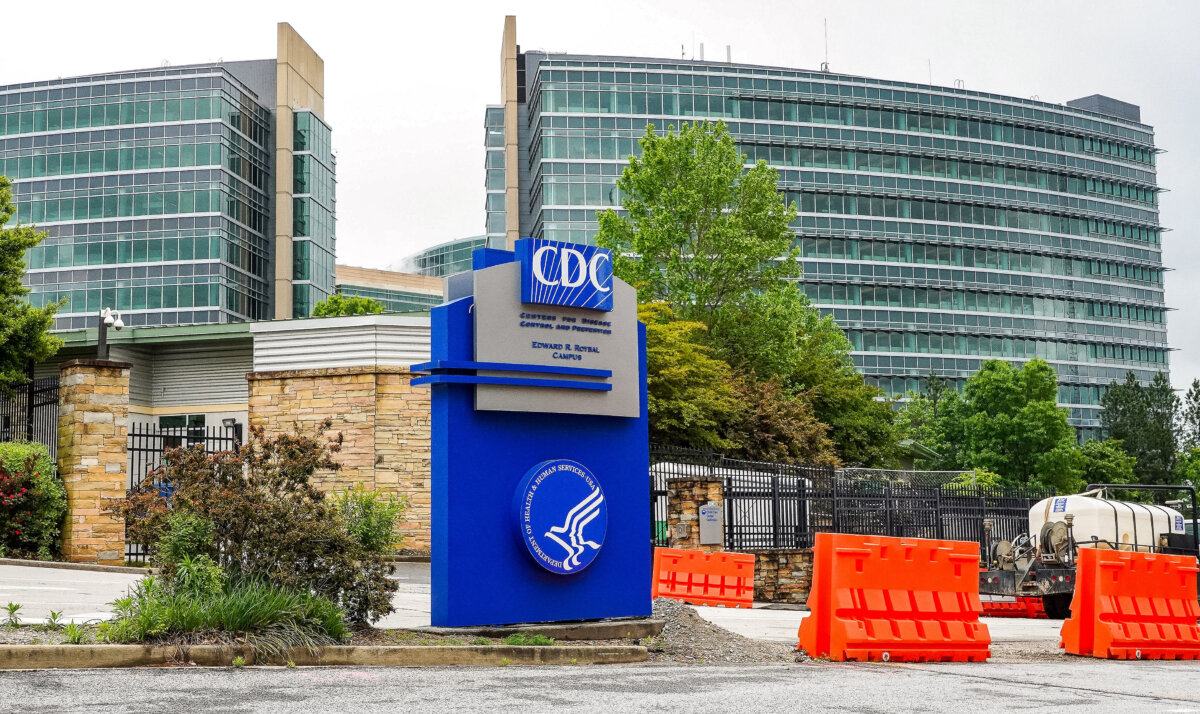
A COVID-19 variant responsible for the vast majority of recent U.S. cases likely isn’t more severe than prior strains, according to early data from the U.S. Centers for Disease Control and Prevention (CDC).
Although the agency is waiting for more data to make a better assessment, the variant, JN.1, doesn’t cause more severe disease for now, CDC official Eduardo Azziz-Baumgartner told CBS News.
When asked if JN.1’s symptoms are more severe, he stated that “there are early signals that that may not be the case” due to medical record data. “Now, it’s important to remember that how a virus affects an individual is a unique ‘n’ of one,” the official added. “It could be very severe. People could die from a virus that, to the general population, may be milder.”
The CDC is looking to provide more details about JN.1’s severity in “the next couple weeks” when more data is available, he said.
Previously, the CDC has said that there are no signs that the variant, which was found during the middle of last year and now accounts for nearly 90 percent of cases in the United States, has markedly different symptoms. The agency also said in a previous update that there was no evidence that the variant causes more severe disease.
Last week, the World Health Organization said there are no reports or data to suggest JN.1, dubbed a “variant of interest” last year, is leading to more severe cases worldwide. “There are currently no reported laboratory or epidemiological reports indicating any association between [variants of interest and variants under monitoring] and increased disease severity,” it stated.
A spokesperson for the CDC told news outlets several weeks ago that “there is no data that would indicate JN.1 infection produces different symptoms from other variants,” adding, “In general, symptoms of COVID-19 tend to be wide-ranging with all variants.”
“The types of symptoms and how severe they are usually depend more on a person’s immunity and overall health rather than which variant causes the infection,” the agency official said. “There have been reports that COVID-19 may be associated with insomnia and anxiety in some patients, and therefore, that can be a general symptom of infection and not related to the variant.”
At the same time, the CDC “is constantly researching the effects of COVID variants and will update the public as we learn more,” the spokesperson continued to say.
There were reports citing data from the United Kingdom that suggested the variant is causing slightly different symptoms, including anxiety and worry.
According to a recent Johns Hopkins article on the variant, symptoms appear to be “very similar” to previous ones and also does not appear to be more severe. However, it noted, “There is some suggestion that JN.1 may be causing more diarrhea than previous variants,” but the article stipulated that it doesn’t “have any firm data supporting that yet.”
Prevalence
As of Jan. 20, the JN.1 variant makes up around 85 percent of cases, the CDC said in an update. However, there are no signs that the variant causes more severe disease or hospitalizations than prior variants, officials and researchers have signaled.
In October 2023, when JN.1 was first reported via the CDC’s tracker, it made up about 1 percent of all U.S. cases. Since then, the variant has quickly spread, prompting an alert from the World Health Organization, which listed it as a “variant of interest.” It became the dominant COVID-19 strain in the United States in late December, officials said at the time.
Meanwhile, the CDC’s tracking data show that COVID-19 hospitalizations, case numbers, and emergency room visits are currently declining for the most recent reporting week ending Jan. 13. Emergency room visits fell by 19 percent, hospitalizations are down by 9.6 percent, and case numbers dipped by 1 percent, according to the agency.
While the numbers have risen in recent months, it’s still much lower than previous increases in the virus across the United States throughout the pandemic, the CDC’s historical data show.
Mandates and Rules
Several weeks ago, hospitals in several states, including New York, California, Washington, Pennsylvania, Illinois, and others re-implemented mask mandates, although some only apply to doctors, nurses, and other staff who are directly working with patients. Local agencies in Los Angeles County and New York City also issued mask mandates for hospitals in their jurisdiction, too.
But California recently broke with the CDC on how long to isolate after testing positive for COVID-19. Guidance that was recently updated by the California Health Department recommended that those who test positive and have mild symptoms can end their isolation if their symptoms improve, and if they’ve been without a fever—without taking medication—for 24 hours or more.
Since 2022, the CDC’s guidelines stipulate that individuals with COVID-19 stay home for at least five days, regardless of whether they’re symptom-free or if they have them. After five days elapse and if the symptoms haven’t improved, individuals should isolate until they feel better and until they have been without a fever for at least a day.