



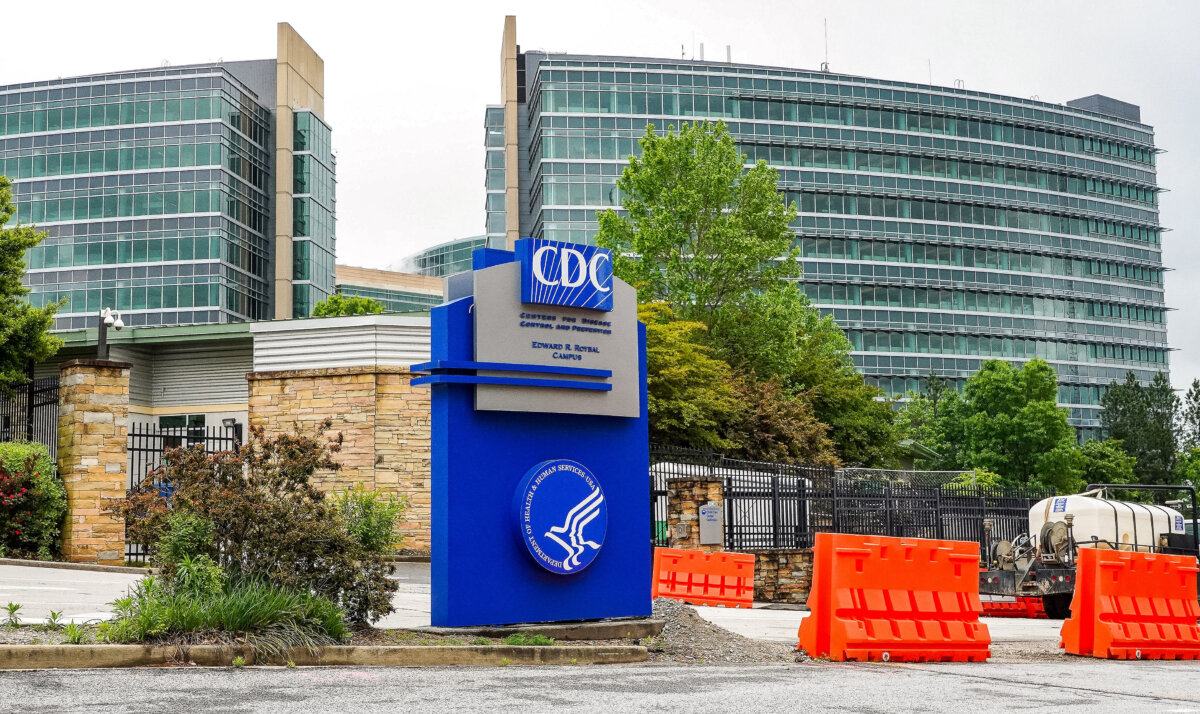
On Tuesday, the U.S. Centers for Disease Control and Prevention (CDC) responded to reports that the agency would soon change its COVID-19 isolation guidance.
The Washington Post, citing alleged agency sources, said that the CDC would change the guidance in the spring to say that people don’t need to isolate once they have been without a fever for 24 hours and that their symptoms are improving or mild. The new recommendations would not apply to hospitals and other health care settings with more vulnerable populations.
With the new CDC recommendations, its guidance on COVID-19 will more closely align with how it treats flu and RSV, according to the Post report.
In response to the report, the CDC told several news outlets Tuesday that the isolation guidance will not be changed “at this time.”
“We will continue to make decisions based on the best evidence and science to keep communities healthy and safe,” the federal health agency said.
The guidelines for isolation when testing positive for COVID-19 have not been updated since December 2021, when the CDC shortened the recommended isolation time for Americans with asymptomatic cases to five days from the previous guidance of 10 days.
The agency also recommends that individuals with the virus stay home regardless of whether they’re symptom-free. After five days, if the COVID-19 symptoms haven’t improved, people should continue to isolate until they feel better and have been without a fever for at least 24 hours, the agency recommends.
Those guidelines are followed by state and local health agencies and hospitals, although they are not mandated to do so.
Last month, California released updated guidelines to recommend that people who test positive and have mild symptoms can end their isolation if their symptoms improve and if they’ve been without a fever—without taking medication—for 24 hours or more.
“We are now at a different point in time with reduced impacts from COVID-19 compared to prior years due to broad immunity from vaccination and/or natural infection, and readily available treatments available for infected people,” the California Health Department said in a statement at the time.
“[The state’s new] policies and priorities for intervention are now focused on protecting those most at risk for serious illness, while reducing social disruption that is disproportionate to recommendations for prevention of other endemic respiratory viral infections,” the statement said.
Oregon also recently broke with the CDC’s recommendations on isolation for people who have tested positive for COVID-19 without any symptoms.
Dr. Dean Sidelinger, Oregon’s state health officer, told CNN last month that “from a pragmatic standpoint,” officials are “trying to make sure that we weren’t unnecessarily burdening families, keeping kids out of school, or keeping people out of work who may have very limited sick leave.”
Recent data published by the CDC shows that COVID-19 cases appear to have been on the decline in recent days. For the week ending on Feb. 3, emergency department visits for the virus dropped by 10.9 percent week-over-week, while hospitalizations decreased by 10 percent in the same time period. Cases also saw a 0.6 percent decrease overall.
Historical data suggest that the recent increase in cases appears to be a far cry from previous virus surges throughout the pandemic. For the week ending on Feb. 4, there were a reported 20,000 hospitalizations. In comparison, for the week ending a year prior, there were about 26,000 cases.
CDC data showed nearly 86 percent of COVID-19 cases in the United States, as of Jan. 19, were caused by the sub-variant JN.1, classified as a “variant of interest” by the World Health Organization.
Health Officials Respond
In response to the reports about the updated CDC guidance, one state health official said that they’re needed.
“Given the increased amount of immunity to COVID-19 in the population, access to treatment for COVID-19 and reductions in hospitalizations and deaths, it seems reasonable for the CDC to adapt our national strategies,” Dr. Clay Marsh, West Virginia’s response coordinator, told CNN, adding: “Currently, many of our citizens are no longer testing for Covid-19 and are not actively isolating.”
Michael Osterholm, an infectious disease researcher at the University of Minnesota, told the Washington Post that health policies have to “be realistic” in order to work. “In making recommendations to the public today, we have to try to get the most out of what people are willing to do … you can be absolutely right in the science and yet accomplish nothing because no one will listen to you,” he said.
Dr. William Schaffner, an infectious disease researcher at Vanderbilt University, noted that the latest JN.1 variant is “producing a lot of mild infection. Lots of people are not even testing.
“Once they feel better, they’re going back to their normal activities. They are not rigorously putting themselves in isolation for five days,” he told CNN.
Reuters contributed to this report.