




About 20 percent of Paxlovid recipients suffer from COVID-19 rebound, according to a new study.
Of those taking Pfizer’s drug, also known as nirmatrelvir, 20.8 percent suffered virologic rebound, researchers said. That was compared with just 1.8 people who took no COVID-19 treatment.
The rebound was defined as a positive test after a prior negative result or sustained elevated viral load.
The virologic rebound was associated with a substantially longer period of virus shedding. Among those who received Paxlovid, the shedding period was a median of 14 days, well above the three-day median among the untreated group.
“We conducted this study to address lingering questions about Paxlovid and virologic rebound in COVID-19 treatment,” Dr. Mark Siedner, M.D. an infectious disease clinician and researcher in the Division of Infectious Diseases at Massachusetts General Hospital, said in a statement.
“We found that the virologic rebound phenomenon was much more common than expected—in over 20 percent of people taking Paxlovid—and that individuals shed live virus when experiencing a rebound, implying the potential for transmission after initially recovering from the virus,” he added.
The paper was published by the Annals of Internal Medicine.
Funding was provided by the U.S. National Institutes of Health (NIH).
“We are continuing to monitor the data, but believe the return of elevated, detected nasal viral RNA—also known as viral rebound or COVID-19 rebound—is not uniquely associated with any specific treatment,” Pfizer told news outlets in a statement. “We remain very confident in Paxlovid’s clinical effectiveness at preventing severe outcomes from COVID-19 in patients at increased risk.”
Paxlovid’s drug has been found in some research to help prevent progression to severe COVID-19 in high-risk adults but a trial found that it did not reduce all-cause mortality or the duration of clearance in hospitalized patients with comorbidities.
Paxlovid is cleared for use as a COVID-19 treatment and the U.S. Centers for Disease Control and Prevention recommends all people aged 12 and older who are experiencing mild to moderate COVID-19 take it “as soon as possible.”
The drug is prescribed in combination with ritonavir, a protease inhibitor that is typically used to treat HIV.
The NIH COVID-19 treatment guidelines acknowledge that studies and clinical trials have found “viral rebound and the recurrence of COVID-19 symptoms in some patients who have completed treatment with ritonavir-boosted nirmatrelvir.”
“The frequency, mechanism, and clinical implications of these events are unclear,” the guidelines state.
Some people experience a rebound of symptoms even though they have not received Paxlovid, the guidelines note.
The rebound was recorded among people in a Pfizer trial, as well in observational studies.
Researchers reported in 2022, for instance, that seven people suffered rebounds and had high viral loads, or the ability to transmit easily, for a median of 17 days after initially being diagnosed.
Thirteen other cases were described in another paper several months later.
Another research group reported in February finding symptom rebound in 19 percent of Paxlovid recipients, compared to 7 percent of controls.
Most rebound cases do not feature severe symptoms.
In the new study, none of the patients died, regardless of whether they received Pfizer’s drug.
Thirteen of the 15 Paxlovid recipients who had a rebound experienced symptoms, including seven who suffered from new or renewed symptoms.
Researchers said that people were less likely to experience viral rebound (VR) if they waited an extra day or two to start Paxlovid.
“This finding, in conjunction with the lack of drug resistance–associated mutations after VR events, raises the question of whether VR might result from incomplete viral eradication in some persons during the currently recommended 5 days of treatment,” they wrote.
To test this hypothesis, future studies could compare the effect of longer durations of N-R therapy on rebound incidence.”
The study examined 72 Paxlovid recipients and compared them with 55 untreated people.
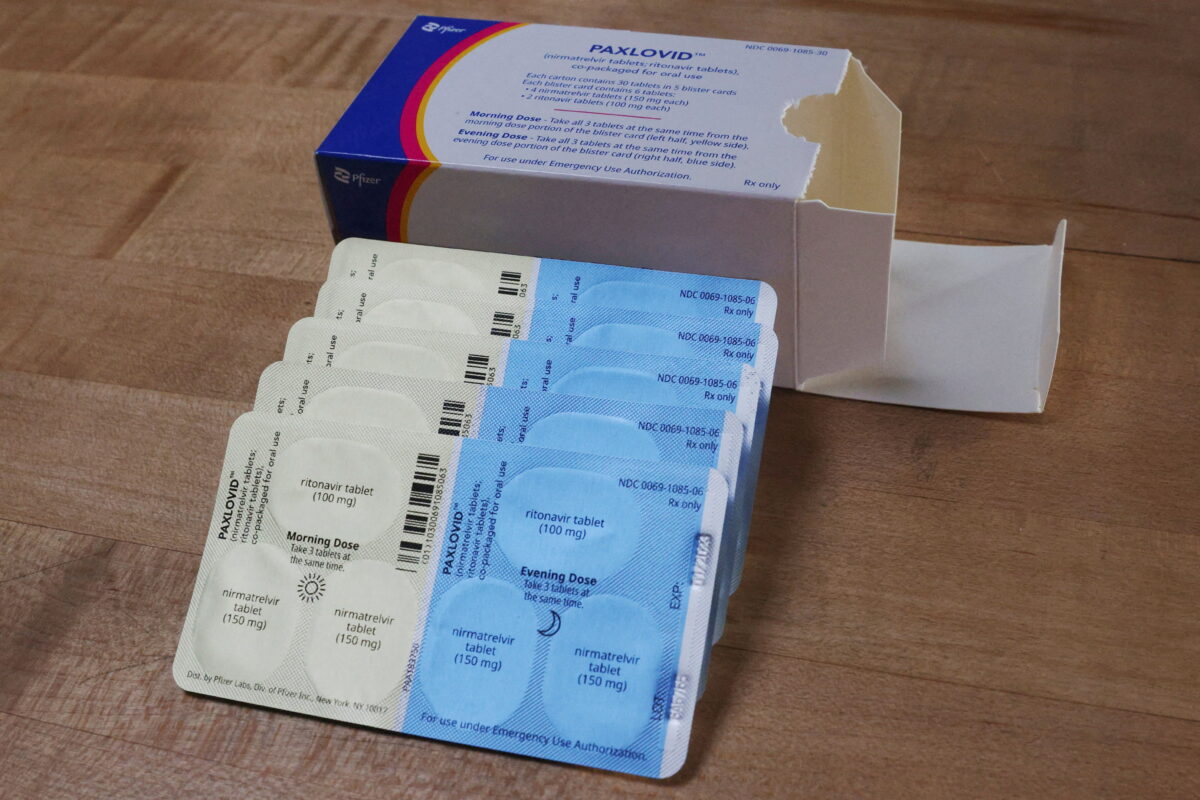
The patient data came from the Post-vaccination Viral Characteristics Study, with people testing positive and/or receiving a prescription in the Mass General Brigham between March 2022 and March 2023.
People who received another COVID-19 therapy were excluded.
Limitations of the paper include its small sample size.
Some of the authors listed funding from Pfizer in their disclosures.
Dr. Jonathan Li, a researcher at Brigham and Women’s Hospital who co-authored the paper, said Paxlovid remains effective but that the study “offers valuable insights to Paxlovid patients, helping them understand what to expect and how long they might be contagious.”
In an editorial in the same journal, several doctors said the newly presented data indicate deciding when to use Paxlovid “is not straightforward and demands exploration of improved COVID-19 treatment management strategies and/or alternative oral therapies.” They said that they thought the current five-day course “is inadequate.”
Pfizer should work to eliminate rebound cases, according to the editorial, which noted that the drugmaker is already studying whether a second course would help patients who do experience a rebound.