



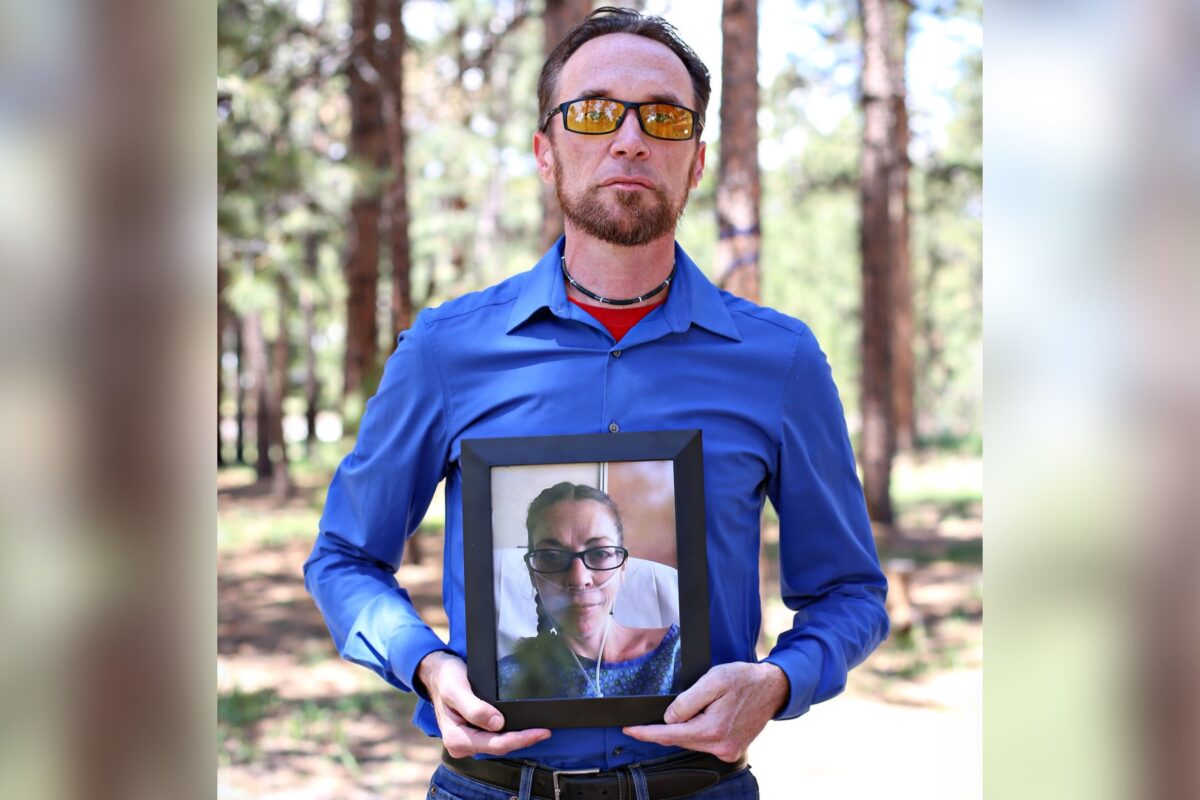
After his wife died in a Colorado hospital in 2020 with no family present, Steve Reiter strives to see that no patient is ever left alone again.
He initiated the Never Alone Project to raise awareness about the dangers of isolating patients in hospitals and to influence legislation that would require hospitals to allow families to visit their loved ones while they are being treated.
“Study after study shows that having a loved one there in the hospital with the patient aids in the healing process,” Reiter told The Epoch Times.
“Not being able to see my wife was devastating to me personally, and I could see over FaceTime that it was taking a toll on her.”
In a National Institute for Health and Care Research study (pdf) on home care residents during COVID-19, social isolation—which includes the social distancing measures taken in 2020—contributes to adverse health outcomes stemming from loneliness such as mortality, cardiovascular disease, depression, and dementia.
A study (pdf) in the scientific journal Antioxidants & Redox Signaling states that “evidence supports the concept that loneliness and social isolation increase morbidity and mortality and should be considered as a risk factor for CVD [cardiovascular disease].”
In addition, the study states that social interaction can generate the neuropeptide oxytocin, which is known to provide an overall sense of wellness and immunity support.
Despite even more studies concluding that social isolation leads to poorer health, the 2020 COVID policies, which encouraged distancing and isolation, left many abandoned in health care facilities throughout the United States.
‘We Saw the Power of Us Being There’
Throughout her periodic hospitalizations, Elizabeth’s last visit would come in 2020 when the hysteria of COVID policies—supported by now-crumbling narratives—was reaching its peak.
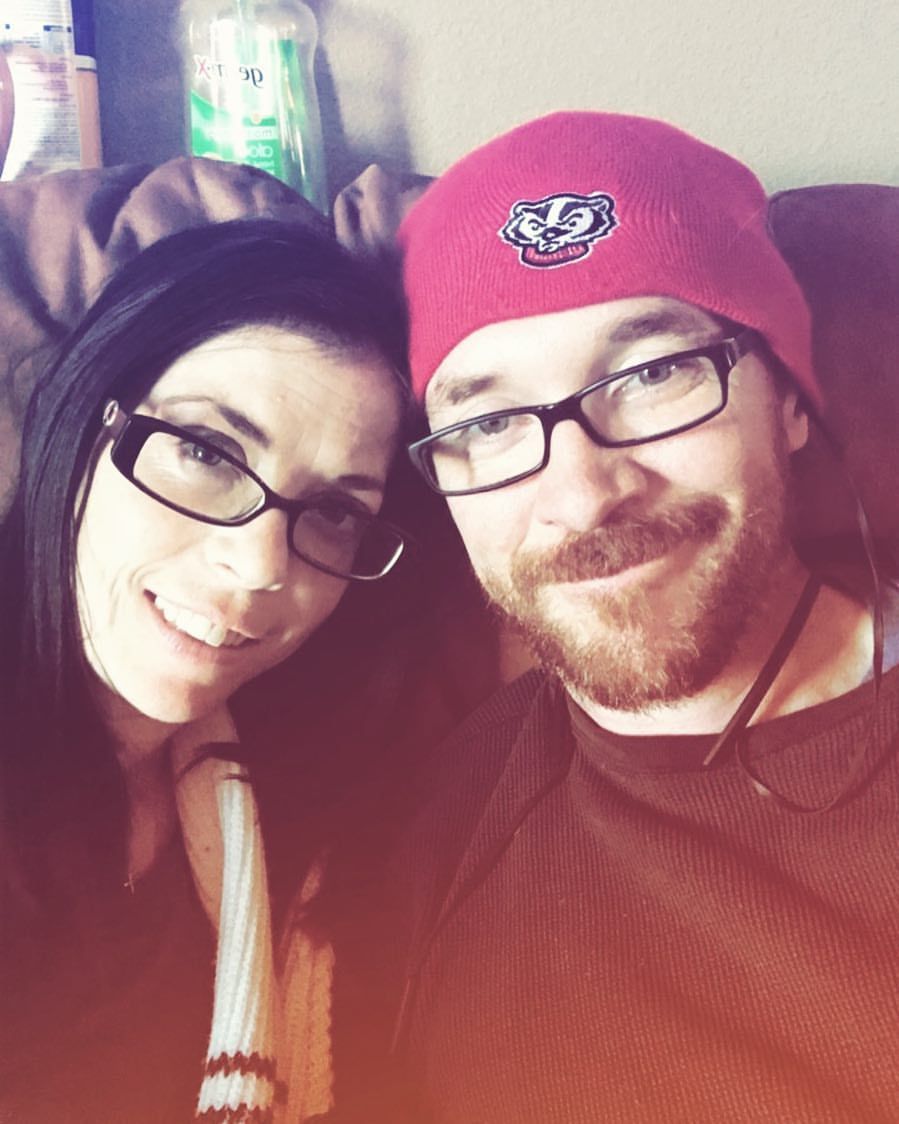
Reiter and Elizabeth married in 2001 and had two sons. Amid the joy of a growing family, she was diagnosed with lupus and rheumatoid arthritis. In 2014, she was diagnosed with pulmonary hypertension.
The doctor at the time told Reiter that there was a very real possibility Elizabeth wouldn’t be around to see their children graduate.
In 2020, she contracted a bacterial infection in her lungs that later settled into pneumonia and eventually became sepsis. Her doctor had assumed it was COVID when Reiter himself began exhibiting similar symptoms, so she only treated her virtually.
The problem with that was, Reiter said, so much of what she was experiencing couldn’t be diagnosed over the phone.
On April 29, she awoke at 3 a.m. throwing up—unable to keep down a sip of Gatorade. Reiter said at that point he knew she had to be admitted, which meant it might be the last time he would see her alive.
Though their tests came back negative, Reiter and their children weren’t allowed to visit Elizabeth throughout her hospital stay, up until her death on May 19.
Reiter knew his presence would have helped, not only because of the studies backing up that claim up but also because he saw it himself in 2014 when Elizabeth was hospitalized for two weeks for a lupus flare-up, and then three weeks for congestive heart failure.
“We saw the power of us being there,” Reiter said. “The doctors weren’t sure she would recover, and she did. I believe that was in large part because we were there 24/7. The doctors were blown away by how quickly she recovered.”
Conversations That Shouldn’t Take Place Over FaceTime
However, in 2020, within the newly defined parameters set by the threat of contracting COVID, Reiter and his children could only see Elizabeth through FaceTime.
For Mother’s Day weekend, they drove to the hospital and had dinner in the parking lot on Friday, with Elizabeth on FaceTime and her husband and children waving to her from the van. On Sunday, they had a conversation Reiter said should never take place over FaceTime, but in person.
“Toward the end of our call, the conversation turned to, ‘what if this is the one you don’t come home from?'”
Since he’s become an advocate for patient visitation, Reiter said he’s talked to several nurses who have quit because of the trauma of holding up an iPad for a dying patient so their family could say goodbye.
“I fully understand the need to protect the doctors, nurses, and patients, but when you’re asking nurses to start to fill the emotional needs of the patients when they are already overworked and overstressed, burnout is inevitable,” he said.
Reiter started the Never Alone Project to raise awareness about the issue, with the ultimate goal of influencing legislative change.
“Patients should have the right to [see] one loved one or advocate every day with reasonable, or even no time limits,” he said.
His legislative efforts began in his home state of Colorado with his advocating for a bill that would allow a patient to have a full-time family member or advocate visiting the patient.
However, he said, this effort, as well as his similar effort in other states, has been met with resistance from state hospital associations who rewrite the bill until it becomes ineffectual.
Even then, he said, with the bill having been reduced to a limited visitation or just a suggestion for hospitals to review their visitation policies, some will still vote against it.
“In most of these states, the hospital associations will come in and gut the bills,” he said.
In some states where legislation has been passed to allow for at least two hours of visitation, hospitals have continued to lock people out because they didn’t know about the legislation. And those visiting won’t file a complaint out of fear of retaliation from the hospital.
“That retribution is very real,” he said. “One physician who spoke in a Senate hearing in Colorado talked about contracting COVID from a patient and having to experience the loneliness and isolation of being treated as a patient. After his testimony, his hours and patients were cut by his hospital.”
‘We’ve Lost Our Humanity in This’
In June 2022, Reps. Jeff Van Drew (R-N.J.) and Andy Harris (R-Md.) introduced the No Patient Left Alone Act, which would guarantee a patient’s right to have visitors, and require hospitals to honor this right as a condition of their participation in Medicare.
“One of the most heartbreaking COVID-19 era policies was the severe restriction of hospital visitors,” said Harris in a press release on the proposed legislation. “Unfortunately, we all have heard too many stories of loved ones unable to be by their family’s side in the hospital—including non-COVID patients. In my experience as a physician, I can’t overstate the benefit of having a family member or friend present throughout a patient’s hospital stay.”
Hospital associations, hospitals, physicians, and nurses will have stated that limited visitation hours are in place to protect the physicians, nurses, and patients.
However, research has suggested that the presence of a family member doesn’t play a significant role in the transmission of COVID.
In one study (pdf) of 9,149 patients admitted to a medical center over a 12-week period, 697 were diagnosed with COVID.
“In the context of a comprehensive and progressive infection control program, only 2 hospital-acquired cases were detected: 1 patient was likely infected by a presymptomatic spouse before visitor restrictions were implemented, and 1 patient developed symptoms 4 days after a 16-day hospitalization but without known exposures in the hospital,” the report states, suggesting that the “overall risk of hospital-acquired COVID-19 was low and that rigorous infection control measures may be associated with minimized risk.”
The hospital policies implemented during COVID led to a sacrifice of the individual to protect the many, said Reiter, calling them policies influenced not by evidence but by fear.
“How many people would still be here today if hospitals let their loved ones in?” Reiter asked.
Reiter continues his work, he said, so that no families experience what his did when they were told they weren’t allowed to visit Elizabeth.
Given what he’s seen over the last few years, Reiter concluded: “We’ve lost our humanity in this.”
“And we need to find our way back.”