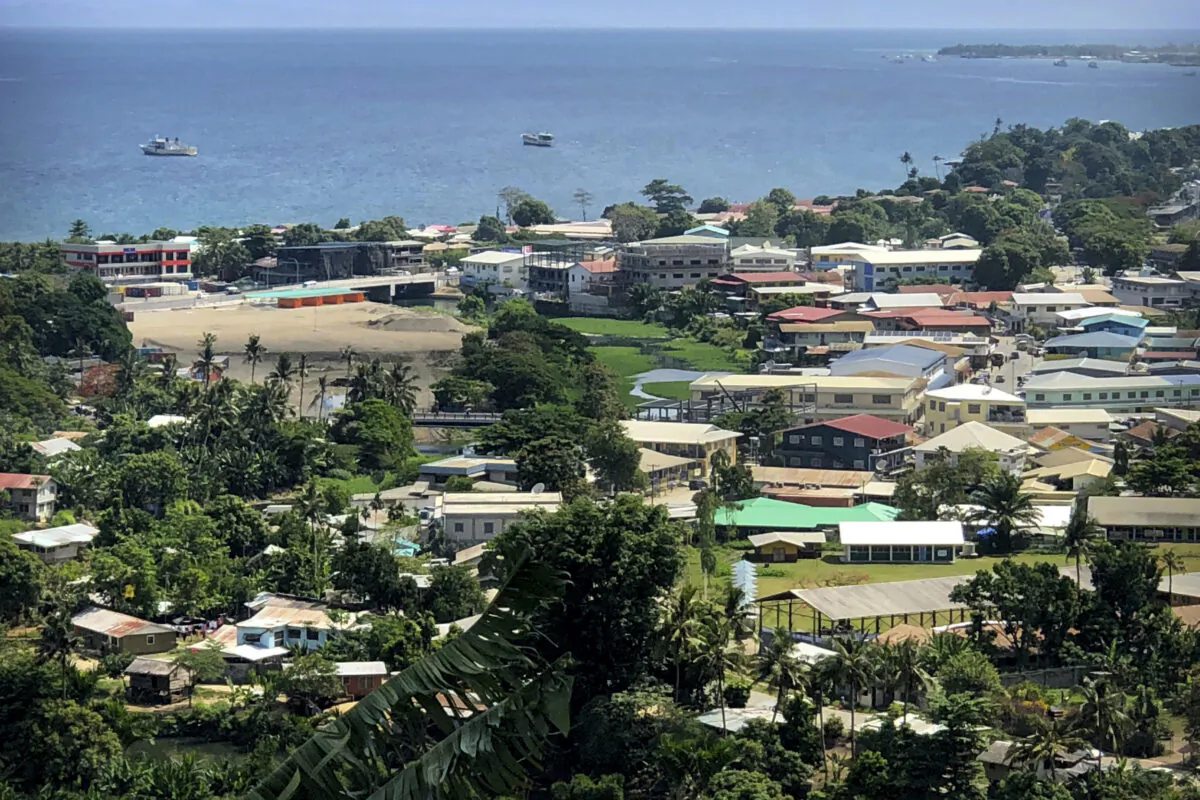

A top U.S. diplomat is reportedly being dispatched to the Solomon Islands as concern mounts over a security agreement that would open the door for the Beijing regime to station troops and weaponry in the region.
Kurt Campbell, U.S. National Security Council coordinator for the Indo-Pacific, is set to travel to the Pacific nation this month, accompanied by Daniel Kritenbrink, assistant secretary of the Bureau of East Asian and Pacific Affairs, according to the Financial Times.
Diplomatic efforts have ramped up after details of the agreement were leaked on social media—alerting neighboring countries of the potential militarization of the region akin to the South China Sea.
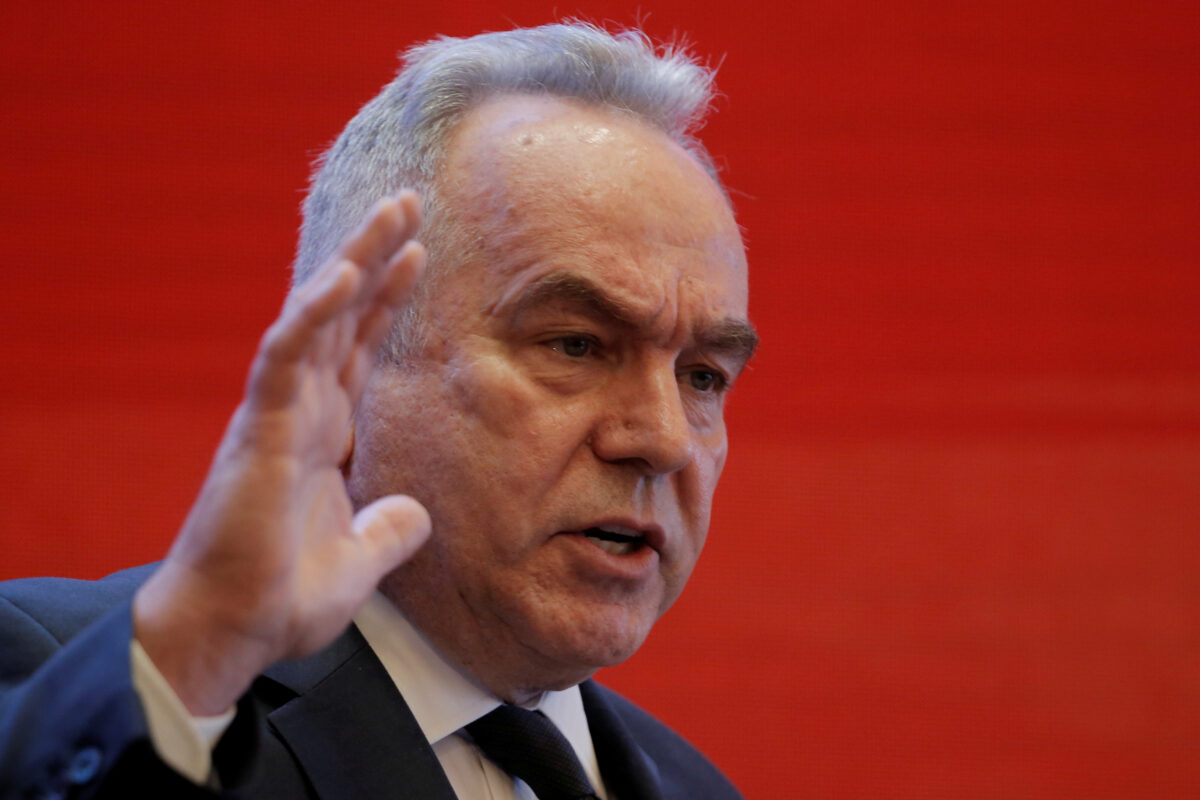
Campbell’s visit follows that of two Australian heads of intelligence—Andrew Shearer, director-general of the Office of National Intelligence, and Paul Symon, director-general of the Australian Secret Intelligence Service—with Solomon Islands Prime Minister Manasseh Sogavare on April 6.
Australian Defense Minister Peter Dutton also told reporters that the high commissioner, Department of Foreign Affairs and Trade, and the (federal) police commissioner, had all been engaging with Solomon Islands authorities “both in private” and publicly.
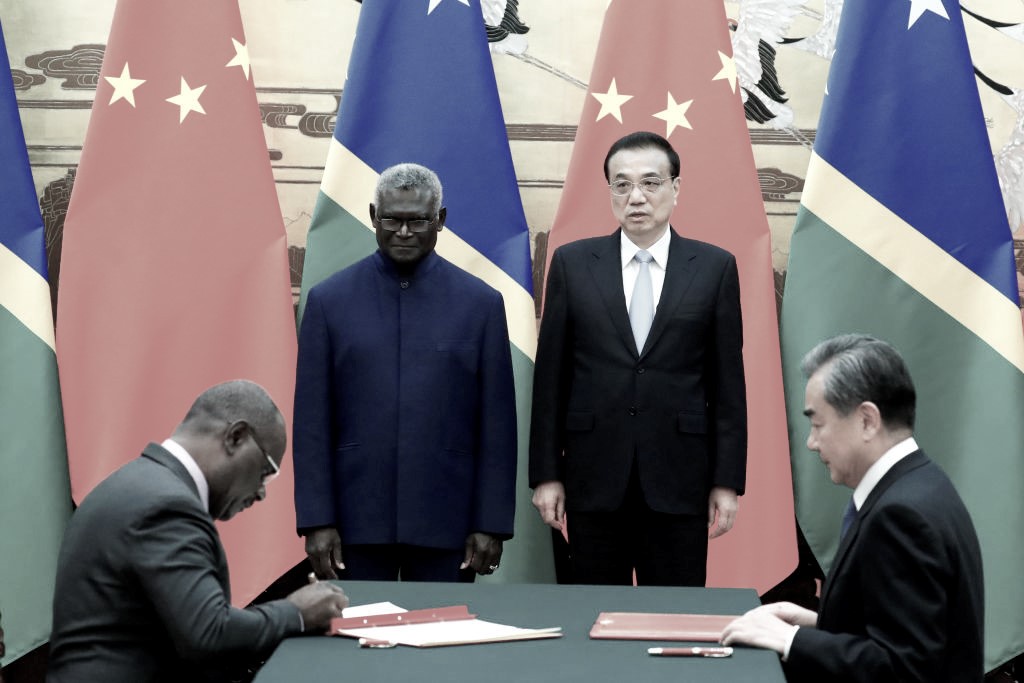
The contentious agreement, which has been “initialed” by the foreign representatives for Beijing and the Solomon Islands, would allow the Chinese Communist Party (CCP) to dispatch forces to “protect the safety of Chinese personnel and major projects in the Solomon Islands.”
While Chinese and Solomon Island leaders have denied that the agreement could open the door toward eventual militarization in the region, leaked documents on April 7 appear to show that Beijing has been scouting the region for military projects for years.
A leaked letter of intent contained details of a proposal from the head of Avic International Project Engineering Co., a Beijing-based state-owned aviation company, to Premier Leslie Kikolo of Isabel Province in the Solomon Islands on Sept. 29, 2020.
The letter, seen by news.com.au, was signed by company President Rong Qian and opens with the following paragraph:
“We, AVIC-INTL Project Engineering Company … present this letter to demonstrate our intent to study the opportunity to develop naval and infrastructure projects on leased land for the People’s Liberation Army Navy in Isabel Province with exclusive rights for 75 years.”
A fully realized project could see the People’s Liberation Army extend its reach beyond the South China Sea and into the South Pacific region, where bitter fighting occurred between Japanese and U.S. troops in the Battle of Guadalcanal during World War II because of the influence it wields over vital sea lanes.
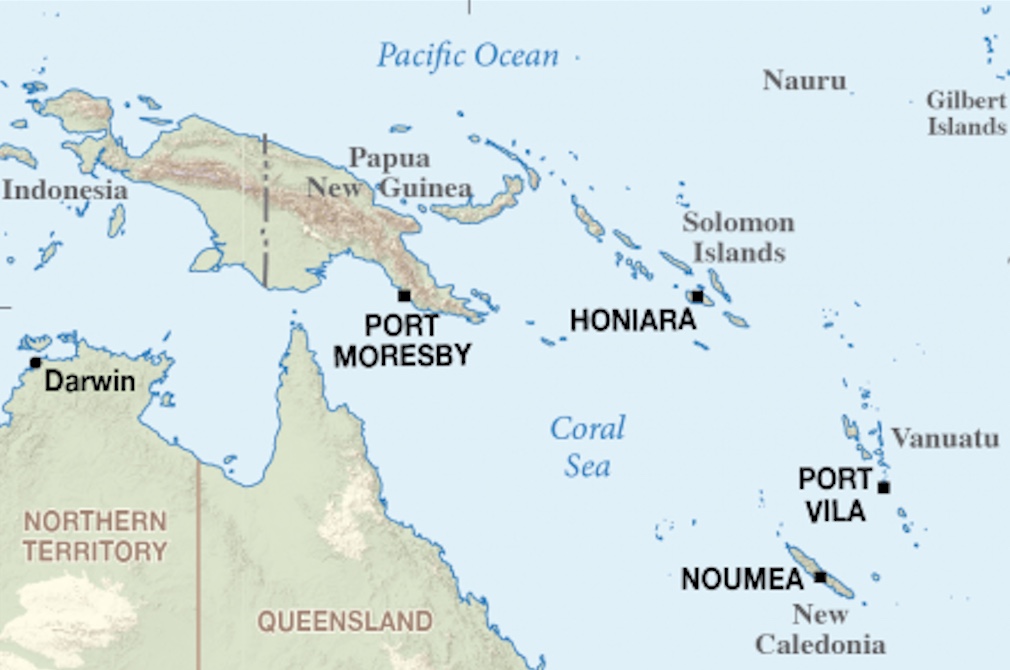
The security agreement crystallizes long-running concerns over Beijing’s deepening influence in the South Pacific, while the Australian government has tried to fend off the CCP’s advances, notably by backing a US$1.6 billion takeover of dominant telecom company Digicel Pacific, which provides mobile and network services across Papua New Guinea, Nauru, Samoa, Vanuatu, Tonga, and Fiji.
One expert says outspending Beijing would be difficult.
Cleo Paskal, an associate fellow of the Asia-Pacific Programme at the London-based Chatham House, called on the Australian government to reinvigorate the democratic process in the Solomon Islands and pressure Sogavare to abide by the 2000 Townsville Peace Agreement.
“Put out the steps that the various provinces, including Malaita [Province], agreed to. There’s a whole series of things that have already been negotiated—everybody signed on, including the government under Sogavare,” she previously told The Epoch Times.
The agreement ended violence between the provinces and laid the foundation for aid programs and democratic government in the country.
“Sogavare and his members of Parliament are given a choice, ‘You can deal with China, or you can deal with the rest of the world,’” Paskal said, noting that Sogavare and his Cabinet could lose privileges afforded to them in their relationship with Australia.
Paskal said the pressure could compel Sogavare’s ministers to intervene and stop things from “going too far.”
 Friends Read Free
Copy
Facebook
Tweet
Friends Read Free
Copy
Facebook
Tweet