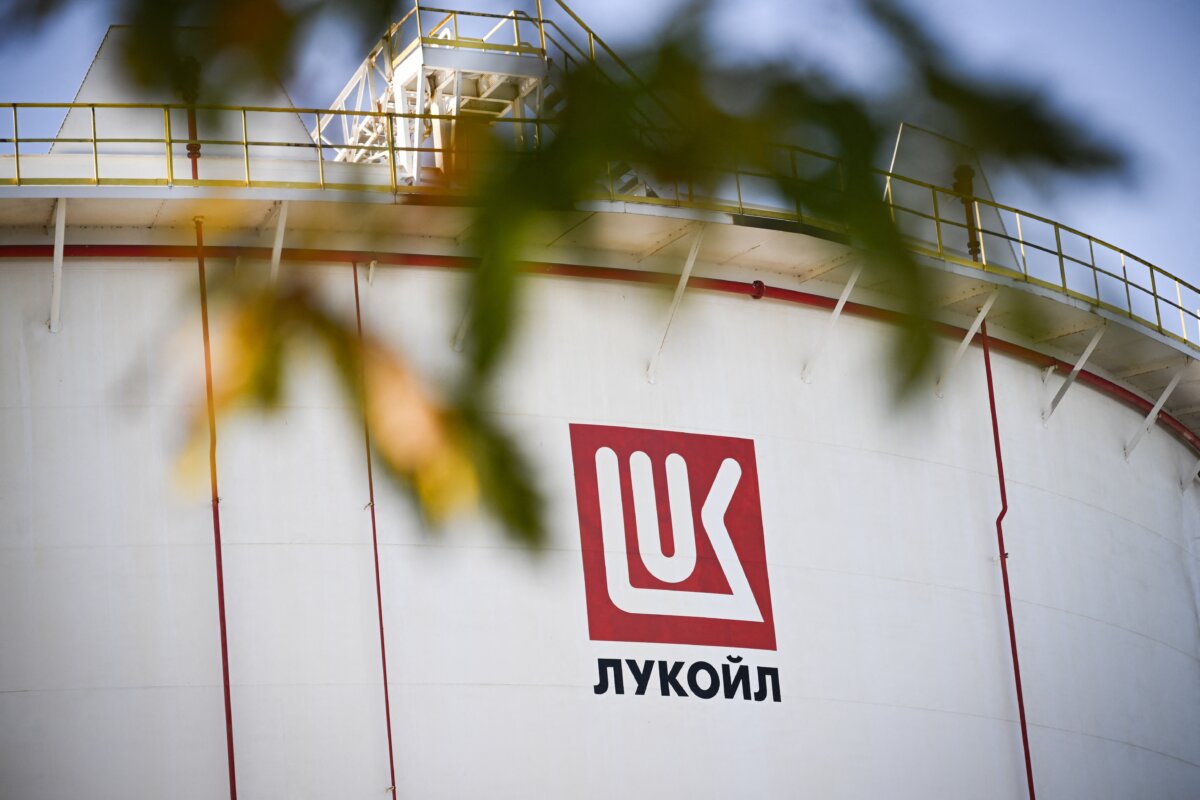


WASHINGTON—Sanctions imposed by U.S. President Donald Trump in October against two Russian oil companies are “having their intended effect” on the country’s oil revenues, according to a Treasury Department market reaction report.
“President Trump has targeted Russia’s two largest oil companies in one of the most impactful Treasury actions to date,” a Treasury spokesperson told The Epoch Times via email on Nov. 18.
“Russian oil is now selling at multi-year lows, starving [Russian President Vladimir] Putin’s war machine,” the spokesperson said, noting that the Treasury Department is prepared to take further action if necessary to help end the Russia–Ukraine conflict.
On Oct. 22, the Treasury Department’s Office of Foreign Assets Control (OFAC) announced additional sanctions on Russia targeting the country’s two largest oil companies, Rosneft and Lukoil.
“I just felt it was time,” Trump said at the time. “We’ve waited a long time.”
Sanctions are reducing Russian revenues by lowering oil prices and are expected to decrease the volume of Russian oil sold over the long term, according to an initial market reaction report shared with The Epoch Times by OFAC’s Sanctions Economic Analysis Division.
“While there are multiple prices of Russian oil depending on grade and location, various grades are trading well below all other international prices,” OFAC stated in the report. “Moreover, several key Russian grades are selling at multi-year lows, widening their spreads to global benchmarks.”
Urals oil, a Russian crude oil blend, is selling for approximately $24 below Brent crude prices, according to Argus Media data reported by Bloomberg.
“This is testament to the fact that demand for Russian oil is plunging, driven by the efficacy of U.S. sanctions,” OFAC stated in the report.
Its report also revealed that nearly a dozen Indian and Chinese buyers have announced plans to pause purchases in December.
Trump issued the sanctions to ramp up pressure on Putin to end the war with Ukraine.
The sanctions came after cease-fire efforts between Russia and Ukraine stalled. After multiple meetings between U.S. officials and leaders from the warring countries failed to secure peace, Trump canceled a planned meeting with Putin in Hungary on Oct. 21, saying that it would be “a waste of time.”
“We hope that [the sanctions] won’t be on for long,” Trump said. “We hope that the war will be settled.”
Treasury Secretary Scott Bessent said earlier that OFAC could take additional actions to end the war in Ukraine.
“Now is the time to stop the killing and for an immediate ceasefire,” Bessent said in an Oct. 22 statement. “We encourage our allies to join us in and adhere to these sanctions.”
Trump granted Hungary, one of the largest purchasers of Russian oil, exemptions from sanctions during a White House meeting on Nov. 7. Budapest has been granted a one-year U.S. sanctions waiver, allowing it to continue purchasing Russian oil and gas through the TurkStream and Druzhba pipelines, the White House stated.
Hungarian Prime Minister Viktor Orban said his nation, as a landlocked country, has no choice but to rely heavily on Russian oil.
 Friends Read Free
Copy
Facebook
Tweet
Friends Read Free
Copy
Facebook
Tweet