
Hungary recently struck an agreement with the United States that Prime Minister Viktor Orban says will provide Hungary a “financial shield” to safeguard the country from any financing problems.
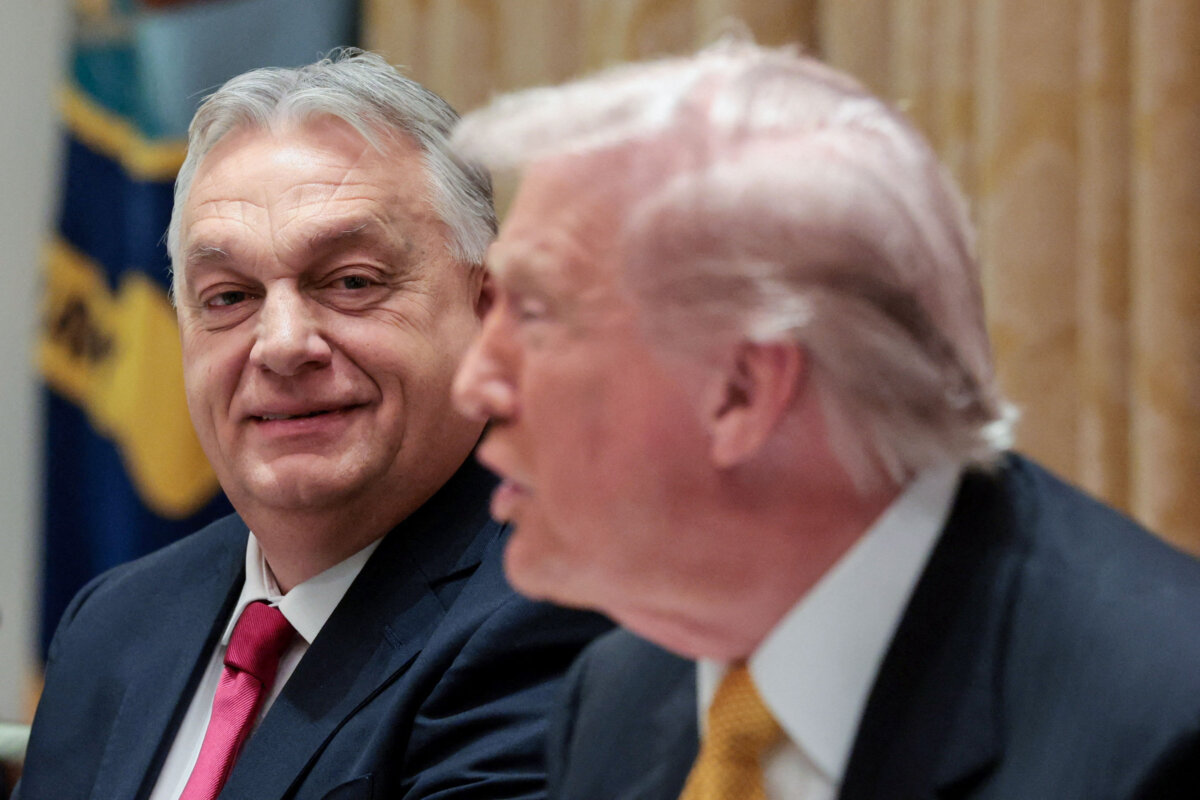
The deal followed a meeting between Orban and U.S. President Donald Trump at the White House on Nov. 7 to discuss sanctions relief on Russian oil and gas. The United States granted Hungary a one-year exemption from those sanctions after the meeting.
“I have also made an agreement with the U.S. president on a financial shield,” Orban told reporters on Nov. 9.
“Should there be any external attacks against Hungary or its financial system, the Americans gave their word that, in such a case, they would defend Hungary’s financial stability.”
Orban did not disclose the terms of the financial shield agreement but suggested that it would safeguard Hungary from any financing difficulties in the future.
“That Hungary or its currency could be attacked, or that the Hungarian budget could be put in a difficult situation, or that the Hungarian economy could be suffocated from the financing side, this should be forgotten,” he said.
The U.S. State Department said last week that Hungary agreed to buy U.S. liquefied natural gas as part of the agreement and that the contracts are expected to be worth about $600 million.
The two nations also agreed to work together on nuclear energy, including small modular reactors, according to the department.
The Nov. 7 meeting was the first between the Hungarian and U.S. leaders since Trump took office for a second term in January. Orban said after the talks last week that Hungary will also purchase nuclear fuel from U.S.-based Westinghouse Electric as part of the agreement.
Orban said the exemption from U.S. sanctions was necessary because his nation is a landlocked country dependent on Russian oil.
He noted that cutting off Russian energy could have consequences for the Hungarian people and the country’s economy.
“We are supplied by pipelines. The pipeline is not an ideological or political issue—it’s a physical reality,” Orban said on Nov. 7. “It’s vital for us.”
Trump had earlier indicated he may consider exempting Hungary from sanctions on Russian oil and gas, citing the country’s difficulties in securing supplies from other sources.
“We’re looking at it because it’s very difficult for him to get the oil and gas from other areas,” Trump told reporters on Nov. 7. “As you know, they don’t have the advantage of having the sea.”
The U.S. Treasury Department in October sanctioned Russia’s major oil companies, Rosneft and Lukoil, in response to Moscow’s lack of progress toward a peace negotiation to end the war in Ukraine.
Trump signaled on Sept. 7 that his administration is ready to move forward with a second phase of sanctions against Russia, as negotiations to end Russia’s war in Ukraine stalled and Moscow intensified its attacks on Kyiv.
Emel Akan and Reuters contributed to this report.
 Friends Read Free
Copy
Facebook
Tweet
Friends Read Free
Copy
Facebook
Tweet