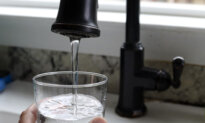
The Environmental Protection Agency (EPA) is allocating almost $2.9 billion in funding to states to cut down the presence of lead in drinking water, the agency said in a May 20 statement.
“This funding will advance state and local efforts to find and replace lead pipes (also known as lead service lines) that deliver water to homes,” EPA said. “Communities can use these funds for identifying lead pipes, planning removal projects, and funding replacement of these lead service lines. Each lead pipe removed and replaced delivers real, tangible public health benefits in communities across our great nation.”
“This investment will go directly to states through the Drinking Water State Revolving Fund (DWSRF) and is part of EPA’s unwavering commitment to Making America Healthy Again.”
EPA highlighted that lead is a powerful neurotoxin, the exposure to which is especially harmful to children.
Even low levels of lead exposure in children can result in learning disabilities, damage to the central and peripheral nervous system, impaired formation of blood cells, impaired hearing, shorter stature, behavioral problems, lower IQ, slowed growth, hyperactivity, and anemia. In some rare cases, exposure may cause seizures, coma, and death.
Among pregnant women, lead can result in premature birth or reduced growth of the fetus. Even after birth, the child may continue to be exposed to lead via the mother’s breast milk. Adults exposed to lead can suffer from reproductive problems, decreased kidney function, higher blood pressure, and cardiovascular effects.
In its latest statement, EPA said the agency is distributing the $2.9 billion funding based on information regarding the location of roughly 4 million lead service lines in the United States. In addition, EPA will redistribute an additional $18 million in previously announced funding under DWSRF that has not been utilized.
“An investment in removing lead pipes is an investment in America’s children and families,” EPA Assistant Administrator for Water Jess Kramer said.
“The Trump EPA is committed to tackling lead exposure and this $2.9 billion will help protect current and future generations by accelerating local efforts to find and replace toxic lead pipes.”
Back in November, the EPA announced $3 billion to states to address lead presence in drinking water, which was to be used to identify and remove lead pipes.
EPA has a Federal Lead Action Plan, launched during President Donald Trump’s first term in office, to reduce lead exposure.
The action plan has four goals—reduce exposure to children from various sources, identify children who have been exposed and improve their health outcomes, communicate more effectively with stakeholders regarding the issue, and conduct and support critical research regarding reducing lead exposure and its health risks.
In April, the President’s Task Force on Environmental Health Risks and Safety Risks to Children published an update on the efforts made by the federal government in fiscal year 2025 regarding the Federal Lead Action Plan.
According to the report, EPA funded the replacement of more than 110,000 lead service lines during the fiscal year. Recipients of EPA grants spent $3.6 million in 10 projects to remediate lead in drinking water in more than 300 schools and childcare facilities.
Fifty-five states and territories were provided with $26 million to help local educational agencies test and remediate lead contamination in childcare facilities and schools, the report said.
In addition to lead, EPA is tackling the presence of per- and polyfluoroalkyl substances (PFAS), also known as “forever chemicals,” in drinking water.
PFAS are man-made chemicals that can persist in the environment for a significant period of time. Exposure to these chemicals has been linked to multiple health issues, including cancers and negative impacts on immune function and reproduction.
Water systems have been given a deadline of 2029 to take two types of PFAS—PFOA and PFOS—out of water supplies. This week, the EPA proposed giving water system administrators more time to comply with the requirement.
“Every American deserves to know that the water coming out of their tap is safe, and the EPA is going to deliver on that, by following the law, by following the science, and giving water systems the time, tools, and support they need to actually get the job done,” agency administrator Lee Zeldin said during a press conference.
 Friends Read Free
Copy
Facebook
Tweet
Friends Read Free
Copy
Facebook
Tweet