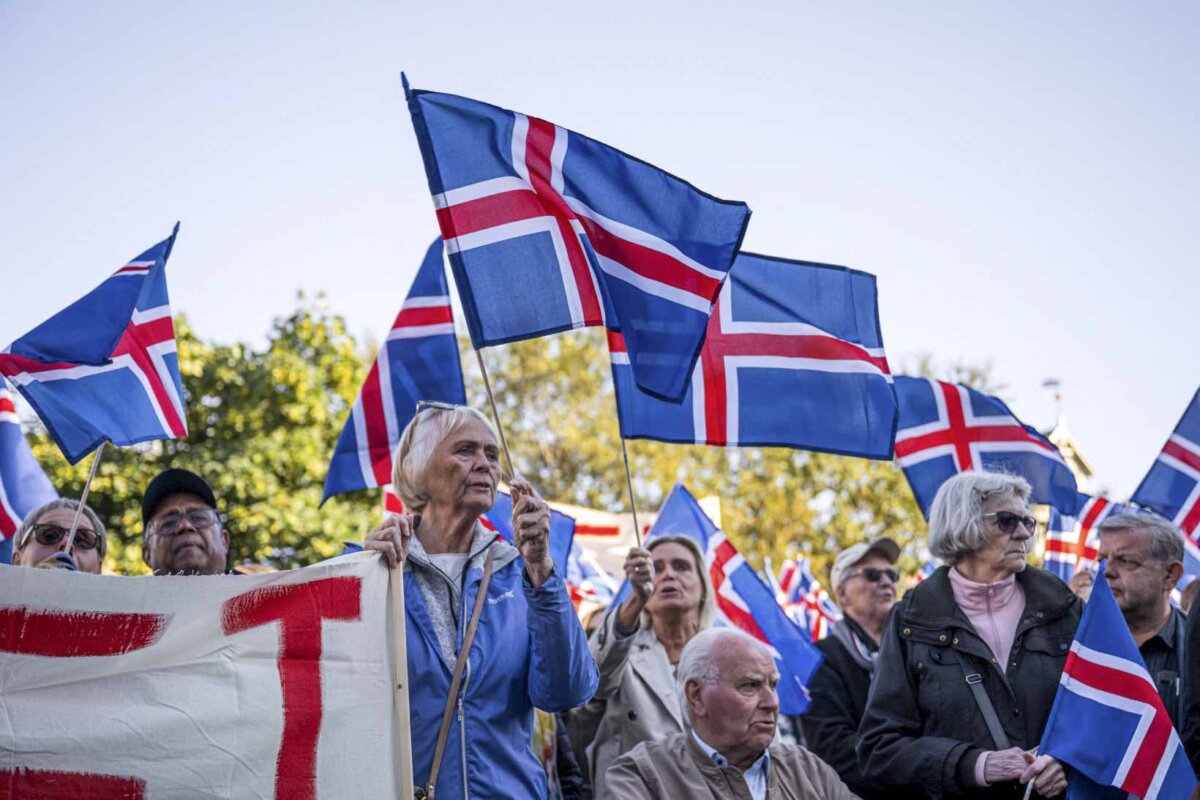

REYKJAVÍK, Iceland—Icelanders on Saturday voted against reopening negotiations to join the European Union, handing Social Democrat Prime Minister Kristrún Frostadóttir’s government a defeat in a referendum it had brought forward by more than a year.
The ballot asks a single question: “Should Iceland resume accession negotiations with the European Union?”
Iceland’s media reported that 52.8 percent of ballots cast were against having negotiations with the EU and 47.2 percent were in favor. The referendum attracted 82.5 percent of eligible voters.
EU membership would require Iceland to give up authority over some laws and trade policy as well as give up some control of its valuable fishing grounds in exchange for a role in EU decision-making and a path toward adopting the euro.
“The nation has spoken: A clear no to the proposed [European Union] journey,” wrote Olafur Ragnar Grimsson, president of Iceland from 1996 to 2016, in a post on Sunday on X.
The result closes, for the second time in 13 years, a question that has divided this North Atlantic nation of some 400,000 people since its banks collapsed in 2008.
Gudrun Hafsteinsdottir, leader of the Independence Party, the center-right party that is the largest in the opposition, and the face of the “no” campaign, reacted immediately to the results on her Facebook page, writing: “The nation has spoken.”
For Hafsteinsdottir, the vote settles Iceland’s place without changing it.
“Iceland is a European country, and it will remain one regardless of whether the vote is yes or no,” she told The Epoch Times hours before the election results were announced. “You do not have to be a member of the European Union to be European.”
Reacting to the results in an interview with The Epoch Times, Gudlaugur Thor Thordarson, a former foreign minister and current lawmaker for the Independence Party, called the outcome “a huge victory for democracy and for the people of Iceland,” all the more so “because the government chose to hold the referendum in the summer, when people’s minds are not on politics, and had the state media and public institutions on its side.”
Snaeros Sindradottir Bachmann, executive director of the European Movement in Iceland, the leading civil-society organization on the “Yes” side, told The Epoch Times she was disappointed by the result. “I truly believe this was a window of opportunity for excellent negotiations with the EU and for Iceland to become part of the European family,” she said.
The European Movement will continue advocating for active Icelandic participation with the EU, Bachmann said.
 Friends Read Free
Copy
Facebook
Tweet
Friends Read Free
Copy
Facebook
Tweet