
The Bank of England (BoE) held interest rates at 3.75 percent on Thursday as policymakers weighed easing Middle East tensions against high inflation and uncertainty over global energy prices.
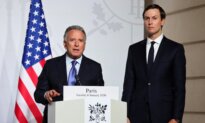
The decision came just after President Donald Trump signed a deal with Iran to end the conflict, a development which BoE Governor Andrew Bailey said he was “very encouraged” by.
The United States and Iran agreed on a memorandum of understanding on June 17, and it came into effect after Trump signed it at Versailles on June 18.
The central bank’s Monetary Policy Committee voted 7–2 to keep rates on hold on June 18.
“Global energy prices have fallen since the previous meeting in response to events in the Middle East. But they remain higher than pre-conflict and have continued to be volatile. The impact of the energy shock on the UK economy remains uncertain,” BoE said.
The BoE’s approach contrasts with that of the European Central Bank and the Bank of Japan, which have both raised rates in the past week, while the U.S. Fed left rates unchanged.
“For now, the Bank is playing for time rather than going on the attack,” George Brown, senior economist at fund manager Schroders, said. “We think the bar for hikes remains high.”
The BoE expects inflation to rise above 3.25 percent in the final quarter of this year, up from 2.8 percent in May, though this is a smaller increase than the rise to 3.6 percent–3.7 percent it projected in April under two of its three main scenarios.
When asked whether he was still pretty cautious, Bailey said he was “very encouraged.”
“We’ve obviously now got this understanding about what’s going to happen in the Middle East, and energy prices have come down quite a lot, but they’re still above where they were before this conflict started,” he said
“Inflation is higher than we expected it to be. I really expected, and I really believe, we would have been back in a 2 percent target by now. But it is good news.”
The U.S. Federal Reserve held interest rates steady at Kevin Warsh’s first policy meeting as chairman of the central bank on June 17.
Officials voted 12–0 to keep the benchmark federal funds rate unchanged at a target range of 3.5 percent to 3.75 percent.
The European Central Bank (ECB) raised interest rates on June 11 for the first time since September 2023, moving to contain an energy-driven inflation shock triggered by the war in the Middle East, even as the eurozone economy shows signs of weakening.
The ECB raised its main deposit rate from 2 percent to 2.25 percent, according to a June 11 policy statement citing inflation pressures driven by an energy price shock stemming from the Iran war.
Policymakers revised their inflation outlook higher and cut their growth forecasts, reflecting expectations that elevated energy prices will continue to affect households and businesses for some time.
“The decision to raise rates is robust across a range of scenarios mapping out how the shock might evolve and affect the medium-term outlook,” the ECB’s governing council said in the statement, which described the outlook as “uncertain, with upside risks for inflation and downside risks for economic growth.”
Japan’s central bank on June 16 raised its benchmark interest rate to the highest level in more than three decades, for the same reasons.
The Bank of Japan (BOJ) voted 7–1 to raise its policy rate to about 1 percent from 0.75 percent, marking the highest benchmark interest rate since 1995. The new rate started on June 17.
Shinichi Uchida, BOJ deputy governor, said after the meeting that the risk of a severe economic slowdown had diminished since the bank’s previous meeting in April.
“On the other hand, price rises are broadening, and there is a risk that underlying inflation may deviate from our target,” he said.
Tom Ozimek, Evgenia Filimianova, Andrew Moran, and Reuters contributed to this report.
 Friends Read Free
Copy
Facebook
Tweet
Friends Read Free
Copy
Facebook
Tweet