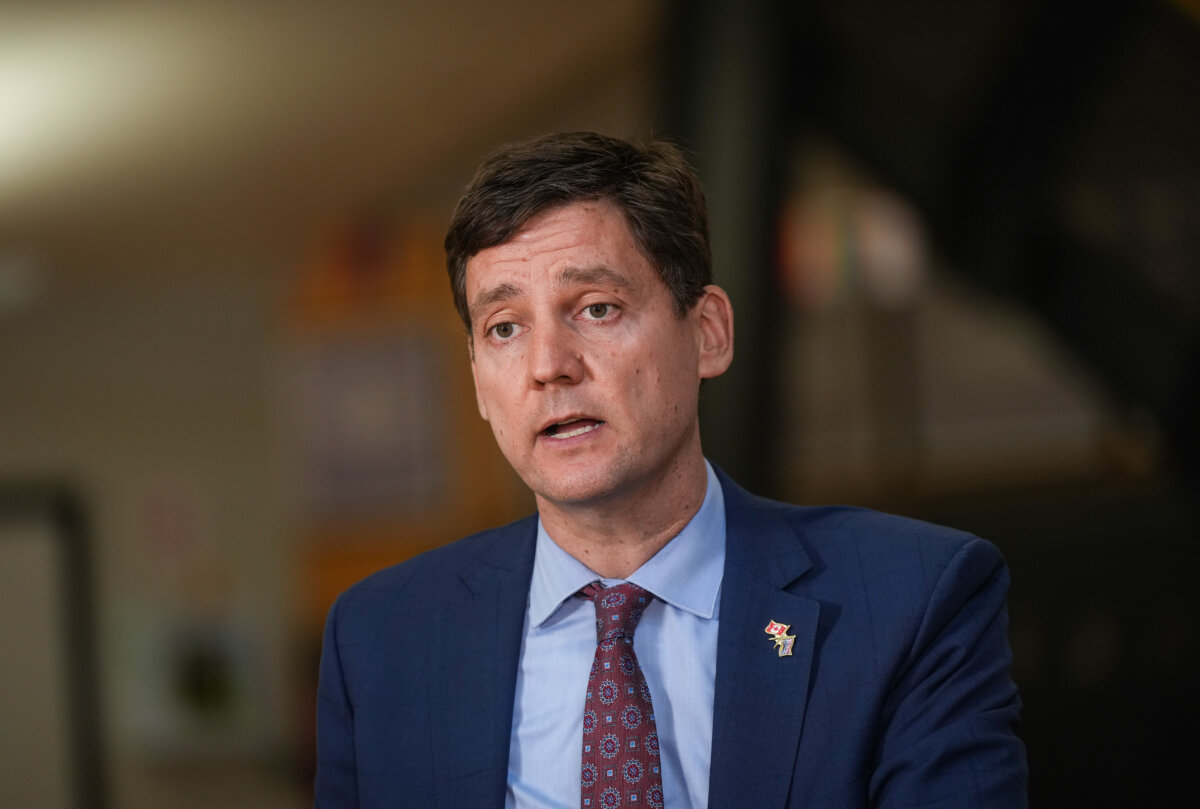
B.C. Premier David Eby says he is open to a potential new oil pipeline from Alberta to B.C. as long as the existing large oil tanker ban on B.C.’s north coast stays in place.
Alberta and Ottawa signed a memorandum of understanding (MOU) on Nov. 27 proposing broad rollbacks of Trudeau-era energy regulations, including possible changes to the oil tanker ban, as well as committing to work together on building an oil pipeline from Alberta to the West Coast.
Eby said on CTV’s Question Period on Nov. 30 that if the pipeline goes to the Lower Mainland or southern B.C. he would “welcome” it, but that he continues to oppose any alteration of the oil tanker ban.
“Politicians of every stripe for generations have understood it, been clear about the fact that there shouldn’t be oil tankers in this area because of the nature of the water and the danger,” Eby said, adding that he’d just left a meeting with Energy Minister Tim Hodgson to discuss the province’s perspective on the pipeline.
Alberta Premier Danielle Smith announced on Oct. 1 that Alberta would act as the primary proponent to develop a proposal for a pipeline from Alberta to B.C. Alberta’s Deputy Minister of Energy Larry Kaumeyer told reporters prior to Smith’s announcement that he expected the route would go to Kitimat, B.C. or Prince Rupert, B.C., both of whose coastlines fall under the oil tanker ban.
The Nov. 27 MOU between the federal government and Alberta proposes to make “adjustments” to the oil tanker ban as necessary for the pipeline to be operational for export from the B.C. coast if the project is approved under the Building Canada Act. The MOU also promises a “trilateral discussion” with B.C. to ensure a future pipeline would benefit B.C. and include indigenous co-ownership.
Oil Tanker Ban
The Oil Tanker Moratorium Act prohibits tankers transporting more than 12,500 metric tonnes of oil from docking in the waters located off the northern coast of British Columbia. This restricted region extends from the northernmost point of Vancouver Island to the border with Alaska, including the Haida Gwaii archipelago. The ban has been in place for six years.
Smith has long opposed the oil tanker ban, stating that it prevents Alberta from getting its oil to the B.C. coast for export to Asian markets. Eby supports keeping the ban in place, however, saying it protects B.C.’s north coast from oil spills.
“I think it’s a grave mistake to get rid of the oil tanker ban off the north coast of British Columbia,” Eby said in the Nov. 30 interview. “I think that the risk of an oil spill is is really significant in terms of the economic harm to every Canadian that enjoys seafood across the country. A good chunk of it comes from these waters. There are thousands of fishing jobs. There’s huge tourism jobs, and it is a big deal.”
Eby added that B.C. coastal First Nations also support the oil tanker ban, something they have expressed in several press releases over the past months. The ban has been in place since 2019.
There is an enormous amount of coastal economic activity including tourism and fishing that would be put at risk by an oil spill, according to Eby, who also said Nov. 27 that the project risks becoming an “energy vampire” that draws away “limited federal resources” from other important projects such as the second expansion phase of the LNG Canada export terminal at Kitimat.
Prime Minister Mark Carney said this summer that Ottawa won’t impose any major project on a province or First Nations without their consent. Hodgson made a similar statement in October that B.C.’s support would be needed for any new oil pipeline to proceed.
Ottawa has legal decision-making power regarding interprovincial pipelines, according to a 2020 Supreme Court decision. Smith has said Alberta is committed to full “consultation” despite B.C. not getting a veto.
An Angus Reid poll published Nov. 27 found that 60 percent of Canadians would support the Alberta-B.C. pipeline. The poll also found that 53 percent of B.C. residents are in favour of the project.
 Friends Read Free
Copy
Facebook
Tweet
Friends Read Free
Copy
Facebook
Tweet