
The Liberal government says its upcoming Nov. 4 budget will double funding for a union training program and create a tax credit for personal support workers worth up to $1,100 per year.
The budget will boost union-based apprenticeship training in Red Seal trades by expanding the Union Training and Innovation Program, the Department of Finance said in an Oct. 27 news release. This includes doubling the program’s funding to $75 million over three years, and doubling the number of apprentices trained each year from 6,000 to 12,500.
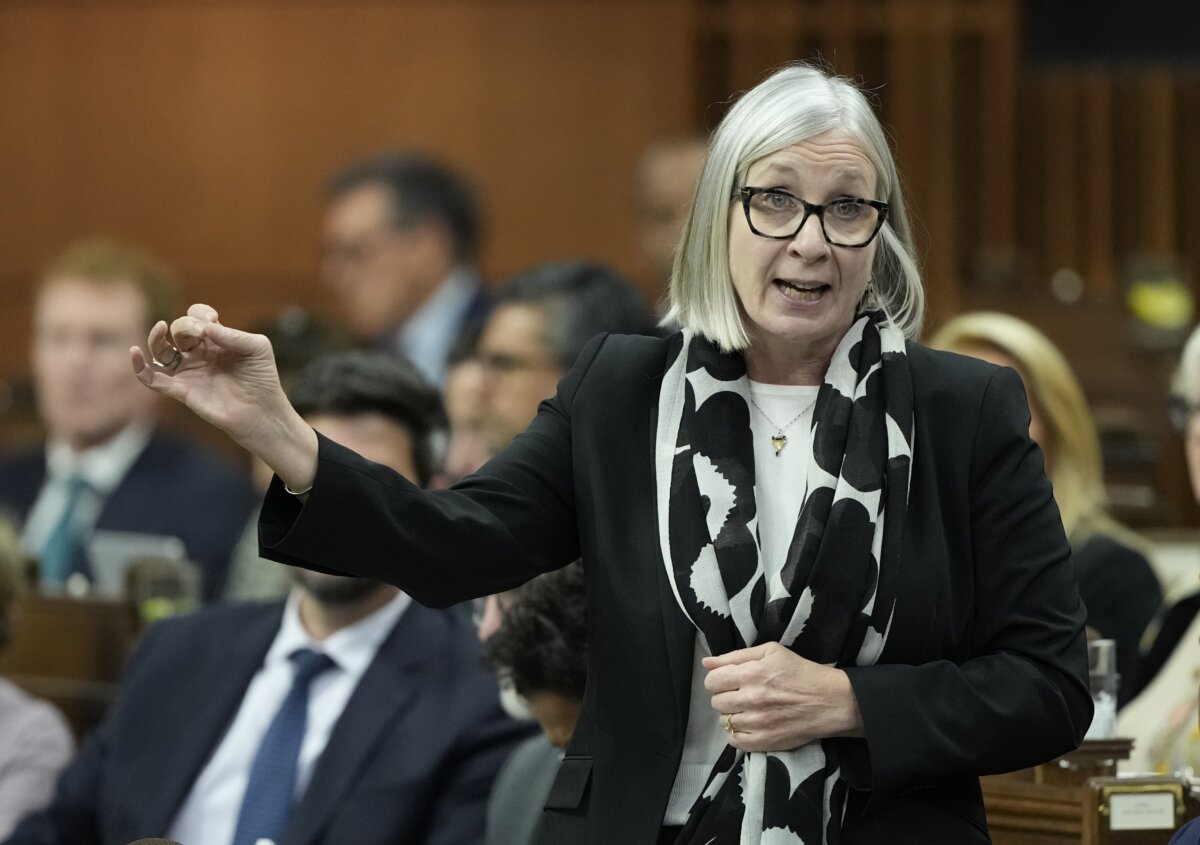
“We are building major infrastructure projects and millions of new homes, and that means that we’ll need more skilled workers to get the jobs done. Unions do a phenomenal job of training people,” Jobs Minister Patty Hajdu said at an Oct. 27 press conference in Ottawa announcing four new measures, which she called “generational investments,” included in the upcoming federal budget.
The upcoming budget will also introduce a temporary refundable tax credit for personal support workers (PSWs) equal to 5 percent of eligible earnings up to $1,100 per year. The credit will be available in provinces and territories not already covered by a bilateral agreement with the federal government to increase wages for PSWs, the department said.
Secretary of State for Labour John Zerucelli, who also announced the four measures at a separate press conference in Etobicoke, Ont., on Oct. 27, noted that PSWs remain “among the lowest paid workers in health care.” He also noted the first two measures fulfill campaign promises made by the Liberal Party earlier this year.
Additionally, the budget will amend the Canada Labour Code to restrict the use of non-compete agreements in employment contracts for federally regulated sectors. The measure will allow workers to move more freely to higher-paying careers or start their own business, the finance department said.
“Non-compete agreements that prevent workers from moving to rivals or starting a competing business reduce competition and undermine the efficiency of the labour market,” the finance department said, noting Ottawa will launch consultations on proposed legislative changes for restricting such agreements in early 2026.
The fourth measure includes a Foreign Credential Recognition Action Fund, which will cost the federal government $97 million over five years. The measure aims to make credential recognition “fairer, faster, and more transparent” to help foreign-trained workers join the Canadian workforce quicker.
Hajdu said the new measures build on other measures announced by Prime Minister Mark Carney in September to support workers impacted by U.S. sectoral tariffs. These include a new “reskilling package” for up to 50,000 workers, a digital jobs and training platform, and temporary changes to Employment Insurance.
Past Pre-Budget Announcements
The Liberal government has made other pre-budget announcements, including several policies related to affordability, such as an automatic tax-filing service for lower-income individuals who don’t usually file taxes and receive benefits.
Carney has also announced spending to extend the national school meal program and the Canada Strong Pass, which gives free and discounted access to national historic sites and passes on VIA Rail. Expansion of the national dental care program was also announced earlier this year.
The prime minister has also announced the hiring of 2,000 additional law enforcement personnel and expanded security programs, including at the border, as well as boosted defence spending to meet NATO’s target of allocating 2 percent of GDP to defence.
Additionally, Carney has said he will offer tax cuts and funding for Canadian industries that are facing pressure due to U.S. and Chinese tariffs. He has also reduced the tax rate for the lowest income bracket.
While speaking during a rare televised address related to the Nov. 4 budget on Oct. 22, Carney said Canada’s economy is doing “reasonably well,” but noted there will be challenges ahead requiring “sacrifices.” The upcoming budget is expected to include steep deficit projections, with Government House Leader Steven MacKinnon saying the deficit will be “substantial.”
Opposition
Whether Carney’s government secures the support of another party on the budget will decide if the Liberals remain in power and if a new election is called, as the Liberals currently have 169 seats in the House of Commons—three seats short of a majority.
Conservative Leader Pierre Poilievre has declined to say whether he will support the federal budget before seeing it. He has repeatedly criticized Carney for not releasing a budget sooner and has called on Carney to “keep his promise and reverse the massive spending increases that he has brought in.”
Interim NDP Leader Don Davies has not ruled out supporting the government, but has said his party won’t support an “austerity budget.” He has expressed support for federal investments to support workers, businesses, communities, and infrastructure impacted by U.S. tariffs.
The Bloc Québécois issued 18 “unavoidable” budget demands earlier this month, including spending increases for health transfers, infrastructure funding, and Old Age Security payments, saying the party will not support the budget unless its demands are met.
MacKinnon told CBC’s Rosemary Barton during an Oct. 26 interview that the government lacks the votes it needs to pass the budget. He’s urging opposition parties to support the spending plan to avoid a Christmas election.
Noé Chartier, Omid Ghoreishi, and Paul Rowan Brian contributed to this report.
 Friends Read Free
Copy
Facebook
Tweet
Friends Read Free
Copy
Facebook
Tweet