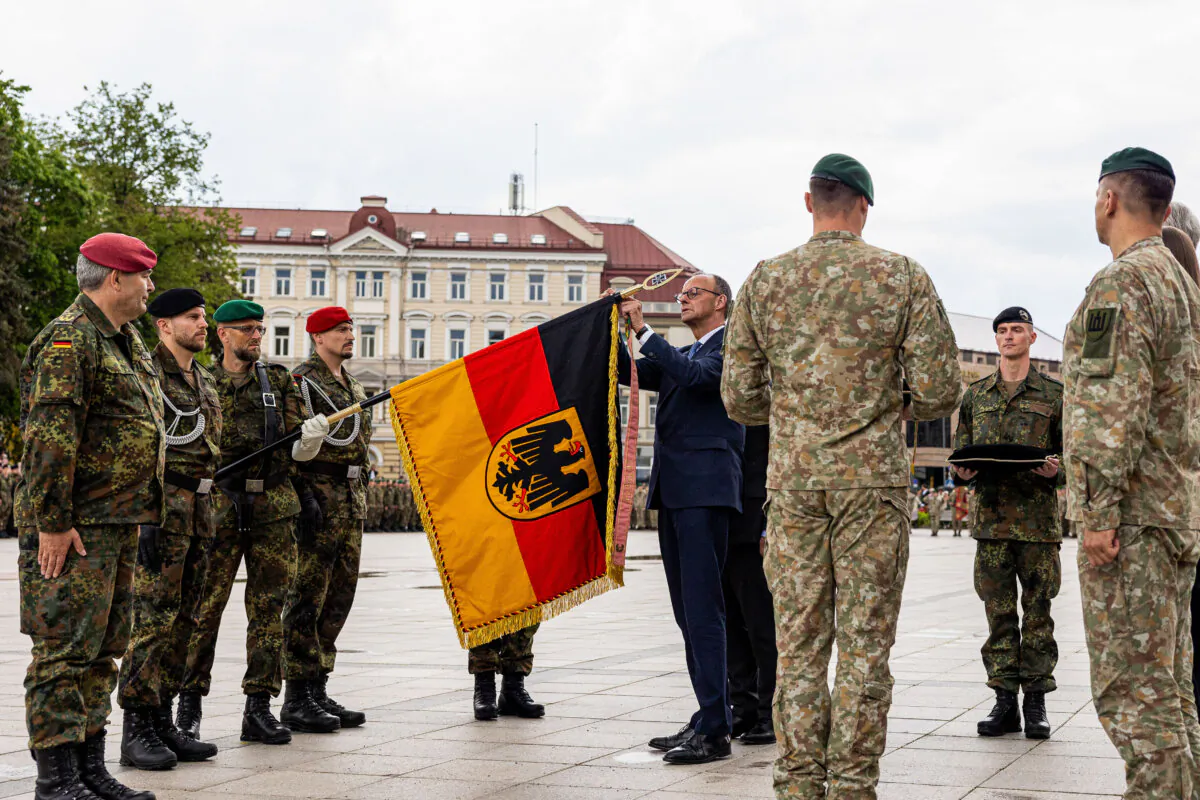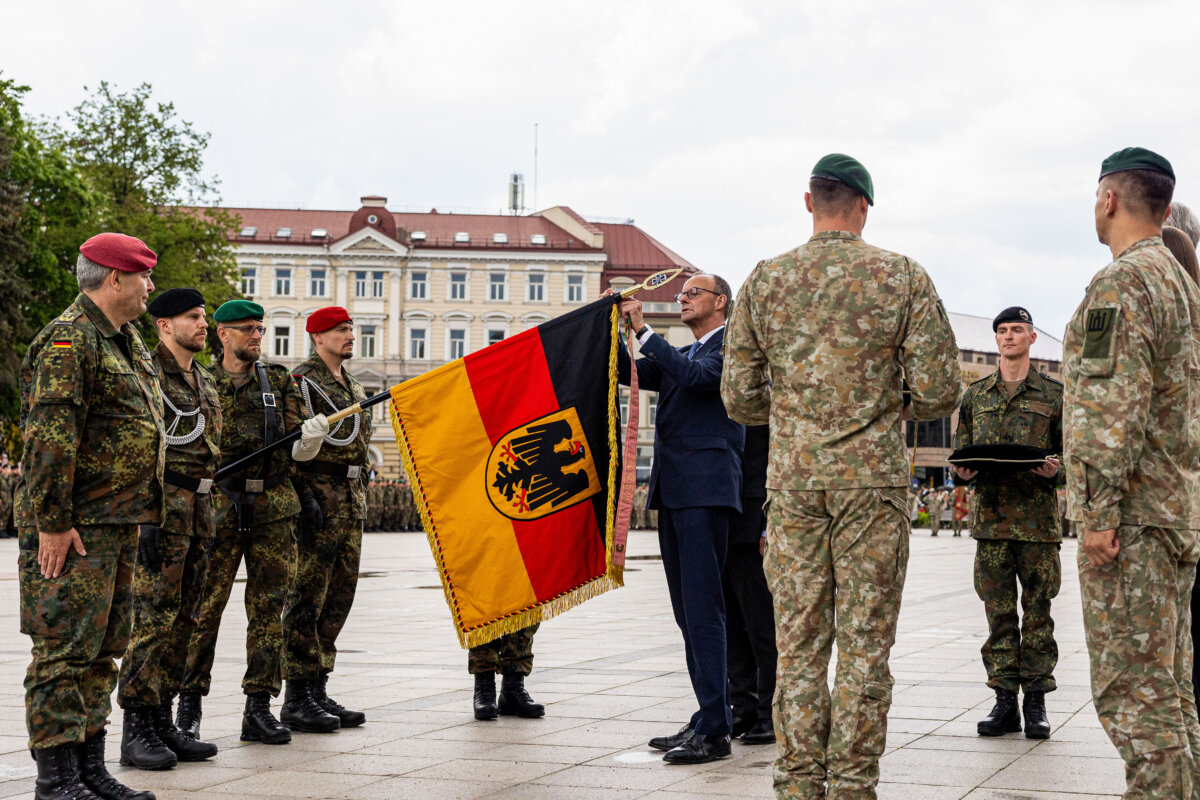

The German Cabinet approved plans on Aug. 27 for a new voluntary military service system, in an attempt to boost numbers in the armed forces, and has laid the ground for reintroducing conscription.
The draft bill would introduce a new form of voluntary military service, but the government of Chancellor Friedrich Merz said that if it failed to meet recruitment targets, conscription could be reintroduced.
The German government said it had “agreed to introduce a new, attractive military service model based on the Swedish military service model and initially based on voluntary participation.”
Germany required national military service for all young men until it was abolished in 2011, and the Bundeswehr, or national army, became a voluntary service.
Currently, professional soldiers are supplemented by volunteers who must enlist for between seven and 23 months.
Under the new proposal, volunteers will train for six months and then become part of a reserve.
Conscription Possible
In its statement, the government said, “Should the security situation worsen or the options for voluntary service are exhausted, the federal government can issue a legal order, with the consent of the Bundestag, ordering mandatory conscription.”
The statement said all 18-year-old Germans—male and female—will need to complete a mandatory online questionnaire, asking if they are willing to volunteer for military service.
In March, Eva Högl, then-German parliamentary commissioner for the armed forces, warned in a report that the country’s armed forces were shrinking and aging.
She said the size of the army had fallen from 250,000 members in 2011 to 181,000 in 2024, of whom only 57,813 were career soldiers.
Högl—who was replaced by Henning Otte—wrote, “While the average age was 32.4 years at the end of 2019, it grew to 34 years by the end of 2024.”
German Defense Minister Boris Pistorius said during a news conference on Aug. 27: “The Bundeswehr must grow. The international security situation, above all, Russia’s aggressive posture, makes this necessary.”
‘Truly Credible’ Deterrence
“We don’t just need a well-equipped force—we are already well on the way there—but we also need a Bundeswehr that is strong in terms of personnel,” Pistorius said. “Only then will deterrence as a whole be truly credible vis-à-vis Russia.”
The bill forecasts that the new voluntary scheme will increase annual recruitment targets from 20,000 in 2026 to 38,000 in 2030.
Germany’s Christian Democratic Union party (CDU) and a smaller conservative party, Christian Social Union in Bavaria (CSU), entered into a coalition deal with the center-left Social Democrats (SPD) in April.
Pistorius—who has been defense minister since January 2023—is from the SPD, and retained his position under Merz, who said in July that Europe had been “free riders,” depending on protection from the United States, for too long.
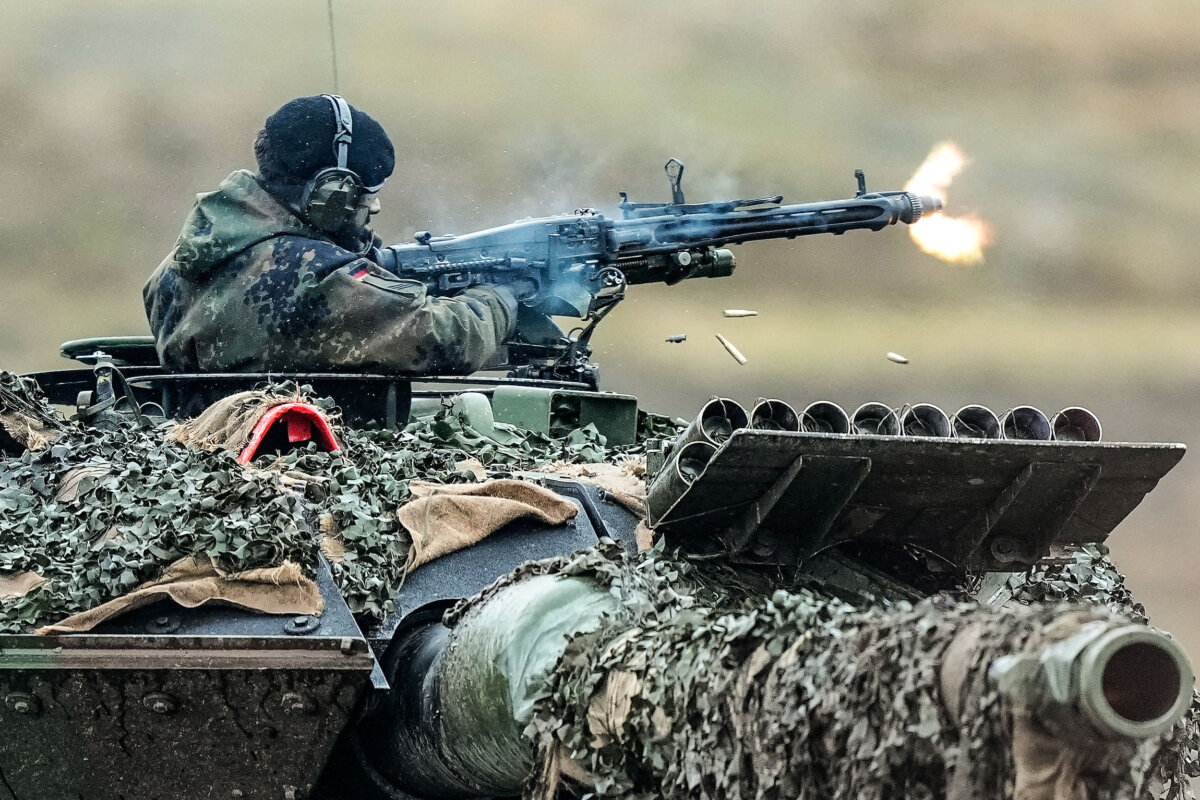
The bill would have to be passed by the Bundestag, but the ruling CDU-CSU-SPD coalition has 328 seats, more than all of the opposition parties together.
Pistorius said he wanted to increase the number of soldiers from 180,000 to 260,000 by the early 2030s to meet new targets set by NATO at a summit in The Hague earlier this year.
Under the Hague Declaration, all members of NATO—with the exception of Spain—committed to investing 5 percent of gross domestic product annually on core defense requirements, as well as defense and security-related spending by 2035.
The German armed forces reported a 28 percent surge in soldier recruits to more than 13,700 people from January to late July, compared with the same period in 2024.
Germany is among Ukraine’s strongest supporters within NATO.
German Vice Chancellor Lars Klingbeil told reporters in Kyiv on Aug. 25 that, in the event of a peace deal in the conflict, security guarantees are needed to ensure that Russian President Vladimir Putin “no longer dares to attack Ukraine.”
In April, Germany deployed troops to Lithuania, which has a 170-mile border with Russia’s Kaliningrad enclave.
Kaliningrad was formed out of East Prussia, a German territory, at the end of World War II.
It was Berlin’s first permanent foreign military mission since World War II, although Germany has engaged in nonpermanent overseas missions, including support for the U.S.-led war in Afghanistan.
Nine countries in Europe—Austria, Lithuania, Latvia, Estonia, Finland, Sweden, Denmark, Greece, and Cyprus—currently have mandatory military service.
Croatia, which abolished compulsory military service in 2008, is reintroducing it in January 2026.
In May 2024, then-British Prime Minister Rishi Sunak promised to reintroduce military service for 18-year-olds, but his Conservative Party lost the general election two months later.
France—which abolished military service in 2001—Poland, and several other European countries are also debating whether to introduce conscription in light of the security situation and the difficulty in attracting recruits.
Reuters contributed to this report.
 Friends Read Free
Copy
Facebook
Tweet
Friends Read Free
Copy
Facebook
Tweet