
News Analysis
The ongoing conflict in the Middle East has led to market jitters and spiking oil prices, which could impact Canadians’ bottom line or investment portfolios.
With the Strait of Hormuz nearly closed for over three weeks now, oil prices have reached as high as US$115 a barrel, leading to worldwide fears of another wave of inflation. Approximately a fifth of all oil and significant volumes of fertilizer flow through the narrow waterway south of Iran.
The impact on Canada as a net energy exporter is two-fold. While Canadian energy and fertilizer companies and their shareholders could see profits rise with energy costs, a drawn-out crisis would ratchet up inflationary pressure on everyday consumers. Any advantages could be limited to commodity-producing regions like Alberta and Saskatchewan.
“As much as you hate to say ‘somebody wins from this [conflict],’ I think it is the case that Canadian commodity companies do benefit,” said BMO chief economist Doug Porter. “In general, supplies from Canada have not been disrupted. If anything, there’s more demand for Canadian commodities.”
Ian Lee, a professor of business at Carleton University, also said Canada would be a “big winner” of the conflict in the Middle East because it is a reliable global energy supplier.
“I don’t mean to say that we’re trying to profit off the horrors of what’s going on in the Middle East. I’m just being geopolitically strategic here,” Lee said.
Jack Mintz, president’s fellow at the University of Calgary’s School of Public Policy, said the closure of the Strait of Hormuz has benefited stocks of Canadian fertilizer and energy companies. The stock of Saskatchewan-based fertilizer company Nutrien has risen 11 percent over the last month, while shares of oil producer Canadian Natural Resources Limited have risen by 22 percent, and Suncor Energy shares have risen by 10 percent.
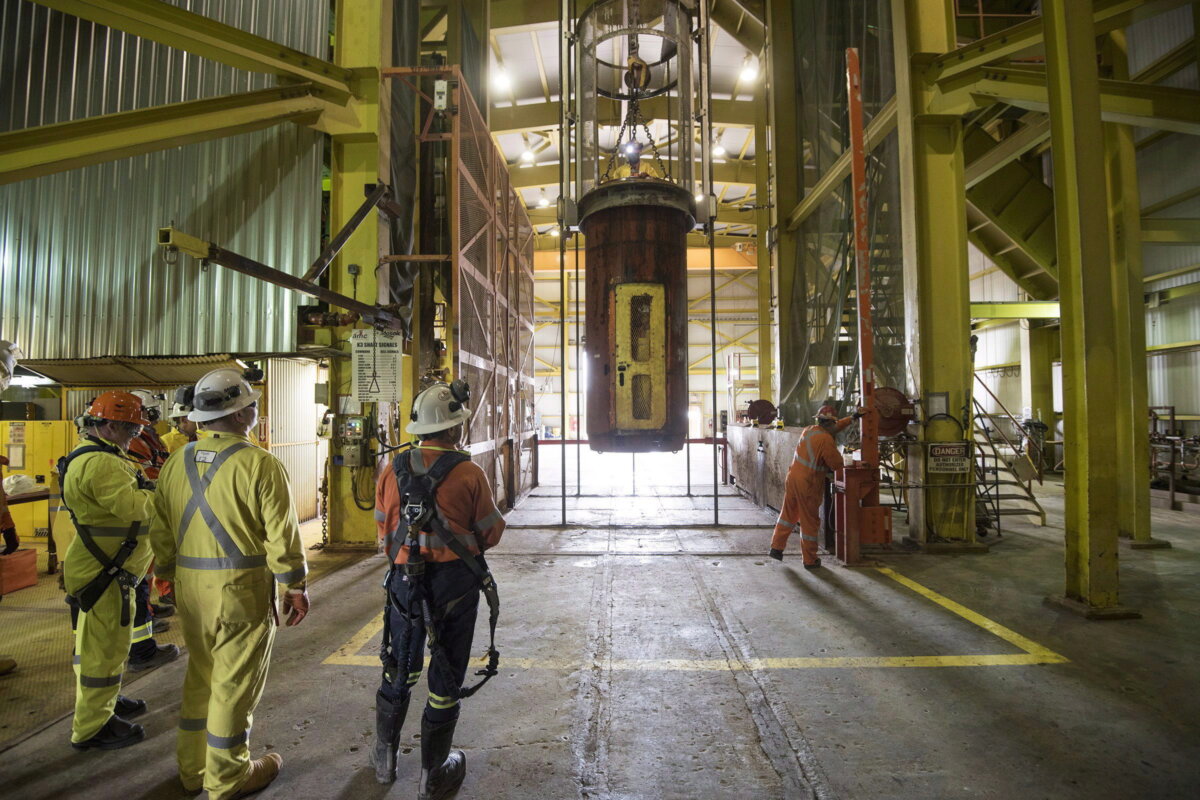
“They’re getting much higher prices for their product, which is giving them more cash flow. So the stock market has replied as you would expect, and share prices have gone up,” Mintz said.
However, Mintz said the Canadian government’s energy policies over the last decade, which have capped production and export of oil and gas, mean the country has not been able to take full advantage of the current crisis in the Middle East.
Livio Di Matteo, a professor of economics at Lakehead University, said the outlook for stocks and commodities “hinges on the degree of uncertainty” being generated by both the Middle East conflict and the recent U.S. Supreme Court ruling on tariffs.
The U.S. Supreme Court recently struck down tariffs imposed by the Trump administration under the International Emergency Economic Powers Act. The White House then imposed a new 10 percent universal tariff and launched a trade investigation into 60 countries, including Canada.
“A lot depends on how long the conflict lasts but the degree of uncertainty is high, making things worse for markets, because it is unclear what the U.S. long-term plan for Iran and the Middle East is,” Di Matteo said.
Di Matteo said the performance of pension funds will depend on how heavily they invested in the Middle East and how exposed they are to investments impacted by the turmoil.
A recent survey of Canadian financial advisors by Fidelity Investments also indicated that around half of them are currently making changes to portfolios. Out of the 54 percent who said they are, the brokers are most likely to be diversifying into the energy, resources, and defence sectors.
Inflationary Pressure
The conflict in the Middle East and the associated rise in oil prices will likely create inflationary pressures for most Canadians. Energy prices are embedded in nearly every part of the economy, particularly when it comes to transportation, food production, and manufacturing.
Statistics Canada’s latest report on consumer prices showed that annual inflation fell from 2.3 percent in January to 1.8 percent in February, driven largely by the effect of comparison with February 2025, when many prices rose at the end of a two-month GST holiday. However, March inflation numbers will likely be higher due to a rise in gas prices.
Dalhousie University Agri-Food Analytics Lab director Sylvain Charlebois has said the Strait’s closure will have “ripple effects” on Canadian energy, transportation, and eventually food costs.
The disruption in the Middle East will also have implications for the Bank of Canada, as it weighs interest rate decisions throughout 2026.
The central bank has kept interest rates steady at 2.25 percent for its last three meetings, following four rate cuts in 2025. The bank said at its Jan. 28 meeting that rates were at the right level to control inflation, and that there was continued unpredictability due to trade disruptions and the upcoming United States-Mexico-Canada Agreement (USMCA) review in July.
Canada and Mexico have said they want the free trade deal to remain in place, whereas White House officials have been more ambiguous in their messaging.
The conflict in the Middle East has injected even more uncertainty into the central bank’s interest rate deliberations. Porter said that before the Iran war, the markets had “downgraded” the chances of the Bank of Canada cutting interest rates in 2026.
Porter said he believed that with the volatility around oil prices and the upcoming USMCA negotiations, it would “make more sense for the Bank of Canada to just stand aside and see what happens.”
Porter wrote in a note to clients on March 16 that, after a Statistics Canada report showed 86,000 job losses in February, the central bank should be “considering cutting rates, not raising them, in this economic backdrop.”
Mintz said the Bank of Canada is in a “tough position” due to the conflict in the Middle East, as inflation may prevent it from further lowering interest rates. “There could be some pressure, and interest rates could go up,” he said.
Di Matteo said a rise in oil prices could “trigger a new burst in inflation,” forcing the Bank of Canada to raise interest rates, further depressing stock markets.
As widely expected, the Bank of Canada held its key rate at 2.25 percent on March 18.

Oil Prices and Energy Stocks
Oil prices surged after U.S. and Israeli strikes on Iran on Feb. 28, rising from US$71 a barrel to a peak of US$115 by March 8. Prices have since fallen to the mid-90s, as expectations of a short conflict and a major release of oil stockpiles helped offset the impact of the Strait of Hormuz’s virtual closure.
A March 3 BMO analysis found uncertainty around how high oil prices could go, as it depends on how long the war lasts and whether the Strait of Hormuz remains restricted for an extended period. The report carries a baseline assumption of oil averaging US$69 for 2026, compared to BMO’s earlier assumption of US$60.
However, Porter told The Epoch Times that an oil and gas producer analysis recently projected prices could temporarily reach US$150.
He also said that when it comes to the overall stock market’s performance, he believes investors were “a little bit too complacent in the opening days” of the conflict. Stocks in New York and Toronto both generally opened lower on the Monday after the conflict began, but then recovered.
Porter added that the pullback in equity markets has not been as severe as the 2025 “Liberation Day” tariffs the U.S. imposed on numerous countries, which drove the S&P 500 index, the benchmark U.S. stock index, down by nearly 20 percent.
“There’s still a path that we can get out of this without serious damage to equity markets, but it is important that hostilities get dialled back within the next month,” he said.
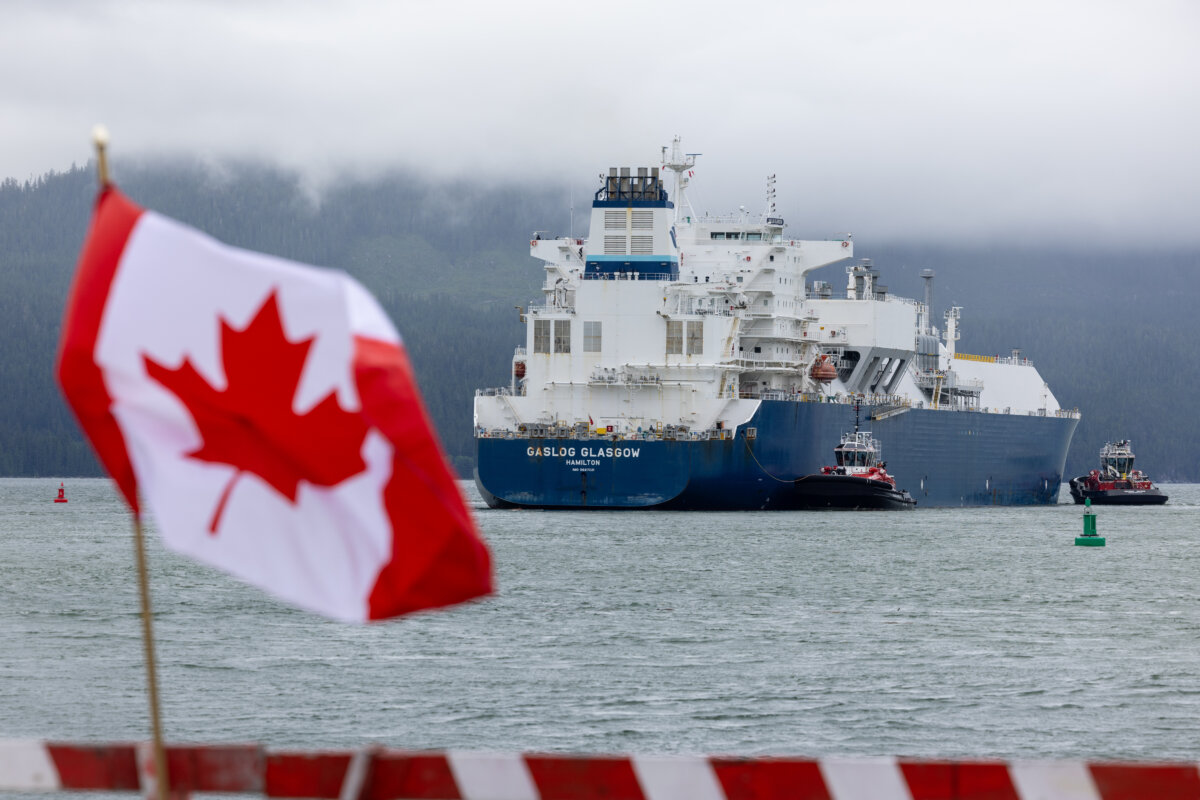
Lee said that Europe and Asia, which depend on oil and gas from the Middle East, will likely look to Canada as a replacement. “We have enormous amounts of natural gas that we can be shipping to Asia or Europe, and so can the United States. So the market is there, and it’s going to continue,” he said.
Lee also said the S&P/TSX Composite Index, the benchmark index of the Toronto Stock Exchange, could continue to outperform major U.S. stock indexes in 2026, given that it weights commodities and materials like precious metals and fertilizer more heavily.
The TSX grew by 27 percent in 2025, while the S&P 500 rose by 16 percent, the Dow Jones Industrial Average gained 13 percent, and the Nasdaq increased by 21.2 percent.
The hostilities have impacted the major stock indexes differently. The S&P 500 has dropped a little over 2 percent since the conflict began. The Dow Jones fell nearly 4 percent over the same period, while the Nasdaq fell nearly 1 percent. On the Canadian side, the resource-heavy TSX fell nearly 4 percent over the same period.
Out of those stock indexes, only the TSX has gained in 2026, with growth of over 3 percent.
Fertilizer, Precious Metals
Aside from crude oil, the Middle East accounts for between 20 percent and 30 percent of global fertilizer exports, with 35 percent of urea passing through the Strait of Hormuz in 2023. Additionally, methane from natural gas is a key ingredient in synthetic nitrogen fertilizers, and 20 percent of global supply passes through the waterway.
Canada is responsible for about 39 percent of global exports of potash, another key component of fertilizer. Porter said Canada’s fertilizer producers could once again benefit from a disruption in global fertilizer markets. Saskatchewan, which has the largest potash industry in the world with 45 percent of known global reserves, would stand to benefit.
When it comes to gold and silver, Porter said he was surprised that prices have not increased more, given that the two metals typically outperform during periods of global uncertainty. The price of gold rose from US$5,200 per ounce to US$5,400 when the war broke out, but has since returned to US$5,100, while silver rose from US$90 per ounce to US$96 but erased those gains.
Porter attributed this to rapid gains in 2025 of both gold and silver, with gold rising 62.5 percent and silver rising 142.6 percent. He said investors who have profited from those trades are likely “selling their winners and moving into what they view as real safe haven [assets].”
Mintz agreed that while uncertainty can push up gold and silver prices, the two metals are still trading at “relatively high levels” that may be currently preventing them from moving higher. He said he expects both gold and silver and related stocks to “benefit from current uncertainty.”
 Friends Read Free
Copy
Facebook
Tweet
Friends Read Free
Copy
Facebook
Tweet