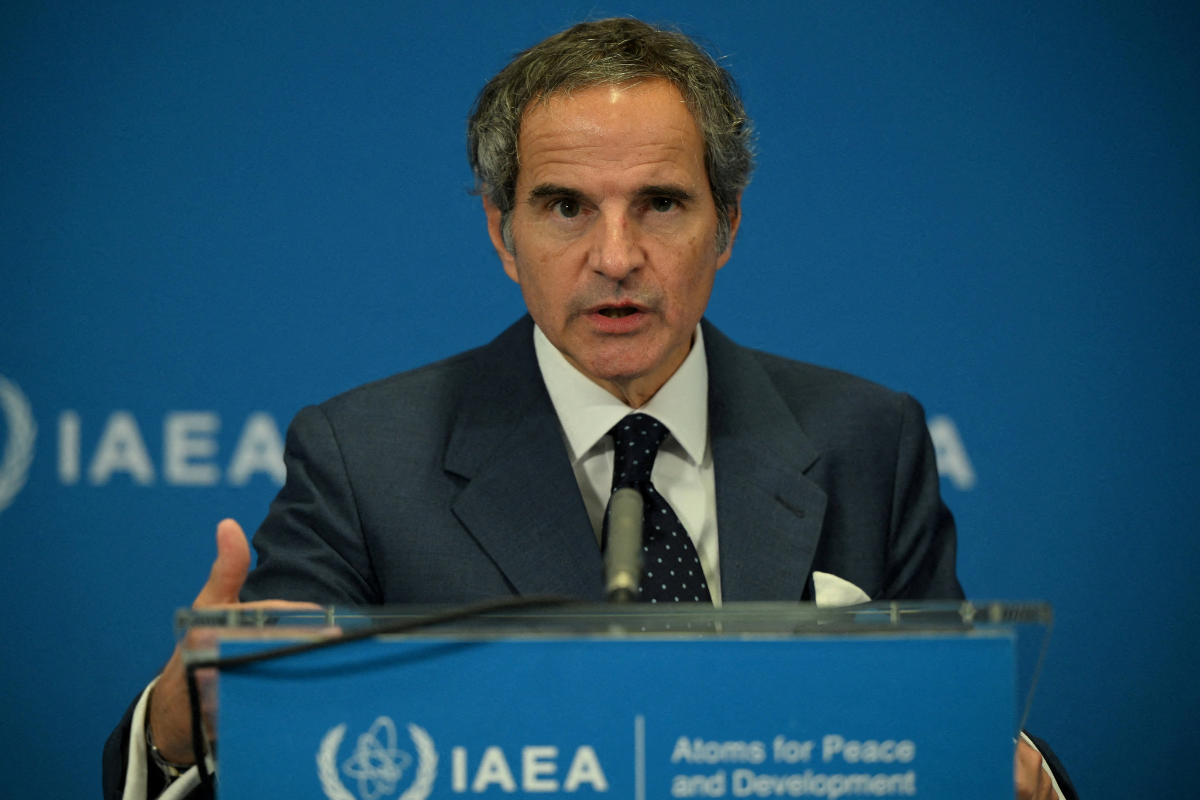

The head of the U.N. nuclear watchdog said Friday that inspectors should soon regain access to Iran under the U.S.–Iran memorandum of understanding, even as Tehran says that bomb-damaged nuclear sites will remain off-limits until a final deal is reached and sanctions are lifted.
International Atomic Energy Agency (IAEA) Director-General Rafael Grossi said on June 26 that the preliminary agreement reached between Washington and Tehran requires that inspectors verify Iran’s nuclear activities, including the fate of its enriched uranium stockpile.
“There is an agreement, and to comply with that agreement, the IAEA will have to have access and inspect,” Grossi told reporters in Japan. “We hope to be there soon.”
The dispute over inspections has emerged as one of the first major tests of the ceasefire-extending memorandum, which opened a 60-day negotiating window for a broader settlement after months of war.
Dispute Over Access
U.S. officials say that during talks in Switzerland, Iran agreed to invite IAEA inspectors back into the country. Vice President JD Vance said earlier this week that Tehran’s agreement represented “a major milestone” and a first step toward permanently ending the threat of an Iranian nuclear weapons program.
President Donald Trump went further, writing on Truth Social that Iran had “fully and completely agreed to highest level Nuclear inspections long into the future,” adding that there would be no further negotiations without such commitments.
Iranian officials have disputed that account, saying Tehran has not agreed to inspections of sites damaged in last year’s U.S.–Israeli strikes, known as Operation Midnight Hammer.
Iranian Deputy Foreign Minister Kazem Gharibabadi said in a June 24 post on X that there was “no program for access to the attacked facilities and nuclear materials,” adding that those issues would be addressed only under a final agreement and after “practical action” by the United States to end sanctions.
Foreign Ministry spokesman Esmail Baghaei made a similar point earlier this week, saying Iran had “no plans” to allow inspections of damaged nuclear facilities. He nevertheless said Tehran would continue to meet its obligations under the Nuclear Non-Proliferation Treaty and existing safeguards agreements.
Stockpile Questions
The memorandum states that Iran reaffirms it will not procure or develop nuclear weapons and that the two sides will resolve the status of Iran’s enriched uranium stockpile under a mutually agreed mechanism. At a minimum, the material would be downblended on site under IAEA supervision.
Grossi said Friday that the agency has begun initial technical contacts with Iran, but that talks over the stockpile have “barely initiated.”
“Initial conversations have taken place,” he said. “We expect this work to pick up soon.”
He said the first task of inspectors would be to verify whether IAEA seals on previously monitored material remain intact and whether any material is missing.
Iran has not told the IAEA how much enriched uranium survived the U.S. and Israeli attacks or where the material is now located. Before the conflict, the nuclear watchdog estimated Iran had around 970 lbs of uranium enriched to up to 60 percent purity, a level close to weapons-grade.
Grossi said on Friday that Iran has publicly denied seeking nuclear weapons, but added that stated commitments are insufficient.
“Intentions are not enough,” he said. “We have to have a very strong verification system in place.”
Concerns about Iran’s nuclear ambitions have also been raised by Tehran’s neighbors.
In a June 25 joint statement, the United States and Gulf Cooperation Council foreign ministers said any durable peace must address Iran’s nuclear program—as well as Tehran’s missile and drone capabilities, and its support for armed groups in the region like Hezbollah.
Iran’s Foreign Ministry on Friday rejected the statement as “interventionist, irresponsible, and provocative,” accusing Washington and Gulf governments of making false claims about Iran’s nuclear program, which Tehran described as “peaceful.”
 Friends Read Free
Copy
Facebook
Tweet
Friends Read Free
Copy
Facebook
Tweet