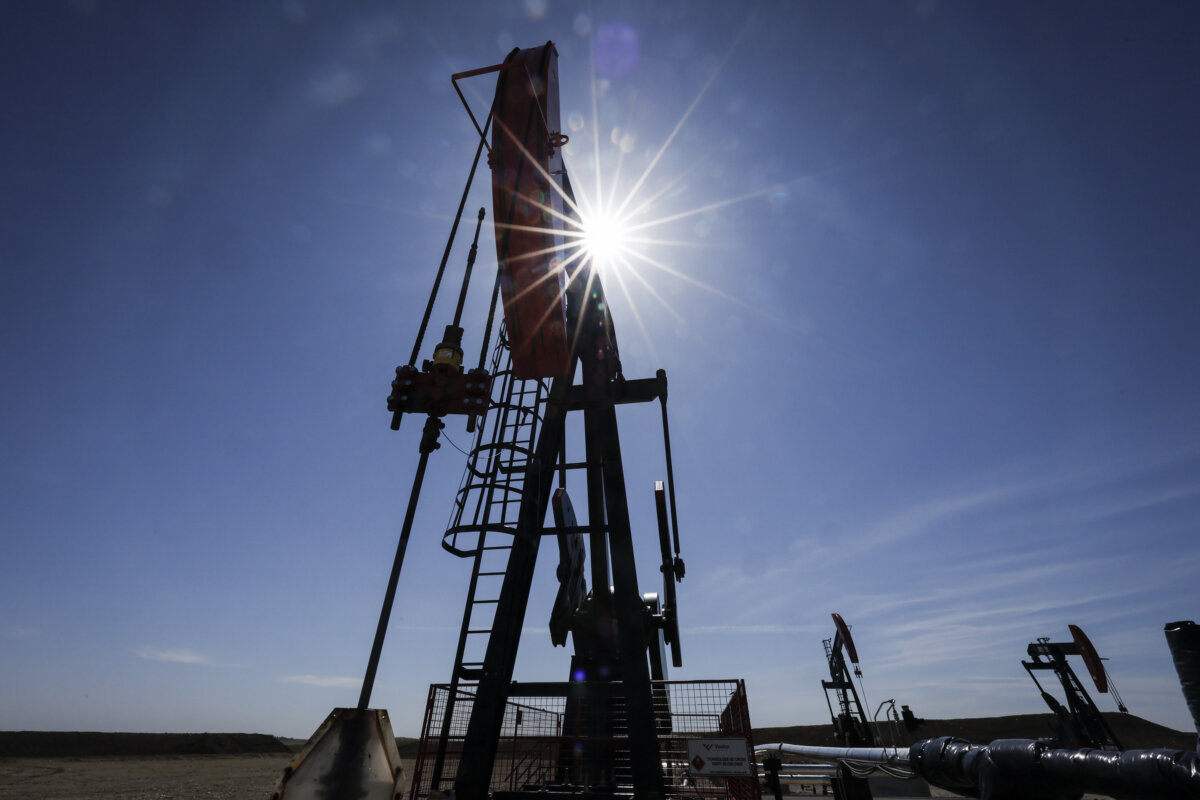

Oil price shocks from the ongoing conflict in the Middle East could raise inflation in Canada by between 1 and 2.3 percentage points, according to a report by Goldman Sachs.
A March 20 report by the multinational investment bank said that over the next year, inflation in Canada could rise by nearly 1 percentage point in a baseline scenario where the Strait of Hormuz—a key waterway for global energy—stays closed for six weeks. Brent crude would average at US$115 a barrel in April but fall to US$80 by the end of the year.
However, in a scenario where the strait remains closed for 10 weeks and the effects of longer-term economic damage are included, inflation in Canada could rise by 2.3 percentage points. Brent crude would hit US$160 in that scenario, beating the 2008 record of US$147.
Since the start of the Iran war, Tehran has virtually shut down the Strait of Hormuz. The price of Brent crude, the global benchmark oil price, has been hovering at just under US$100 for the last few days, while the price of West Texas Intermediate, the U.S. benchmark, has been at around US$90.
The report said higher energy prices are likely to slow economic growth and boost inflation in most countries, but there is “limited risk” that inflation effects like the 2021 and 2022 pandemic shock will re-emerge. Canada saw inflation rise to 8.1 percent in June 2022 before being brought back down by interest rate increases by the Bank of Canada and the restructuring of supply chains.
The report also said that each 10 percent increase in oil prices would lower global GDP by just over 0.1 percent because energy price increases hurt productivity. However, it said Canada’s GDP would rise by nearly 0.2 percentage points due to its role as an oil-exporting economy.
Statistics Canada’s latest inflation report showed that the country’s annual inflation fell from 2.3 percent in January to 1.8 percent in February. The Bank of Canada said on March 18 that inflation would be higher in the coming months due to a rise in gas prices. The bank kept its key interest rate steady at 2.25 percent.
Bank of Canada governor Tiff Macklem said the bank faced a “dilemma,” as raising interest rates to slow inflation could further weaken the economy while easing them to support growth could raise inflation beyond the bank’s 2 percent target. Macklem said that with inflation near the bank’s 2 percent target and the economy in excess supply, the risk of higher energy prices fuelling inflation seemed to be contained.
In response to the energy crisis, International Energy Agency member countries recently agreed to make 400 million barrels of oil from their emergency reserves available to the market. Canada has agreed to contribute 24 million barrels of crude oil.
According to a report by Oxford Economics, since Canada does not have emergency oil reserves, it would take Canada’s energy sector about 100 days to meet Canada’s pledge to contribute the oil.
 Friends Read Free
Copy
Facebook
Tweet
Friends Read Free
Copy
Facebook
Tweet