
Japan and Germany have dismissed criticism from Russian United Nations Ambassador Vassily Nebenzia that the “remilitarization” of the two countries is a threat to global security and undermines the results of World War II.
Nebenzia made the comments on May 26 at the first session of a U.N. Security Council meeting, in relation to Berlin and Tokyo’s recent efforts to build up their defensive capabilities.
Japanese envoy Kazuyuki Yamazaki rejected these claims, saying that Japan has upheld international law and was faithful to the U.N. Charter, criticizing Russia for “continuing its aggression against Ukraine in violation of the charter.”
“Japan’s efforts to strengthen its defense capabilities are a response to an increasingly severe security environment and are not directed against any specific country. Japan has consistently maintained an exclusively defense-oriented policy under its constitution,” Yamazaki said.
“It is ridiculous to criticize Japan’s defense posture as militaristic. It is even more so [coming from] a state continuing its own military aggression in clear violation of the U.N. Charter.”
Russia’s foreign ministry spokeswoman later said on May 28 that Japan’s allowing of U.S. Typhon missile systems to be deployed from its territory for military exercises is “a step that threatens Russia’s Far Eastern borders.”
Russian Foreign Ministry spokeswoman Maria Zakharova said Moscow had informed Tokyo that any deployment of missiles in Japan had “a serious negative impact on the stability and security of the Asia-Pacific region and poses a direct threat to our Far Eastern frontiers.”
Zakharova said such decisions will be classified by Moscow “as deliberate, hostile and ignoring the national interests of the Russian Federation.”
The U.S. Army first deployed its midrange Typhon missile system to Japan last September. Typhon is a truck-mounted weapon designed to bridge the gap between the Army’s precision strike missiles and long-range hypersonic systems. It can fire both Tomahawk cruise missiles and SM-6 multi-purpose missiles. It has become an increasingly visible element of U.S. military activity with allies in the Indo-Pacific region.
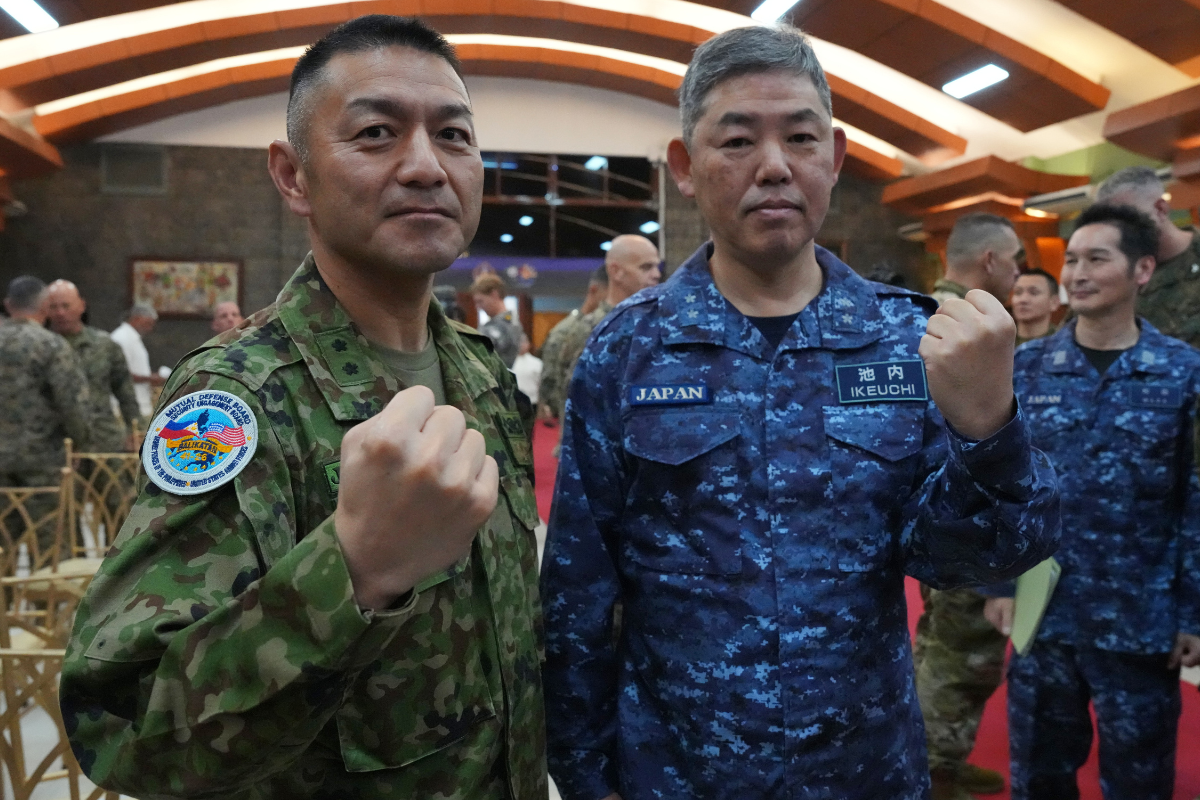
Japan has been conducting regional military exercises with allies, including the United States.
The country has begun to move away from its postwar pacifist policy under the leadership of Prime Minister Sanae Takaichi, and the country’s arms build-up comes amid increased aggression from the Chinese communist regime in the East China Sea.
‘Unjustified Accusations’
Also at Tuesday’s U.N. Security Council meeting, Germany’s Minister of State for Europe, Gunther Krichbaum, called Nebenzia’s comments, which also criticized Germany, “unjustified accusations.”
“We have been and continue to be crystal clear about our aim, which is to live in peace with our neighbors and prevent conflicts in and beyond Europe and around the world,” Krichbaum said.
Like Japan, Germany has also been working to increase its military defensive capabilities as it faces a continued war on NATO’s doorstep between Ukraine and Russia.
Recently, Germany and the Netherlands have taken the joint lead in establishing a new tactical headquarters in the Baltic region to bolster NATO’s eastern flank and deter Russian aggression.
German Defense Minister Boris Pistorius said on May 28 that the integration of this second corps headquarters in the region shows Germany and the Netherlands “are assuming further responsibility for the security of Europe.”
Pistorius said the two countries were committed to their roles, and that this corps will provide a “success story of multinational cooperation.”
“This is what interoperability and responsibility for Europe look like,” he said.
Creating this new command zone could allow NATO to devote more troops to the Baltic region, which is most at risk from a potential Russian attack.
NATO has said Russia could launch a major assault on allied territory as early as 2029, if its armament efforts persist—an intention that Moscow denies.
Bill Pan and Reuters contributed to this report.
 Friends Read Free
Copy
Facebook
Tweet
Friends Read Free
Copy
Facebook
Tweet