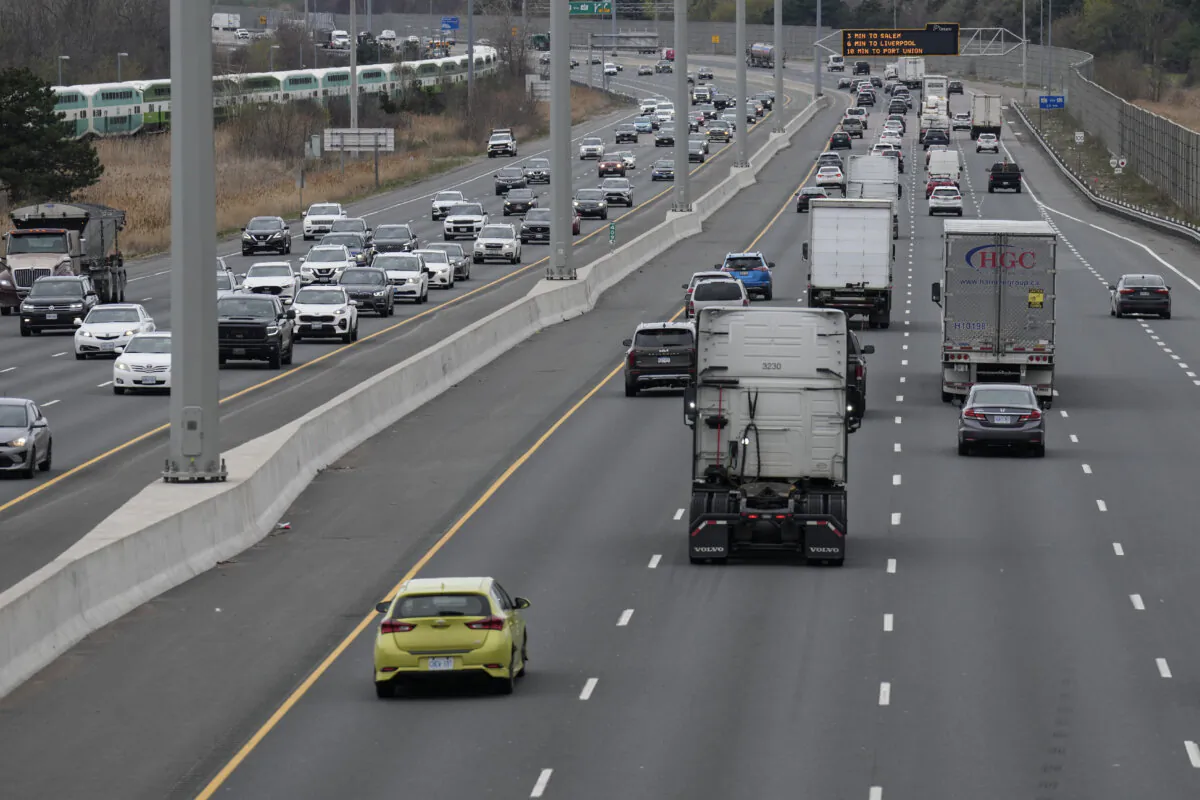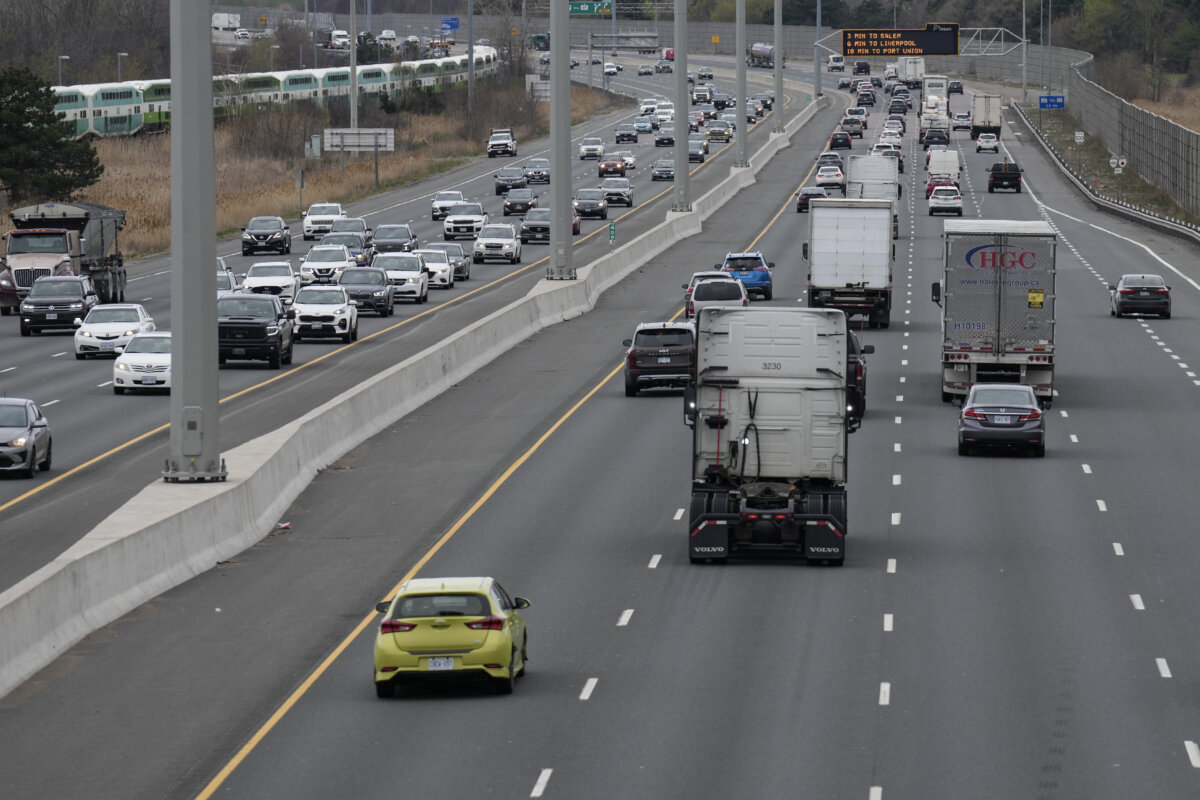

Canada’s federal tax agency says it is reinstating penalties for failure to report service fees on T4A forms for the current tax year and beyond, in a bid to crack down on driver misclassification and illegal drivers in the trucking industry.
The Dec. 4 announcement from the Canada Revenue Agency (CRA) comes amid a wider push to end so-called “Driver Inc.” practices in the trucking industry at the federal and provincial level. Driver Inc. refers to the practice of hiring novice truck drivers as independent contractors rather than as employees to evade payroll taxes and circumvent minimum wage requirements and benefits.
“By supporting greater transparency and compliance, we are helping to build a trucking sector that continues to be safe, more resilient, and better positioned to serve Canadians and our trading partners,” Transport Minister Steven MacKinnon said in support of the CRA’s decision.
Businesses that earn more than 50 percent of their income for trucking will face fines for failing to report payments above $500 to Canadian-controlled trucking businesses, as required on the T4A slip, by Feb. 28, 2026.
CRA said more details on how companies can comply with the new rules will be issued in the coming weeks, and noted that the new rules are supported by $77 million in funding to boost monitoring, auditing, and enforcement.
Ottawa has already put $26.3 million in funding toward cracking down on trucker misclassification since 2023.
The federal government previously announced it was carrying out a trucking inspection blitz in the Greater Toronto Area and Hamilton in a Dec. 1 press release.
Minister of Jobs and Labour Patty Hajdu said the inspections were about holding companies “accountable” for illegal practices.
“Misclassification is not only exploitation, but also illegal—plain and simple,” Hajdu said. “This inspection blitz is about finding employers who are breaking the law and holding them accountable so every truck driver in Canada is treated fairly.”
Trucking Safety
In addition to concerns about driver misclassification, trucking safety has emerged as a significant issue in Canada after a series of deadly accidents across the country in recent months.
Quebec’s chief coroner announced a public inquiry on Oct. 10 following an increase in fatal truck collisions, saying evidence has emerged that inexperienced and illegally hired drivers are contributing to the rising deaths.
Executive director of the Atlantic Provinces Trucking Association Chris McKee told the House of Commons transport committee that Driver Inc. practices have harmed Canada’s trucking industry in various ways, particularly regarding safety.
“Driver Inc. has weakened our industry from a safety, labour and competitive standpoint,” McKee said on Oct. 9. “This is a crisis of fairness, safety and the rule of law.”
The Truck Training Schools Association of Ontario previously submitted a brief to the committee saying that Driver Inc. has led to a proliferation of poorly-trained truck drivers and exploited foreign workers driving improperly maintained vehicles, causing Canadian roads to become more dangerous.
Bloc Québécois MP Xavier Barsalou-Duval has pressed for a full federal inquiry into the practice. According to Barsalou-Duval, the Driver Inc. scheme began in Ontario before catching on in Quebec and other provinces across the country.
The Alberta government recently introduced new requirements to tighten industry safety, including a requirement that trucking companies must provide full driver records to insurance companies. Provincial Transportation Minister Devin Dreeshen said the measure was in response to “bad truck drivers” on Alberta’s roads resulting from “gaps in accountability in the industry.”
Alberta has also closed several truck driving schools that it identified as fraudulent, in addition to suspending trucking companies it considered unsafe and enforcing actions against companies it claimed operate below industry standards, as announced in an Oct. 3 press release.
“These drivers often lack proper training and oversight and are vulnerable to exploitation,” the province said. “In July 2025, a week-long commercial driver status and classification check stop revealed that 20 percent of the 195 drivers stopped were suspected of being misclassified, including several temporary foreign workers.”
 Friends Read Free
Copy
Facebook
Tweet
Friends Read Free
Copy
Facebook
Tweet