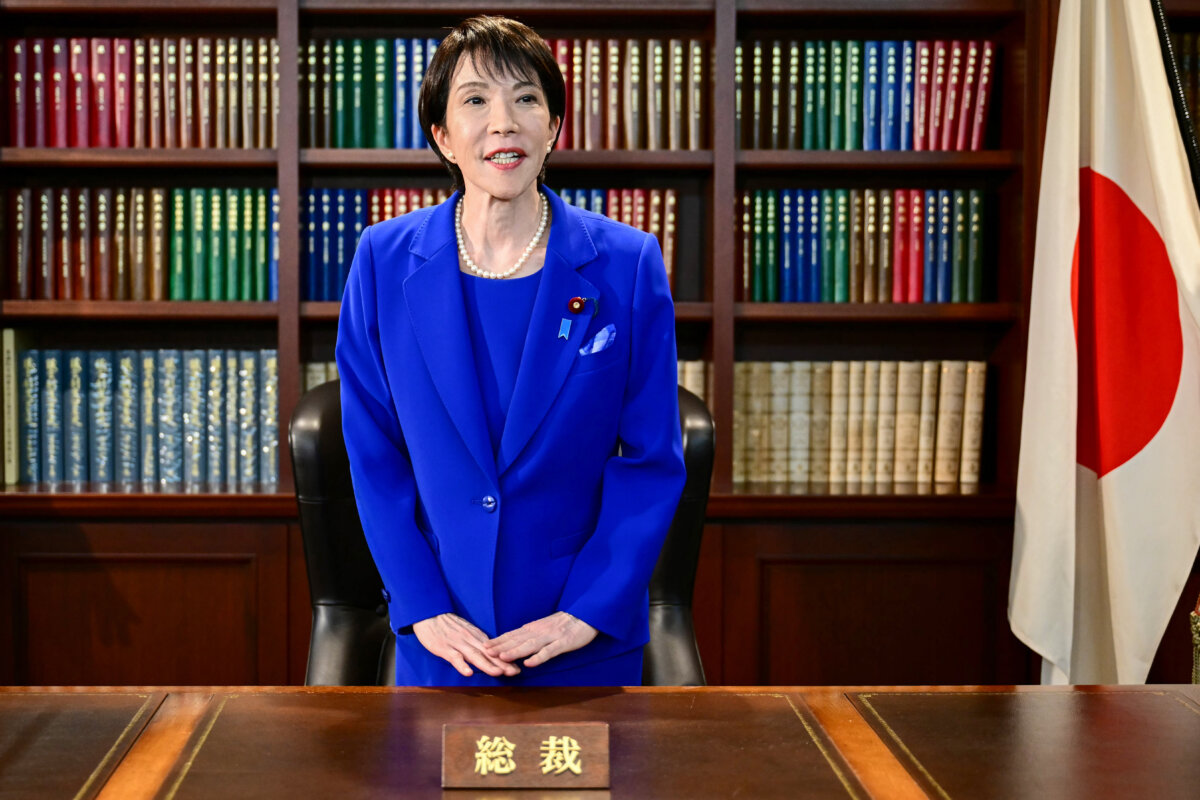

Sanae Takaichi, leader of Japan’s ruling Liberal Democratic Party (LDP), is poised to become the next prime minister after the opposition Japan Innovation Party stated that it would back her in forming a new government.
“I told Takaichi that we should move forward together,” Hirofumi Yoshimura, head of the Japan Innovation Party, known as Ishin, told reporters in Osaka.
The coalition deal is set to be finalized on Oct. 20 in Tokyo, where Yoshimura is meeting with Takaichi.
“Together with the new President Takaichi, we will move politics forward for the future of Japan. I understand that from the party’s perspective, there is risk involved,” he said on X. “However, unless someone takes that risk, stagnant Japan will not find a way forward. For the sake of Japan, to fulfill our promises, and to advance society, I will take a step forward.”
Yoshimura and Ishin’s co-leader, Fumitake Fujita, met with party lawmakers earlier on Oct. 20 to discuss the proposed alliance.
The agreement would give the two parties a combined 231 seats in Japan’s lower house, just two short of an outright majority but enough to ensure that Takaichi wins a parliamentary vote on Oct. 21 to select the next prime minister.
Under the rules, she needs only a majority of ballots cast in a runoff vote, not of all lawmakers.
The new coalition would remain a minority government and would likely need support from other opposition groups to pass legislation.
Takaichi secured the leadership of the LDP on Oct. 4, positioning her to succeed Prime Minister Shigeru Ishiba.
Six days later, the LDP’s longtime coalition partner, the Komeito Party, withdrew from the alliance amid a funding scandal. The move left Takaichi searching for new allies to secure a working majority in parliament.
U.S. President Donald Trump welcomed the election result, describing Takaichi as a “highly respected person of great wisdom and strength.”
U.S. Treasury Secretary Scott Bessent congratulated Takaichi on her election, saying in a post on X that she had proven herself to be “a strong leader, policy maker and communicator” and would be “a valuable partner in deepening the relationship between Japan and the United States.”
He noted that Washington looked forward to working with her on “economic and national security issues of mutual interest.”
Trump is set to take part in the Asia-Pacific Economic Cooperation (APEC) leaders’ meeting held in South Korea between Oct. 31 and Nov. 1.
In comments to CNBC, Bessent said last week that Trump will travel to Japan before he attends the APEC summit.
“We’re going to do a visit, president’s going to do a visit to Japan, and then move to Korea for the APEC conference, where the leaders, as of right now, will meet,” he said.
Policies
Takaichi is expected to pursue closer defense cooperation with the United States and continued support for Taiwan to counter Chinese aggression, although analysts suggest that such a stance will need to be balanced with Japan’s significant economic relationship with Beijing.
At a rally on Oct. 9 condemning Beijing’s human rights record, she criticized China’s treatment of ethnic Mongolians in the country’s north, underscoring her hardline stance on regional security.
Takaichi has proposed that Japan consider strengthening security cooperation with Taiwan.
In a speech last month, she also remarked on reports of tourists mistreating the sacred deer in Nara Park, citing broader concerns about visitor behavior and the growing public debate over immigration.
Takaichi remains committed to the economic policies of former Japanese Prime Minister Shinzo Abe, who was assassinated in 2022, known as “Abenomics,” advocating fiscal stimulus and structural reforms to revive growth.
She has called for tax cuts to ease the cost-of-living burden on households and criticized the Bank of Japan for raising interest rates, arguing the move could stifle recovery.
If confirmed on Oct. 21, Takaichi would become Japan’s first female prime minister.
Chris Summers and Jarvis Lim contributed to this report.
 Friends Read Free
Copy
Facebook
Tweet
Friends Read Free
Copy
Facebook
Tweet