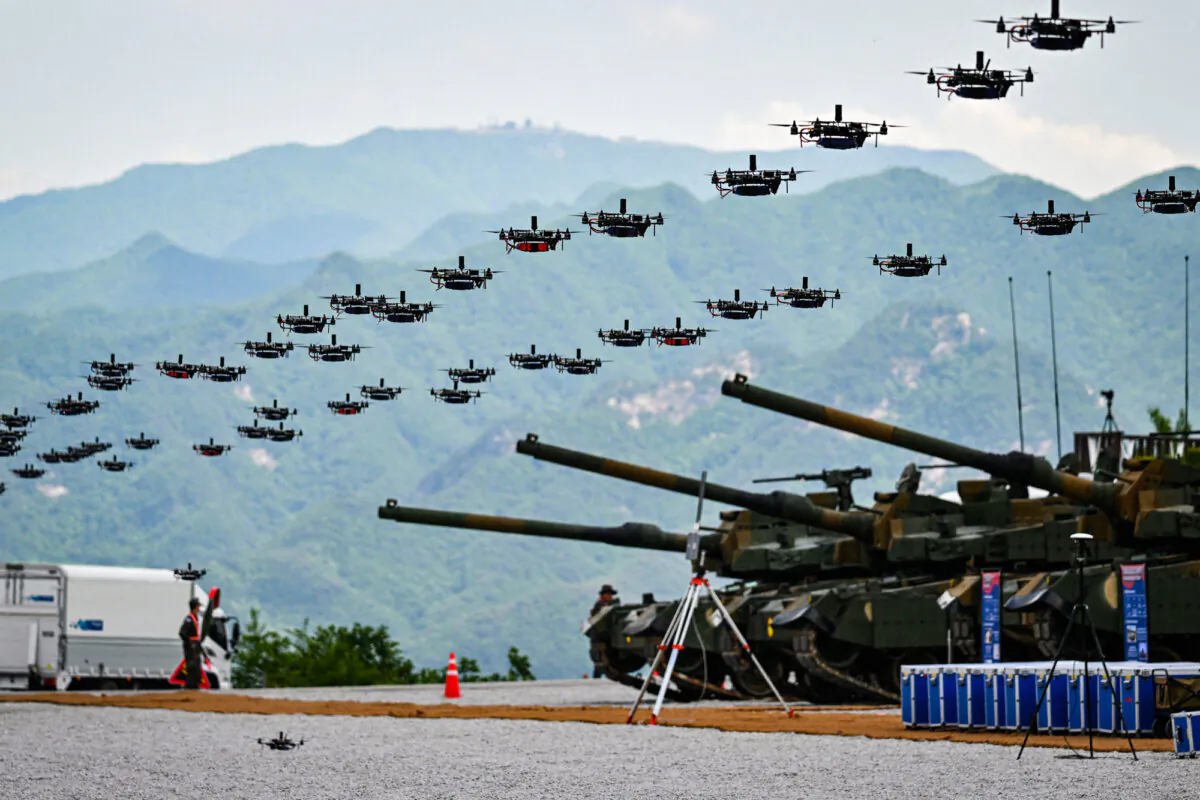

South Korea has announced plans to train 500,000 military personnel to operate drones and rapidly expand unmanned and counter-drone capabilities as Seoul seeks to strengthen defenses against North Korea.
The announcement came as North Korean leader Kim Jong Un oversaw tests of upgraded artillery and ballistic missile systems that Pyongyang said are intended to strengthen its military posture along the Korean Peninsula’s southern border.
The South Korean Ministry of Defense unveiled its “Defense Drone and Anti-Drone Development Policy” on June 26. It said the military will transition toward an unmanned force by distributing tens of thousands of drones across frontline units and training 500,000 service members to operate them.
“Moving forward, drones must cease to be specialized equipment operated by specific units and personnel and become a universal means of combat utilized by all soldiers,” said South Korean Defense Minister Ahn Gyu-back.
The policy is designed to make drones a common battlefield capability, the ministry said in a June 26 post on X, rather than equipment reserved for specialized units.
Ahn said the military also plans to expand long-range strike drones, swarm-drone capabilities, and systems to counter hostile unmanned aircraft.
“That long-range suicide drone, also known as the Killer Bus, which can be strategically utilized in preparation for various warfare scenarios while continuously expanding next-generation capabilities necessary for future battlefields, such as air-based swarm drones,” he said.
Ahn said South Korea will also develop counter-drone systems using laser, high-power, and microwave technologies while accelerating the military’s adoption of commercial drone technology.
He added that the ministry plans to support South Korea’s domestic drone industry by purchasing more locally produced training drones, expanding military testing of commercial systems, and creating new procurement methods that allow civilian technology to reach the armed forces more quickly.
War Anniversary, Political Controversy
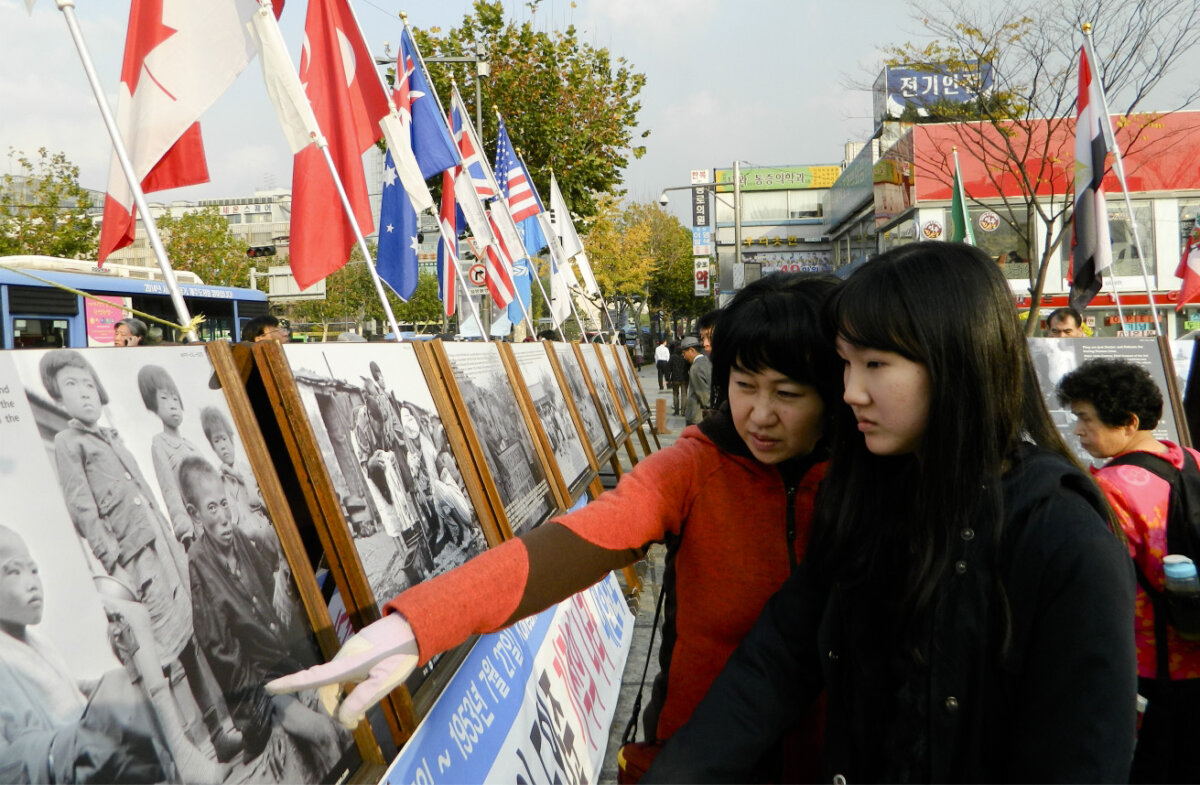
The announcement came one day after South Korea marked the 76th anniversary of the outbreak of the Korean War, which began on June 25, 1950, when North Korean forces invaded the South.
In a June 25 message marking the anniversary, Ahn honored South Korean troops and allied veterans who fought during the conflict and said the country must prepare for future security challenges.
“It is the 76th anniversary of the 6·25 War,” Ahn wrote in a June 25 post on X. “Now, we must prepare for the ‘victory of the next era.'”
He said South Korea should maintain a strong military readiness posture while adapting to emerging technologies, including artificial intelligence and manned-unmanned military operations.
The expansion also follows political controversy surrounding South Korea’s previous drone operations.
Former South Korean President Yoon Suk Yeol was sentenced on June 12 to 30 years in prison on charges linked to allegations that he ordered military drones to enter North Korean airspace to help create a pretext for his failed December 2024 martial law declaration.
South Korean President Lee Jae Myung’s administration has since dismantled the previous drone operations command.
North Korean Missiles, Artillery Tests
North Korea announced on June 26 that it supervised a series of weapons tests the previous day as part of the country’s five-year military modernization program.
According to the Korean Central News Agency, the tests evaluated an upgraded 240 mm multiple rocket launcher, a tactical ballistic missile equipped with what the agency described as a “special mission warhead,” and extended-range ammunition for a 155 mm self-propelled howitzer.
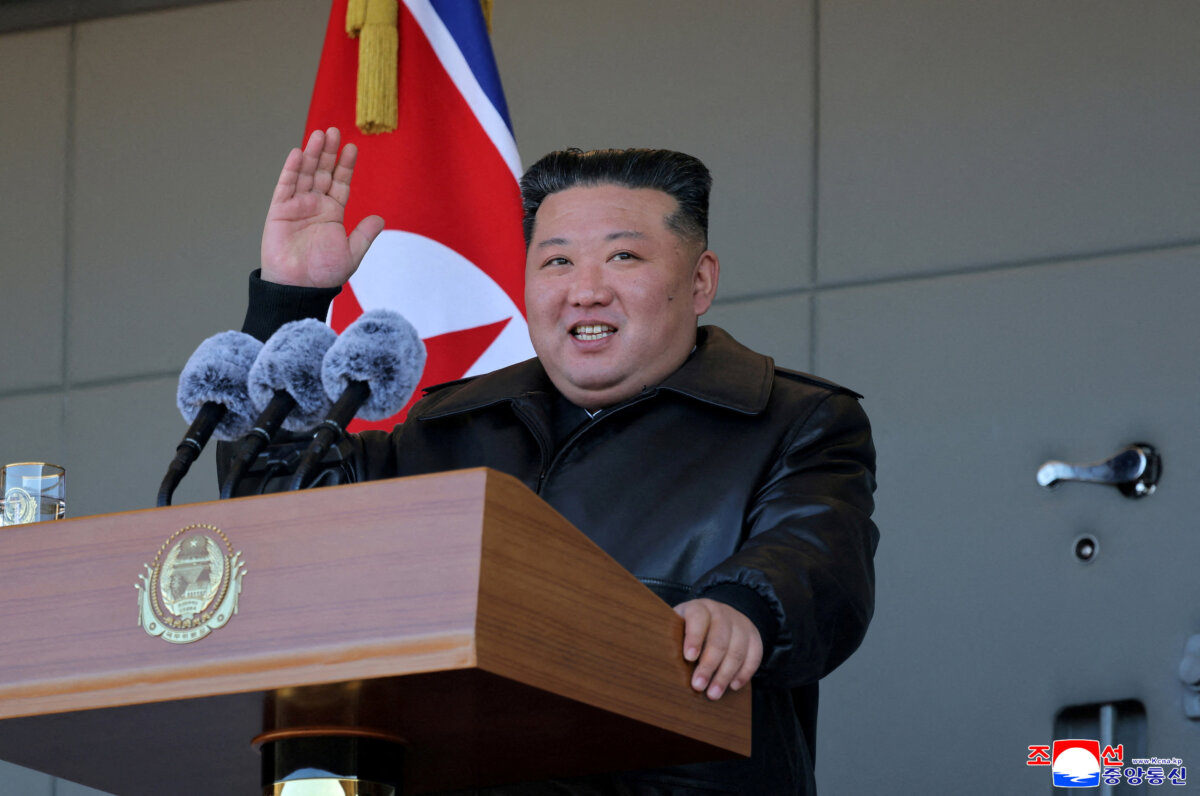
KCNA said the upgraded rocket launcher now has a range of about 90 kilometers, while the tactical ballistic missile is designed to strike major military targets, including airfields, ports, and power facilities.
Kim said the tests demonstrated progress toward modernizing North Korea’s artillery and missile forces.
“The present international situation, in which sovereignty can be defended and existence guaranteed only by complete upper hand in strength,” makes stronger defense capabilities an essential national priority, Kim said, according to KCNA.
He also said North Korea intends to strengthen what he described as its offensive military posture and replace long-range strike systems with upgraded weapons “in the shortest possible time.”
The latest announcements continue a broader pattern of military modernization on both sides of the Korean Peninsula.
In May, North Korea tested tactical ballistic missiles, artillery rockets, and AI-guided precision cruise missiles under Kim’s supervision.
North Korea has also tested a cluster-munition warhead, an electromagnetic weapon, and carbon-fiber bombs.
Earlier this month, Kim Yo Jong, the sister of North Korean leader and director of the General Affairs Department of the ruling Workers’ Party of Korea, rejected calls by the G7 nations for North Korea’s denuclearization. She said the country’s nuclear weapons status is protected under its constitution and cannot be reversed.

Her statement followed a June 12 meeting in Tokyo involving senior officials from the United States, Japan, and South Korea, who reaffirmed their commitment to North Korea’s denuclearization, enforcement of U.N. sanctions, and efforts to limit Pyongyang’s nuclear and missile programs.
 Friends Read Free
Copy
Facebook
Tweet
Friends Read Free
Copy
Facebook
Tweet