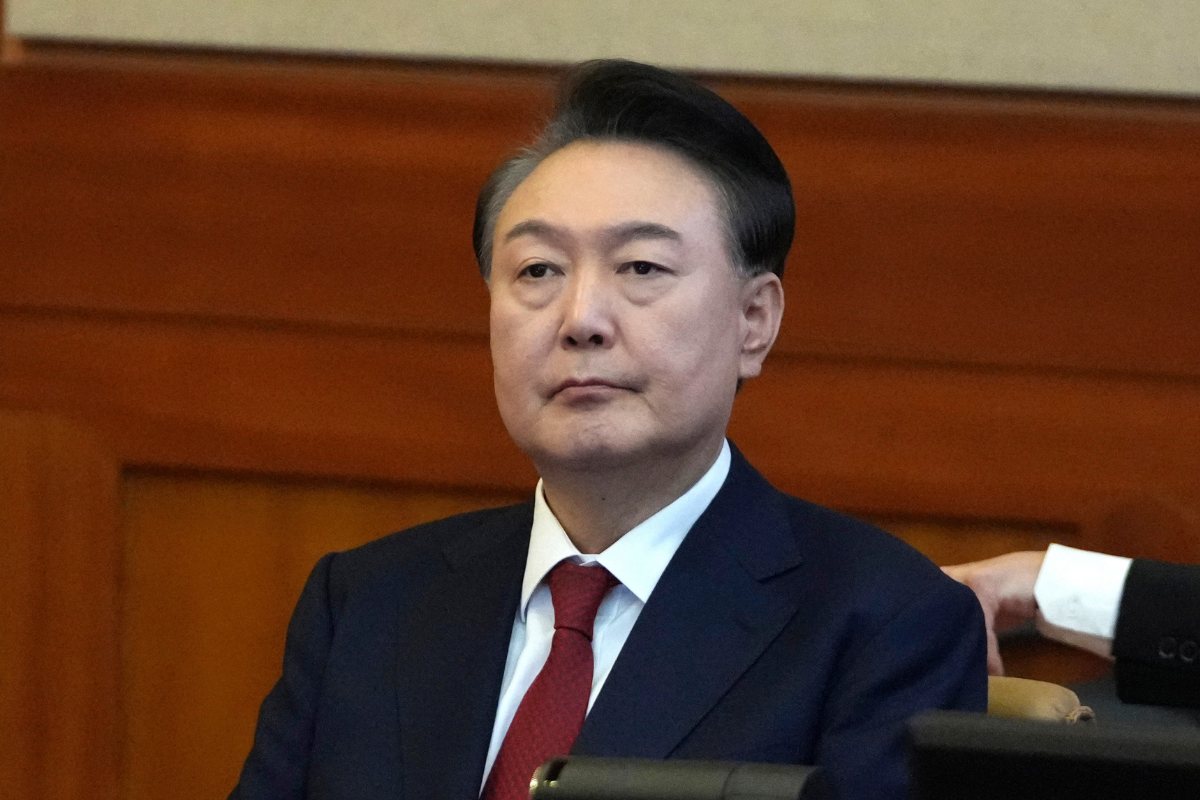

South Korean prosecutors are seeking a 30-year prison sentence for ousted former President Yoon Suk Yeol, who is accused of trying to escalate tensions with North Korea by allegedly flying drones over Pyongyang in a bid to create justification for later imposing martial law.
Prosecutors made the request on April 24 at the closing of his trial in Seoul Central District Court, where Yoon is facing charges of benefiting an enemy and abuse of power.
The charges of benefiting an adversary can apply without direct collusion with an enemy if South Korea’s military interests are harmed or if an enemy is aided.
A team of investigators led by special prosecutor Cho Eun-suk said the conservative former president and top defense officials were responsible for alleged drone infiltrations into North Korea two months before attempting to impose martial law.
Pyongyang accused Seoul of using drones to drop propaganda leaflets over the capital three times in October 2024.
Yoon’s legal team said in a statement to reporters that he never ordered the alleged drone flights over Pyongyang, saying prosecutors have not backed their claims with evidence.
Seoul Central District Court is expected to make a ruling on the case at a later date.
Yoon attempted to impose martial law on Dec. 3, 2024, but backed down after six hours, following parliament’s vote to overturn the decree. He said he imposed the measures in order to protect the South Korean constitution because the opposition, which controlled the parliament, was sympathetic to communists and North Korea.
He had previously told the court that it was within his presidential powers to call for a state of emergency and that doing so could not constitute an insurrection.
Yoon faces a total of eight trials related to the martial law decree. He received his first conviction on Jan. 16 for charges such as mobilizing the presidential security service to prevent authorities from detaining him, which resulted in a five-year prison sentence.
On Feb. 19, Seoul Central District Court found Yoon guilty on charges of abuse of authority and orchestrating an insurrection, and he was sentenced to life in prison. Prosecutors had sought the death penalty, though no one has been executed in South Korea since 1997, following the introduction of a moratorium on capital punishment in 1998.
The former president’s lawyers said in their appeal of the conviction that they aim to address the “errors in fact-finding and misinterpretations of the law” contained in the ruling.
Prosecutors are also appealing the decision.
South Korea’s judicial system allows prosecutors to challenge sentences and rulings—giving them the same rights as defendants—if they believe the decisions are flawed.
Yoon and his lawyers have denied all charges he faces.
North Korea Relations
Yoon was removed from office on April 4, 2025, after South Korea’s Constitutional Court voted to uphold the Dec. 14, 2024, parliamentary vote to impeach him.
The Constitutional Court’s decision triggered a snap election, and in June 2025, Lee Jae-myung, a former Democratic Party of Korea leader who led the impeachment bid against Yoon, won the presidency.
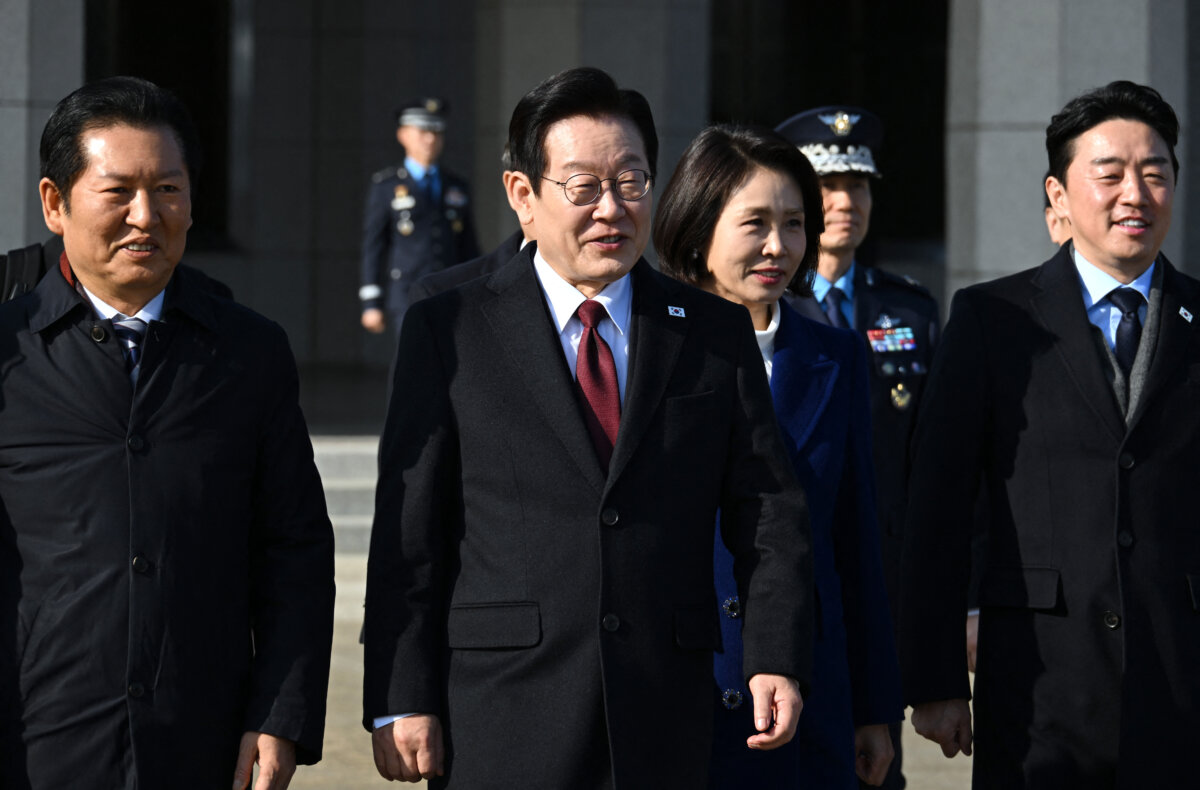
Since his time in office, Lee has sought to de-escalate tensions with Pyongyang, including the cessation of broadcasting the radio program “Voice of Freedom” into North Korea in September 2025.
On Aug. 15, 2025, in a speech marking the 80th anniversary of the end of Japanese colonial rule, Lee announced that his government would reinstate a 2018 agreement with North Korea to scale back certain military activities along the border, saying that it would help “prevent accidental clashes between the South and the North, and build military trust.”
The 2018 Comprehensive Military Agreement was a de-escalation measure that halted some military activities between the two countries. The pact included measures such as imposing no-fly zones, ending military drills near the Demilitarized Zone, or DMZ, and maintaining hotlines.
However, Pyongyang has not reciprocated in efforts to improve relations between the two Koreas.
After Lee announced plans to scale back some military activities, Kim Yo Jong, the sister of North Korean leader Kim Jong Un, said hopes that Pyongyang would respond to the efforts were a “pipe dream,” according to North Korean state-run media outlet KCNA.
“Whether or not [South Korea] withdraws its loudspeakers, stops broadcasting, postpones its military exercises, and downscales them, we do not care about them and are not interested in them,” she said.
The Associated Press and Reuters contributed to this report.
 Friends Read Free
Copy
Facebook
Tweet
Friends Read Free
Copy
Facebook
Tweet