
The U.S. military on Monday morning said a claim by Iran that mines had damaged a supertanker in the Strait of Hormuz was false.
“No ships have hit mines in the Strait of Hormuz,” said the U.S. Central Command (CENTCOM) in an Aug. 31 post on X, adding that claims to the contrary are an Islamic Revolutionary Guard Corps (IRGC) “attempt to intimidate regional commercial shipping through disinformation.”
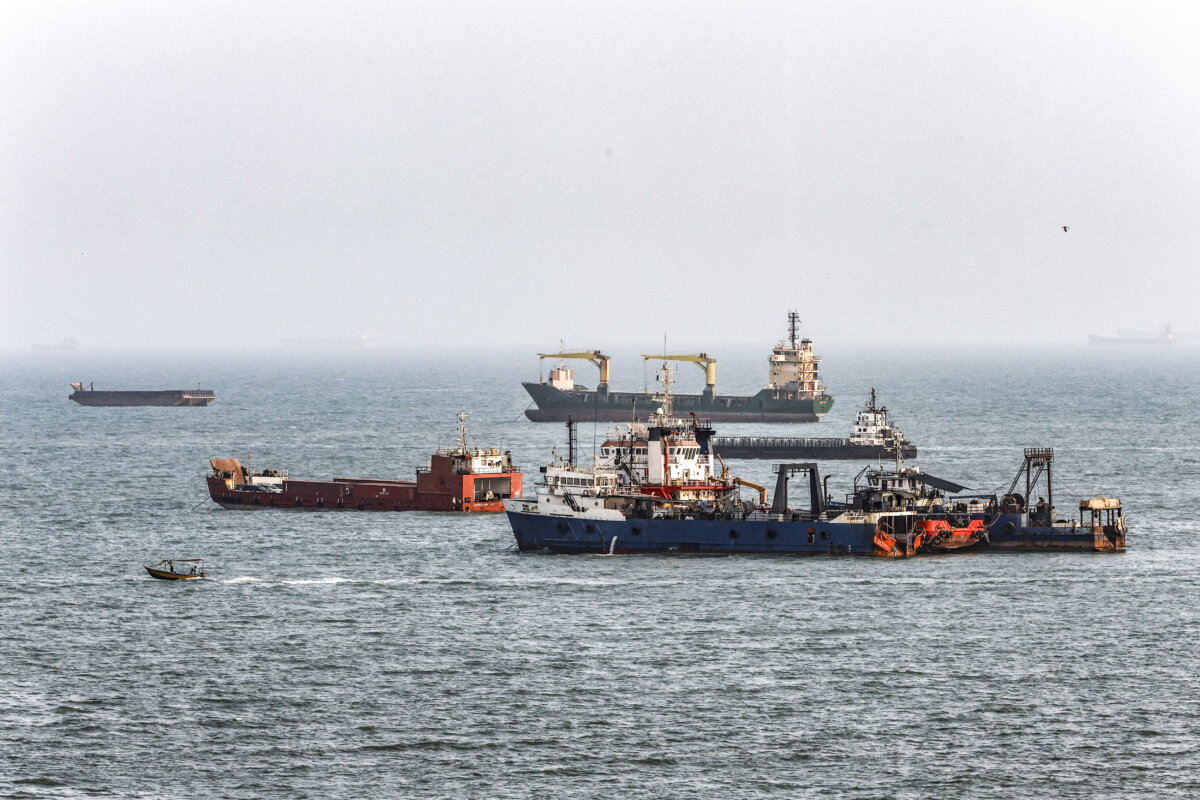
The IRGC’s naval unit said that a supertanker that was using what it termed an unauthorized route in the strait, which connects the Persian Gulf and the broader Indian Ocean, had struck two sea mines, according to Iranian state-run television.
The ship was engulfed in “massive fires” and was brought to a “complete halt” after it struck the mines, the IRGC said via PressTV. “The IRGC Navy once again warns that the fate of vessels that violate the security regulations governing the Strait of Hormuz will be no different,” it added.
No details were provided about the supertanker, including where it was flagged or where it was heading.
The statements from CENTCOM and the IRGC follow a similar pattern throughout the war, with both making competing claims about recent military actions. CENTCOM has often taken to social media to refute what it says are false assertions made by the Iranian regime.
Hours earlier, CENTCOM said on X that recent strikes by U.S. military forces to block the IRGC from setting mines in the Hormuz Strait were an “act of aggression,” which it said is “absolutely FALSE.”
“U.S. forces took limited, precise action against IRGC minelaying forces posing an imminent threat in the Strait of Hormuz,” the military said on X. “In essence, Iran created the threat and the U.S. military eliminated it to protect civilian mariners, commercial shipping, and the free flow of global commerce.”
The updates from CENTCOM were made as the United States struck Iranian rocket launchers in the strait in the first American military action against Iran in more than a month. In July, the U.S. carried out attacks on Iran each day for nearly two weeks straight in an intermittent conflict that has lasted around six months.
On Aug. 1, President Donald Trump confirmed that he would order the military to hold off on strikes after Gulf allies Qatar, Saudi Arabia, and the United Arab Emirates urged him not to attack again.
Iran said that it fired missiles and explosive drones at American bases in Jordan, according to state-run Tasnim News on Aug. 31. Since the war started on Feb. 28, Iran has targeted nearby countries in the Gulf and Middle East, including their infrastructure, in response to U.S. actions.
The latest strikes were launched about a week after the Trump administration announced it would focus on increasing economic sanctions on Tehran, including pressuring trade partners with Iran, in what was dubbed “Operation Economic Outcast.”
Trump, meanwhile, has said he is not in a rush to end the conflict—even as the midterm elections loom.
“We are winning very big,” Trump told Al Jazeera TV in a call on Aug. 26. “They’ve got massive inflation, their economy is falling apart, they’re treating their people very badly, they are killing many, many protesters. I have no time schedule; whatever it takes.”
 Friends Read Free
Copy
Facebook
Tweet
Friends Read Free
Copy
Facebook
Tweet