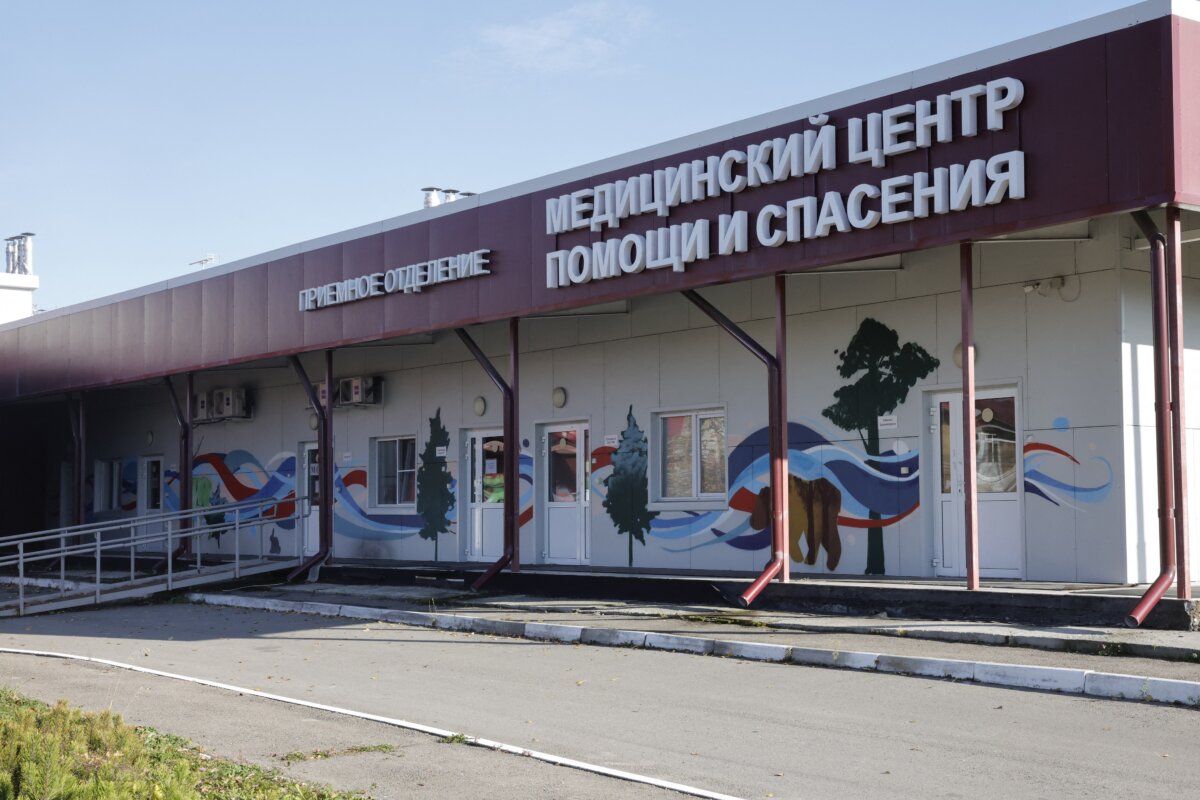

The World Health Organization (WHO) on Saturday said it still doesn’t know what caused the pneumonia that killed a Russian anti-plague researcher earlier this month, but it noted that no case of plague has been registered.
Meanwhile, the United Nations-backed health body wrote that based on information from Russian officials, WHO “has not identified evidence of ongoing transmission associated with this event.”
“A key uncertainty remains the absence of a confirmed diagnosis in the deceased laboratory worker,” the Oct. 10 statement said.
The organization said it will monitor the situation and decide whether there are any potential health risks associated with the woman’s death if more information becomes available.
“Test results were negative for the tested high-threat pathogens,” WHO wrote, adding it has not found any “evidence of ongoing transmission associated with this event.”
A Russian health body provided information to WHO and confirmed the lab researcher’s death. It said that “no case of plague had been registered recently in Irkutsk Oblast,” where the laboratory is located, according to the statement.
“Preventive and control measures had been implemented in accordance with national sanitary legislation, and the laboratory testing of contacts detected no high-threat pathogens,” the statement said, reiterating information provided by Russian authorities and the WHO.
Russian authorities said the worker, Darya Shipilova, 28, died of pneumonia on Oct. 2 of unknown origin, prompting officials to carry out preventative measures in the region such as contact tracing.
The governor of Irkutsk, Igor Kobzev, said in a social media post on Oct. 8 that those preventative measures have “been completed.” He added that “no incidents or accidents involving pathogenic microorganisms were identified” at the research lab.
“The affected employee had been vaccinated and possessed immunity against the dangerous pathogens she worked with,” his statement said, according to an English translation from Russian.
Some 5,000 lab tests were also conducted as part of the response to the worker’s death, he said. The monitoring of the deceased individual’s contacts also concluded Oct. 8, and no infectious diseases were discovered, the governor added.
Responding to reports of the death, U.S. President Donald Trump answered a question about whether a biological weapon may have been involved. He said there is no evidence suggesting that was the case.
“Well, we don’t think so. We’re going to find out soon enough, but we don’t think so,” he said.
U.S. Secretary of State Marco Rubio this past week said Russian officials must be more transparent because “any time you hear that there’s some disease that infected someone in a lab anywhere in the world, you’re going to be concerned about it.”
“I think it’s incumbent upon Russia to obviously share more information with the world. That’s what they should do,” he said.
Amid reports about the death, the Kremlin sought to tamp down what it described as speculation and rumors. It also responded to reports of an alleged second death in connection with the laboratory.
Kremlin spokesman Dmitry Peskov told reporters last week that “the vast majority of what the media are reporting about this situation is false information.” Media outlets should instead rely on information provided by Russia’s health watchdog, Rospotrebnadzor, he added.
When the plague bacterium infects the lungs, it’s known as pneumonic plague, according to the WHO and other health agencies. It’s considered a severe illness with a high risk of death if left untreated.
Pneumonic plague is also the only type of plague that can spread from person to person via bacteria-containing droplets in the air. Anyone with that form of plague can transmit it to others, in contrast to the bubonic or septicemic plague, which are transferred to people via infected flea bites.
 Friends Read Free
Copy
Facebook
Tweet
Friends Read Free
Copy
Facebook
Tweet